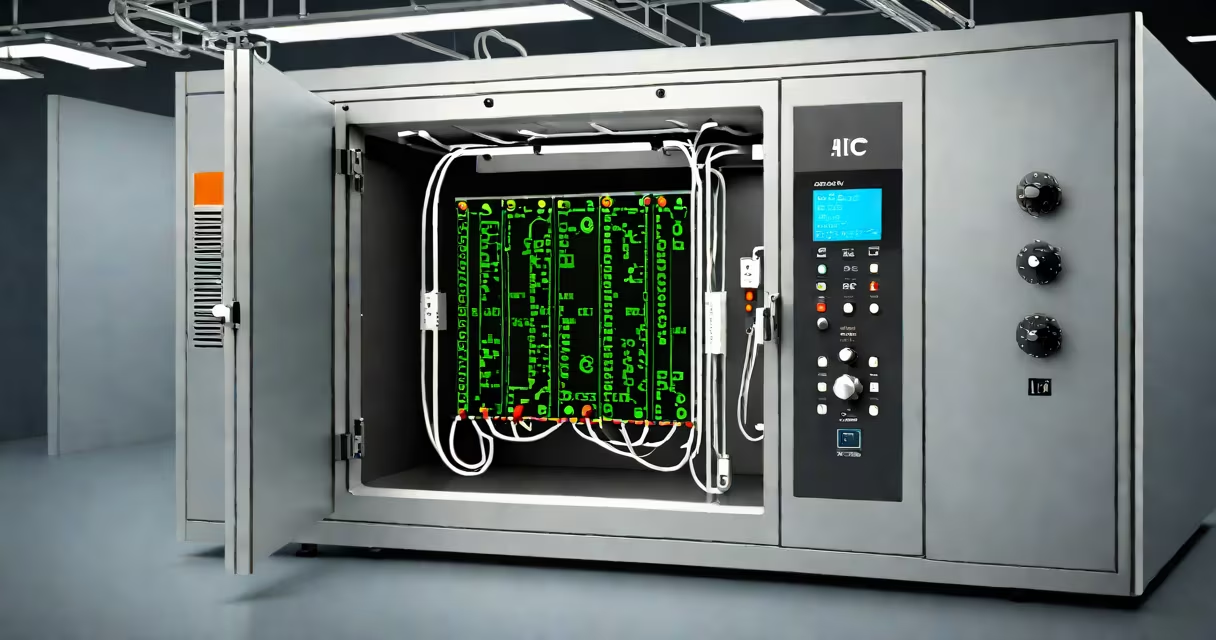
IEC 60068-2 is a series of international standards that define laboratory test methods for assessing how electrical and electronic products perform under environmental stresses such as temperature extremes, humidity, vibration, and shock. These tests simulate real-world conditions to ensure reliability and durability during shipping, storage, and operation.
The standard is part of the larger IEC 60068 family, which focuses on environmental testing. IEC 60068-2 specifically covers the test procedures themselves, not the acceptance criteria. Each test is assigned a letter-number combination, such as Test A (Cold), Test B (Dry Heat), Test C (Damp Heat), and Test F (Vibration).
Manufacturers use IEC 60068-2 to validate product performance before market release. For example, a smartphone designed for use in tropical climates must pass Test Db (Cyclic Damp Heat) to confirm resistance to condensation and corrosion. Without this testing, devices may fail prematurely in humid environments.
Each test in IEC 60068-2 follows a structured protocol. The test specifies the environmental condition (e.g., temperature, humidity, vibration frequency), duration, rate of change, and required equipment. Results are recorded, but failure is not automatically assumed-pass/fail depends on the product's specification.
For instance, Test B (Dry Heat) requires exposing a device to 70°C for 2 hours. During this time, the device must remain operational or return to normal function within specified limits after cooling. If the device shuts down unexpectedly or fails to reboot, it fails the test unless the specification allows temporary shutdown.
Test sequences often combine multiple conditions. A product shipped globally might undergo Test Ab (Temperature Cycling), where it cycles between −40°C and +70°C over 24 hours. This simulates rapid changes experienced during air transport through different climate zones.
IEC 60068-2 includes over 20 individual tests. The most common ones are grouped by physical stress type.
| Test Code | Stress Type | Typical Duration | Common Use Cases |
|---|---|---|---|
| A | Cold | 2 hours at −40°C | Arctic equipment, winter vehicle sensors |
| B | Dry Heat | 2 hours at +70°C | Industrial controls, outdoor electronics |
| C | Damp Heat, Steady State | 48 hours at 40°C, 93% RH | Consumer electronics, medical devices |
| D | Damp Heat, Cyclic | 24 hours cycle over 10 days | Marine electronics, long-term reliability |
| F | Vibration (Sinusoidal) | 2 hours per axis at 10-200 Hz | Avionics, automotive systems |
| G | Shock (Pulse) | 10 ms pulse at 150 m/s² peak | Transportation, military gear |
These tests are not applied randomly. A product's intended environment determines the sequence. A weather station deployed in Alaska would require Test A, Test B, and Test D to cover cold, dry heat, and cyclic dampness.
One non-obvious point: IEC 60068-2 does not define what constitutes "failure." That decision rests with the manufacturer or customer. A device may survive a 48-hour 40°C/93% RH exposure but fail if its display shows ghosting. The standard only mandates the test execution, not the outcome threshold.
IEC 60068-2 is mandatory in many global markets. The European Union requires compliance with IEC 60068-2 for CE marking in industrial and consumer electronics. Similarly, China's CCC certification relies on these tests for equipment sold domestically.
Automotive manufacturers use IEC 60068-2 to qualify components for use in vehicles. A car's infotainment system must pass Test F (vibration) to endure road vibrations over 100,000 km. Failure in this test leads to warranty claims and recalls.
Medical devices also depend on IEC 60068-2. A portable defibrillator used in emergency response must survive Test G (shock) to handle rough handling during transport. The U.S. FDA references IEC 60068-2 in guidance documents for medical equipment reliability.
During my work at a test lab, we evaluated a solar-powered weather sensor meant for deployment in desert regions. It passed Test B (dry heat) at 70°C but failed Test C (damp heat) due to moisture ingress into the battery compartment. We traced the issue to a missing gasket seal. After redesign, the unit passed all tests. This illustrates how IEC 60068-2 catches design flaws early.
IEC 60068-2 is frequently mistaken for a safety standard. It is not. Safety standards like IEC 60950-1 address electrical hazards, fire risk, and insulation integrity. IEC 60068-2 assesses environmental resilience, not safety.
For example, a laptop power adapter may meet IEC 60950-1 requirements for insulation and grounding. But if it fails Test B (dry heat) at 70°C, it may not operate reliably in a hot server room. The two standards serve different purposes and are often used together.
Another misunderstanding: IEC 60068-2 tests are not optional. Even small consumer electronics like Bluetooth earbuds must undergo environmental testing if they are marketed globally. A company selling earbuds in Japan must comply with IEC 60068-2 Test C (damp heat) because humidity levels exceed 80% in summer months.
Some assume that passing IEC 60068-2 guarantees long-term reliability. This is incorrect. The standard measures short-term endurance under controlled conditions. Long-term aging effects, such as capacitor degradation over five years, require additional accelerated life testing models.
An oil rig in the North Sea operates in extreme conditions: temperatures from −30°C to +45°C, high salt spray, and constant vibration. A pressure sensor installed on a pipeline must survive these conditions.
Testing plan:
The sensor passed all tests. However, during field deployment, it failed after six months due to corrosion in the connector. Post-mortem analysis revealed that while IEC 60068-2 Test Db simulated humidity, it did not account for salt-laden air. The manufacturer added a new test using saline mist (per IEC 60068-2-11) to prevent recurrence.
This case shows that IEC 60068-2 provides a baseline but must be supplemented with application-specific testing when operating in harsh environments.
Understanding IEC 60068-2 is essential for product developers, quality engineers, and compliance teams. It helps devices don't just work in a lab-they survive in the wild. When designing for global markets, integrating IEC 60068-2 early in development reduces costly redesigns and field failures.