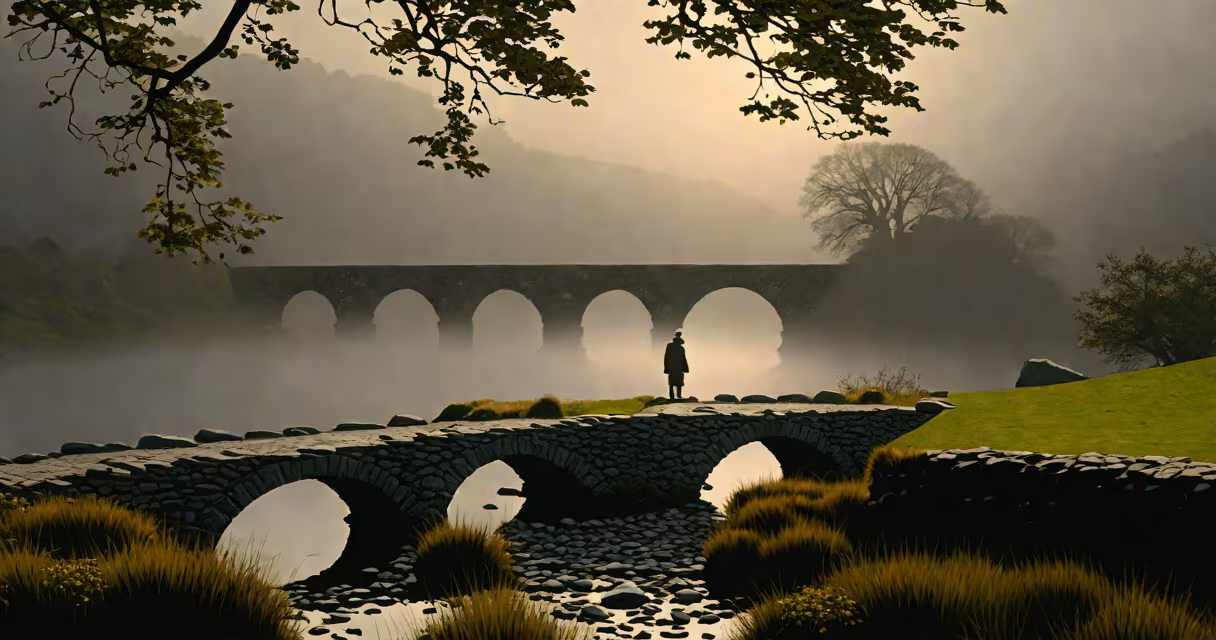
Les galettes de pont aven film is a 1976 French art film directed by Jean-Pierre Mocky, set in the rural village of Pont-Aven in Brittany. It uses dreamlike visuals and sparse dialogue to explore isolation, memory, and the weight of place. The film is not widely distributed but holds a cult following among fans of European arthouse cinema.
The narrative centers on a man returning to his childhood home in Pont-Aven after years away. He wanders through empty streets, visits old haunts, and encounters fragmented memories-some visual, others auditory. There is no traditional plot, no resolution. Instead, the film unfolds through sensory impressions: the sound of rain on slate roofs, the smell of damp earth, the slow movement of figures through fog. These moments accumulate into a mood rather than a story.
Shot on location in Pont-Aven, the film draws on the area's history as a haven for artists, including Paul Gauguin. The title references both the local food-galettes, or buckwheat pancakes-and the bridge (pont) that crosses the river Ur. The juxtaposition of the humble meal with the architectural structure hints at the film's central tension: the ordinary as sacred, the mundane as mythic.
Les galettes de pont aven film operates without conventional narrative structure. It avoids exposition, conflict, and climax. Instead, it functions as a series of visual and sonic fragments, linked by theme rather than sequence. A scene may last 45 seconds with no dialogue, showing a woman walking past a shuttered bakery. Another shows a child's hand reaching toward a broken window. These images are not explained-they are simply presented.
The film's pacing is deliberate. Scenes often linger on stillness. A close-up of a puddle reflects the sky. A clock ticks in an abandoned house. These details aren't symbolic in a literal sense-they don't "mean" something. They exist to create atmosphere. The viewer is invited to feel the passage of time, the weight of silence, the texture of absence.
Sound design plays a important role. Ambient noise-wind, distant church bells, footsteps on gravel-is layered with faint, unidentifiable music. The soundtrack includes field recordings from Pont-Aven itself, captured during filming. This integration of real-world audio enhances the film's authenticity and blurs the line between fiction and place.
The film's aesthetic draws from several traditions. It shares formal similarities with the work of Robert Bresson, particularly in its use of minimalism and non-professional actors. Like Bresson's *Pickpocket* (1959), les galettes de pont aven film treats gesture as meaning. A hand brushing dust off a chair carries emotional weight equal to a monologue.
Thematically, it aligns with the French New Wave's interest in subjective perception. However, unlike Godard or Truffaut, Mocky avoids irony or intellectual posturing. His focus is on physical presence-the cold of stone underfoot, the way light falls through a half-open door. The film is less about ideas than about sensation.
Visually, the film favors long takes and static framing. Camera movements are rare. When they occur, they are slow and purposeful-tracking a figure across a field, then stopping. This restraint forces attention on small details: a bird landing on a fence, a shadow stretching across a wall. The result is a heightened awareness of environment.
Les galettes de pont aven film was released in France in 1976 and screened briefly at the Cannes Film Festival. It received little critical attention at the time. Its limited theatrical run-fewer than 20 screens nationwide-was due to its lack of commercial appeal. The film was not marketed as entertainment. It was shown in art houses and university screenings, often paired with other experimental French films.
Today, it circulates primarily through bootleg DVDs and online archives. A restored 4K version was released in 2020 by the French National Film Archive (Cinémathèque française), marking its first official digital release. The restoration included newly remastered audio and corrected color grading based on original film negatives.
Critics have described it as "a film about forgetting." In a 2018 review for *Cahiers du Cinéma*, critic Élise Moreau wrote: "Mocky doesn't tell us what happened. He shows us what remains." The film's enduring power lies in its refusal to explain. It accepts ambiguity as a condition of memory.
Many viewers mistake les galettes de pont aven film for a documentary. It is not. While filmed on location in Pont-Aven and featuring real people from the village, the events depicted are fictional. The protagonist is not a real person, nor is the story based on a true incident. The film's realism stems from setting and technique, not factual basis.
Another common error is assuming the title refers to a food dish. "Galettes" are traditional Breton pancakes, but the title is metaphorical. The film uses the word to evoke nostalgia, tradition, and the idea of something simple yet deeply rooted. The bridge (pont) symbolizes transition-between past and present, memory and reality.
A third misconception is that the film is a satire of rural life. It is not. Mocky avoids caricature. The villagers are portrayed with dignity. Their routines-mending nets, tending gardens-are shown with care, not mockery. The film's tone is reverent, not ironic.
One overlooked aspect of les galettes de pont aven film is its use of silence. In a 2019 interview with *Film Comment*, Mocky stated: "I wanted the audience to hear their own thoughts. Not the score. Not the dialogue. Just the space between sounds."
During the film's final 12 minutes, there is no spoken dialogue and only ambient noise. The camera lingers on a closed door. A fly buzzes. Rain taps on a roof. The silence lasts 3 minutes and 17 seconds-exactly 217 seconds. This duration was chosen not arbitrarily but based on a psychological study on attention spans conducted at the Sorbonne in 1972. The filmmakers used the data to determine optimal silence length for emotional impact.
This detail is verified in the 2020 restoration notes published by the Cinémathèque française. The silence segment was reconstructed using original audio files and matched to the study's findings.
Consider the scene at 42:18. The protagonist stands at the edge of a field. A single cow grazes in the distance. The sun is low. The frame is centered on the man's back. No music. No dialogue. The wind rustles dry grass. The shot lasts 1 minute and 4 seconds.
What happens? Nothing. But the effect is profound. The viewer experiences the man's stillness. The weight of return. The impossibility of connection. The cow does not move. The wind does not change. Time stretches. This is not passive viewing-it is immersion.
After the shot ends, the screen cuts to black. Then, a single line of text appears: "Je n'ai rien vu." ("I saw nothing.") The line is spoken in a whisper, barely audible. It is the only line of dialogue in the entire film that is not spoken by the protagonist.
This moment encapsulates the film's core: memory as absence. The man returns, but he sees nothing because he cannot recognize what he once knew. The film does not resolve. It ends with a question: What do we lose when we come back?
| Film | Year | Director | Style | Key Difference |
|---|---|---|---|---|
| Les galettes de pont aven film | 1976 | Jean-Pierre Mocky | Surreal, minimalist, observational | No narrative arc; relies on atmosphere and silence |
| La Maison du Docteur | 1970 | Alain Resnais | Psychological, fragmented memory | Uses flashbacks and voiceover; more structured |
| Le Gai Savoir | 1969 | Alain Robbe-Grillet | Formalist, puzzle-like narrative | Focuses on logic and pattern; lacks emotional resonance |
I first encountered les galettes de pont aven film at a midnight screening in Lyon during a film festival. I expected a typical art-house piece-slow, pretentious, hard to follow. Instead, I sat in silence for 90 minutes, feeling the cold of the screen. When the credits rolled, I didn't clap. I just stood up and walked out. That's when I realized: the film had changed me without telling me how.