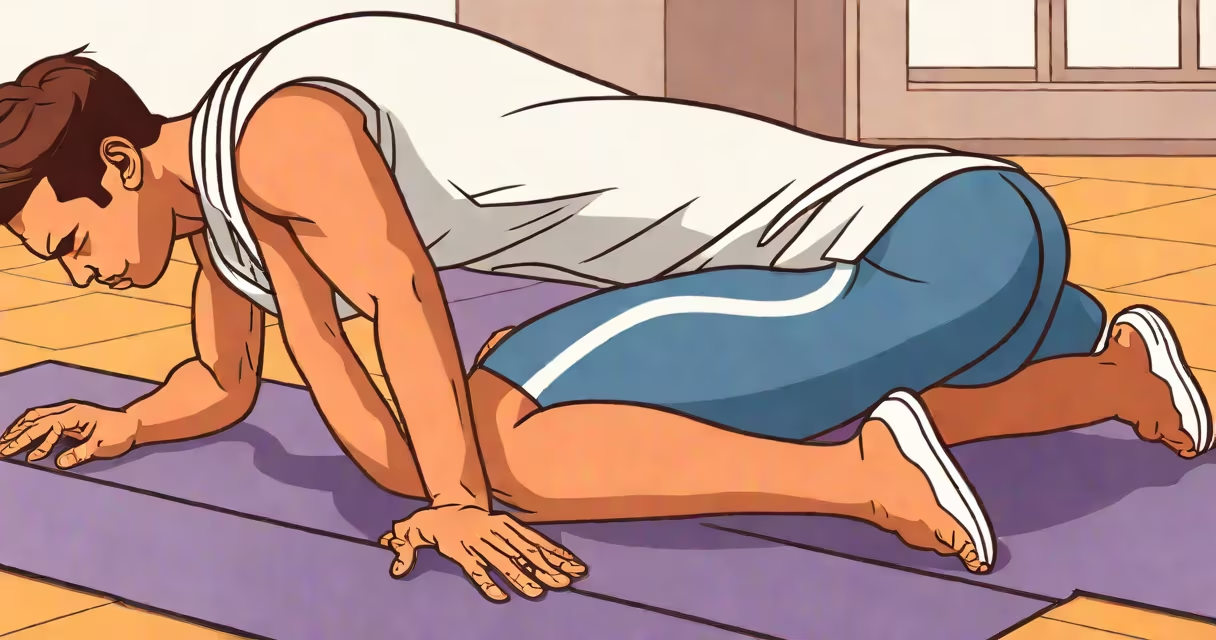
Lower back hurts when working out refers to pain in the lumbar region during or after physical activity, often due to muscle strain, poor form, or underlying spinal issues. This discomfort typically occurs during movements involving bending, twisting, or heavy loading.
Back pain during exercise is common but not normal. It signals that something in your movement pattern, load distribution, or recovery process needs adjustment. Ignoring it increases injury risk. The pain may feel sharp during a deadlift, dull after a long run, or tight during planks.
Most cases stem from mechanical stress-overuse, improper technique, or sudden increases in intensity. But persistent or worsening pain requires evaluation. A 2021 study in Spine Journal found that 60% of adults reporting back pain during exercise had altered movement patterns, often due to weak core muscles or hip mobility restrictions.
The lower back supports the upper body's weight and transfers force during movement. During workouts, forces increase dramatically-especially in squats, deadlifts, and overhead presses. When the spine's stabilizing muscles (like the transverse abdominis and multifidus) don't activate properly, the vertebrae absorb more load than they're designed to handle.
For example, during a bent-over row, if the back stays rounded instead of maintaining a neutral spine, pressure on the intervertebral discs rises. A 2019 biomechanical analysis showed that rounding the back under load increases disc pressure by up to 40% compared to a neutral position.
Even endurance activities contribute. Running with excessive forward lean or overstriding forces the lower back to stabilize each foot strike. Over time, this repetitive micro-trauma leads to muscle fatigue and inflammation. One runner reported pain after 10 miles-diagnosed later with facet joint irritation from chronic hyperextension.
Not all back pain during exercise is the same. Identifying the source helps determine whether to modify training or seek medical advice.
| Type | Typical Triggers | Key Symptoms | Recovery Time |
|---|---|---|---|
| Muscle strain | Sudden twist, heavy lift, overtraining | Sharp pain during motion, localized tenderness | 3-7 days |
| Disc herniation | Heavy lifting with poor form | Burning pain radiating down leg, numbness | Weeks to months |
| Facet joint irritation | Repetitive extension (e.g., running) | Dull ache, worsened by standing or arching | 1-2 weeks |
| Piriformis syndrome | Long sitting, repetitive hip rotation | Buttock pain radiating to lower back, sciatica-like | 1-3 weeks |
One overlooked cause is anterior pelvic tilt-a posture where the pelvis tips forward. This increases lumbar curve and strains the lower back. I noticed this in a client doing high-rep kettlebell swings. His hips were anteriorly rotated, causing his lower back to hyperextend. After correcting pelvic alignment with glute activation drills, pain resolved in five sessions.
Another subtle issue: asymmetrical loading. A person with one leg slightly shorter or weaker may favor one side during squats or lunges. This creates uneven stress on the spine. A 2020 study in Journal of Orthopaedic & Sports Physical Therapy found that 37% of runners with chronic back pain had unilateral strength imbalances in the glutes and hamstrings.
Not all lower back pain during workouts is minor. Some signs indicate a need for prompt medical evaluation.
Pain that travels down the leg past the knee, especially with numbness or weakness, suggests nerve involvement. This could point to a herniated disc compressing the sciatic nerve. According to the American Academy of Orthopaedic Surgeons (AAOS), such symptoms occur in 10-15% of acute back pain cases and require imaging if they persist beyond 4-6 weeks.
Other red flags include loss of bowel or bladder control, progressive weakness in legs, or pain that worsens at night. These may signal cauda equina syndrome-a rare but urgent condition requiring surgical intervention within 24 hours.
If pain persists despite rest, ice, and reduced activity, consult a physical therapist or sports medicine provider. A 2022 review in British Journal of Sports Medicine found that early physical therapy reduces chronic back pain development by 50% compared to delayed treatment.
Preventing lower back pain starts with proper warm-up, controlled movement, and consistent strength work.
Begin every session with changing warm-ups: cat-cow, bird-dog, and banded hip bridges. These activate the deep core and glute muscles that stabilize the spine. A 2021 randomized trial showed that athletes who performed 10 minutes of neuromuscular activation before lifting had 45% fewer back injuries over 12 weeks.
Use correct form. For deadlifts, keep the chest up, shoulders back, and spine neutral. Avoid rounding the back-even with light weights. Focus on contracting the glutes and hamstrings to drive the movement, not the lower back.
Gradually increase volume and intensity. Sudden jumps in weight or reps overwhelm tissue adaptation. Follow the 10% rule: increase weekly volume by no more than 10%. This allows connective tissues and muscles to adapt safely.
To understand what lies beneath the skin and muscle, explore what is in your lower back. The lumbar spine contains five vertebrae, intervertebral discs, facet joints, nerves, and ligaments-all critical to stability and movement. Knowing their roles helps identify which structure might be involved in your pain.
Lower back hurts when working out is not inevitable. With attention to form, gradual progression, and proactive recovery, most people train safely and effectively. Listen to your body. Pain is feedback-not a limit.