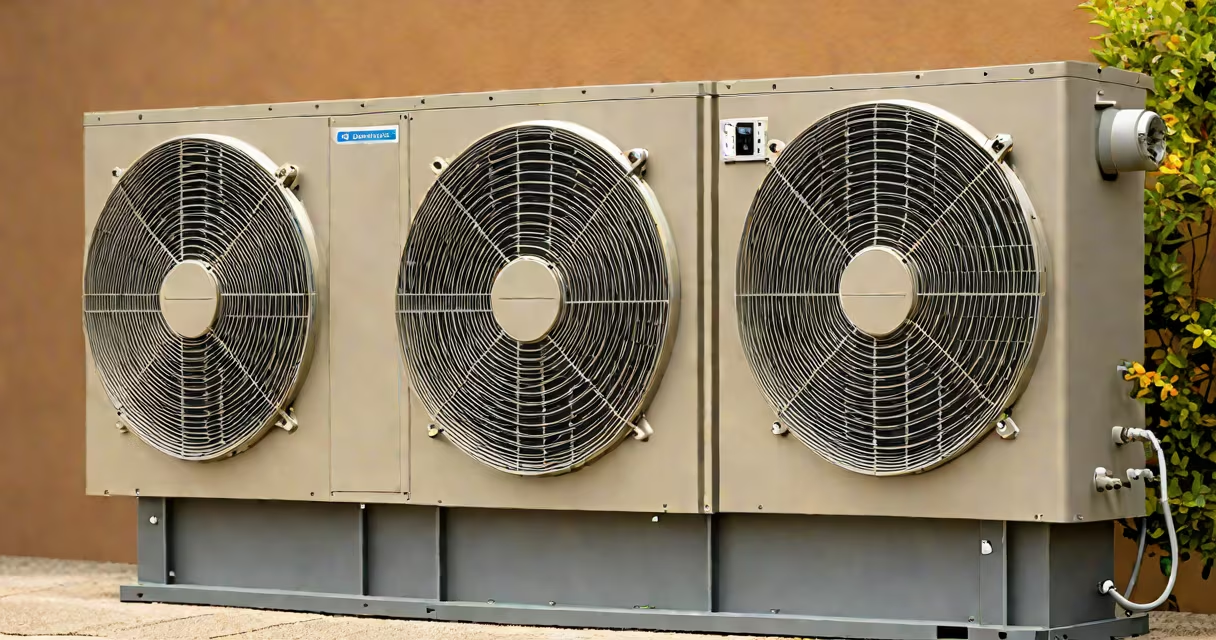
Central air conditioning is a system that cools an entire home by circulating chilled air through a network of ducts connected to a single indoor air handler and outdoor condenser unit. It maintains consistent indoor temperatures and humidity levels, especially during hot weather.
The system operates by drawing warm indoor air into the furnace or air handler, passing it over cold evaporator coils, then blowing the cooled air back into rooms through supply ducts. The heat absorbed by the refrigerant is expelled outside via the condenser unit. This process repeats until the thermostat reaches the set temperature.
According to the U.S. Department of Energy, central air systems account for nearly 60% of residential cooling in the United States. They are most effective in homes with existing ductwork and are typically paired with forced-air heating systems.
Central air conditioning relies on a closed-loop refrigeration cycle. A compressor in the outdoor condenser pressurizes refrigerant gas, turning it into a hot liquid. This liquid flows through copper tubing to the indoor evaporator coil, where it expands and absorbs heat from the indoor air.
A blower fan pulls warm air from rooms through return ducts and forces it over the cold evaporator coil. As the air passes over the coil, moisture condenses out, reducing indoor humidity. The cooled, dehumidified air exits through supply ducts and enters living spaces.
Once the refrigerant absorbs heat, it returns to the outdoor unit as a low-pressure gas. The compressor repressurizes it, and the cycle restarts. This continuous loop maintains stable indoor conditions.
Every central air system includes four core parts: the outdoor condenser unit, indoor air handler, ductwork, and thermostat. The condenser contains the compressor, condensing coil, and fan. The air handler houses the blower, evaporator coil, and sometimes a furnace or heat pump.
There are two main types: split-system and packaged units. Split systems have separate indoor and outdoor components and are standard in most homes. Packaged units combine all components into one outdoor cabinet and are common in smaller homes or apartments without ducts.
| Type | Best For | Efficiency Rating (SEER) | Installation Cost |
|---|---|---|---|
| Split System | Homes with existing ductwork | 14-26 | $4,000-$8,000 |
| Packaged Unit | Small homes, condos, or homes without ducts | 13-20 | $3,500-$7,000 |
SEER (Seasonal Energy Efficiency Ratio) measures cooling efficiency. Higher SEER values indicate better energy savings. The U.S. Environmental Protection Agency mandates minimum SEER 14 for new units sold in the southern U.S., and SEER 15 in northern regions.
Many people assume central air conditioning cools faster than window units. In reality, window units cool small rooms quickly because they don't rely on ductwork. Central systems take longer to lower room temperatures due to air travel time through ducts.
Another misconception is that central air only runs in summer. Modern systems often include heat pumps, which reverse the refrigeration cycle to provide heating in winter. These dual-function systems improve year-round comfort and reduce reliance on separate furnaces.
Some homeowners confuse "central air" with "HVAC." While HVAC (Heating, Ventilation, and Air Conditioning) covers all climate control, central air specifically refers to the cooling component. A home can have central air without a furnace, though most systems integrate both.
A typical 2,200-square-foot home in Phoenix, Arizona, requires a 3-ton (36,000 BTU/hour) central air system. The homeowner installs a 16 SEER split system with a variable-speed blower. The system runs 8 hours daily during peak summer months.
At 16 SEER, the system uses approximately 1.2 kWh per ton-hour. Over 8 hours, the total energy consumption is:
3 tons × 8 hours × 1.2 kWh = 28.8 kWh per dayAt $0.18/kWh, daily cooling cost is $5.18. Annual cost: $1,890. This aligns with average U.S. household spending on cooling, according to the U.S. Energy Information Administration.
I once replaced a failing condenser in a suburban home where the indoor unit was running constantly but never reaching the set temperature. After checking refrigerant levels and cleaning the condenser coils, the system returned to normal operation. The issue stemmed from a blocked outdoor unit vent, a common problem in homes with shrubs too close to the unit.
If central air is not blowing cold air, check the thermostat settings, ensure the system is set to "cool," and confirm the mode is not stuck on "fan" or "auto." Verify that the circuit breaker hasn't tripped and that the outdoor unit is receiving power.
Duct leaks, dirty filters, or low refrigerant can cause poor airflow. A clogged air filter restricts airflow, forcing the blower to work harder and potentially freezing the evaporator coil. Replacing a filter every 1-3 months prevents this.
If the system runs but doesn't cool, the issue may be low refrigerant, a faulty compressor, or a malfunctioning thermostat. Refrigerant leaks require professional repair and cannot be topped off by homeowners.
While central air provides cooling, it doesn't guarantee comfort. Factors like air distribution, humidity, and air movement affect perceived comfort. A system may cool the air to 72°F, but if stagnant air remains in corners, occupants still feel warm.
Advanced systems include features like zoned cooling, which uses motorized dampers to adjust airflow to different areas based on occupancy and temperature. This improves comfort while reducing energy waste.
For homes seeking enhanced comfort, explore options beyond basic cooling, such as dehumidification, air purification, and smart thermostats that learn usage patterns.
Central air conditioning is not just a cooling tool-it's a core element of indoor climate control. Proper installation, maintenance, and understanding of its function prevent inefficiencies and extend equipment life.