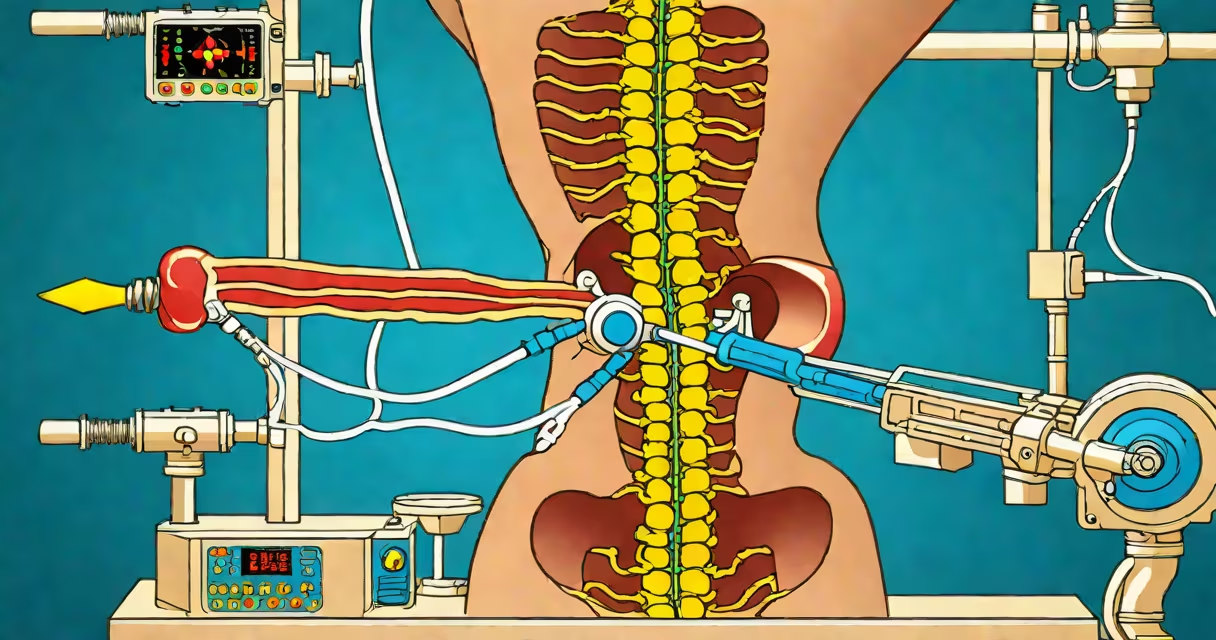
Lumbar radiofrequency ablation is a minimally invasive procedure that uses heat generated by radio waves to disrupt nerve signals transmitting pain from the lower back. It targets the medial branch nerves near the facet joints, which are common sources of chronic lower back pain. The goal is to reduce pain for months to years without surgery.
This procedure is performed under fluoroscopic (x-ray) guidance to ensure precise needle placement. A small electrode is inserted through a needle into the targeted nerve area. Once positioned, radiofrequency energy heats the surrounding tissue to about 80°C (176°F), creating a lesion that blocks pain signals. The process takes 15 to 30 minutes per side, and patients typically go home the same day.
According to the North American Spine Society, lumbar radiofrequency ablation is recommended only after diagnostic nerve blocks confirm that the patient's pain originates from the facet joints. This step ensures the treatment is likely to work. The procedure is not a cure but a pain management tool designed to improve function and reduce reliance on medications.
The procedure begins with the patient lying face down. The skin over the lower back is cleaned and numbed with local anesthetic. A thin needle is guided to the medial branch nerve using real-time x-ray imaging. Once in place, a small probe delivers controlled radiofrequency energy to create a thermal lesion around the nerve.
When the nerve is heated, it loses its ability to transmit pain signals to the brain. The effect is not immediate - patients often report gradual improvement over 1 to 2 weeks. The nerve may regenerate over time, which is why results typically last between 6 and 18 months. Repeat treatments are possible and often effective.
A 2021 study published in *Pain Medicine* found that 68% of patients experienced at least 50% pain reduction at 12 months post-procedure. Pain relief was associated with improved mobility and reduced opioid use. These results support the role of lumbar radiofrequency ablation as a viable option for persistent lower back pain unresponsive to conservative care.
Lumbar radiofrequency ablation is intended for individuals with chronic lower back pain lasting more than three months, especially when pain stems from the facet joints. Common causes include degenerative disc disease, spinal stenosis, or arthritis. Patients who have failed physical therapy, medications, or injections may be candidates.
Not everyone qualifies. The procedure requires a positive response to a diagnostic medial branch block. If pain improves by at least 50% during the block, the likelihood of success with ablation increases. The North American Spine Society recommends this step to avoid unnecessary procedures.
Patients with certain conditions are not suitable candidates. These include active infections, bleeding disorders, or severe osteoporosis that compromises bone integrity. Pregnant women and those with implanted spinal devices like stimulators are also excluded due to safety concerns.
There are two main approaches: conventional radiofrequency ablation and pulsed radiofrequency ablation. Conventional ablation uses continuous heat to destroy nerve tissue. Pulsed ablation delivers short bursts of energy without heating the tissue. It's believed to modulate nerve activity rather than destroy it.
| Type | Energy Delivery | Target Effect | Typical Duration of Relief |
|---|---|---|---|
| Conventional RF Ablation | Continuous heat (80-90°C) | Nerve destruction | 6-18 months |
| Pulsed RF Ablation | Short pulses (20-30 seconds), low temperature | Nerve modulation, less damage | 3-12 months |
Pulsed radiofrequency ablation is preferred in patients with sensitive nerves or when preserving nerve function is a priority. It's also used when the risk of motor or sensory deficits is high. However, evidence suggests conventional ablation provides longer-lasting relief in most cases.
One widespread misunderstanding is that lumbar radiofrequency ablation eliminates all back pain. That's incorrect. The procedure only affects pain originating from the targeted facet joints. If pain arises from discs, nerves, or muscles, ablation won't help. A clear diagnosis is essential.
Another misconception is that the procedure is permanent. Nerves can regenerate, and pain often returns after 12 to 18 months. Repeat treatments are safe and frequently effective. A 2020 review in *The Journal of Pain Research* noted that up to 70% of patients had sustained benefit after multiple sessions.
Some patients assume ablation is a surgical alternative. It is not. It's an outpatient intervention with minimal recovery time. Most people return to normal activities within 24 hours. There is no incision, and scarring is negligible.
I observed a 54-year-old woman with chronic lower back pain due to lumbar facet joint arthritis. She had tried physical therapy, NSAIDs, and epidural steroid injections with limited relief. After a positive diagnostic block, she underwent lumbar radiofrequency ablation on both sides.
She reported 70% pain reduction at four weeks. Her ability to walk increased from 10 to 45 minutes without stopping. She stopped taking daily ibuprofen and resumed light gardening. At six months, pain returned slightly, but she still rated her quality of life as "much better." She later had a repeat procedure with similar results.
This case illustrates that lumbar radiofrequency ablation is not a miracle fix but a practical tool for managing long-term pain. Success depends on accurate diagnosis, proper technique, and realistic expectations.
Pain may increase slightly for the first 48 hours due to inflammation from the lesion. Ice packs and prescribed medication help manage this. Most patients resume light activity the next day. Strenuous exercise should be avoided for at least one week.
Follow-up appointments are scheduled at 1, 3, and 6 months to assess pain levels and functional improvement. If pain returns, a repeat ablation may be recommended. Some patients choose to alternate with other interventions like spinal cord stimulation or nerve blocks.
Complications are rare. The most common side effects include temporary numbness, soreness at the injection site, or mild muscle weakness. Serious complications such as nerve injury or infection occur in fewer than 1% of cases, according to the American Society of Regional Anesthesia and Pain Medicine.
Lumbar radiofrequency ablation is a well-established treatment for chronic lower back pain originating from facet joints. It offers meaningful relief for many patients who haven't responded to other therapies. Success hinges on correct diagnosis, skilled execution, and ongoing management.
If you're considering this procedure, discuss your history and goals with a board-certified pain specialist. Not all clinics offer the same standards of care. Look for providers with experience in image-guided interventions and published outcomes.