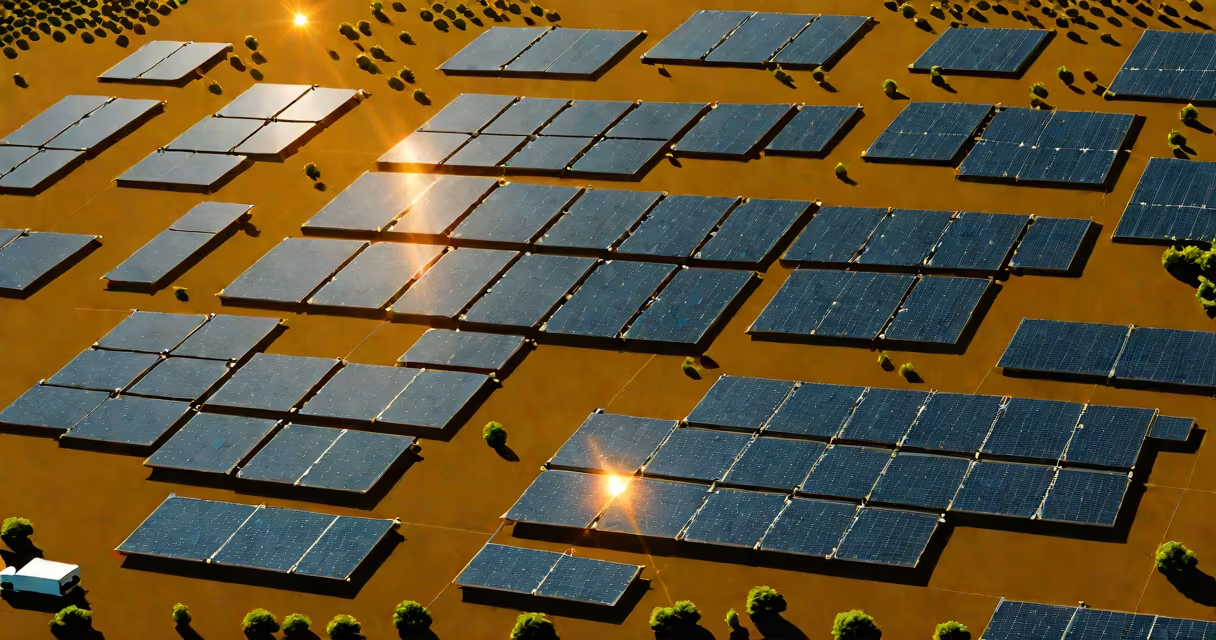
A solar field is a large installation of photovoltaic panels designed to generate significant amounts of electricity from sunlight. These fields typically cover hundreds of acres and consist of thousands of individual solar modules connected in series and parallel configurations to feed power into the grid.
Solar fields are engineered to maximize energy yield across wide areas. They differ from rooftop solar systems in scale, purpose, and infrastructure. While residential arrays serve individual homes, solar fields supply power to entire communities or industrial zones. The largest operational solar fields exceed 1 gigawatt of capacity, enough to power over 300,000 homes annually.
According to the U.S. Energy Information Administration (EIA), utility-scale solar facilities accounted for 36% of all new U.S. electricity generation capacity added in 2023. This growth reflects increasing demand for clean, dispatchable energy sources. Solar fields are central to national decarbonization goals, including the U.S. Inflation Reduction Act's target of 100% clean electricity by 2035.
Each panel in a solar field contains multiple photovoltaic cells made from silicon. When sunlight hits these cells, electrons move, creating direct current (DC) electricity. Inverters convert DC into alternating current (AC), which is compatible with the electrical grid.
Field layouts follow precise spacing to avoid shading between rows. Panels are mounted on trackers that rotate throughout the day to follow the sun's path. Single-axis trackers increase annual energy output by 20-25% compared to fixed-tilt systems. Dual-axis trackers offer additional gains but are less common due to higher maintenance costs.
For example, the Topaz Solar Farm in California uses single-axis tracking across 9.5 square kilometers. It generates 550 megawatts of power-enough to supply approximately 160,000 homes. The system includes over 9 million solar panels and 1,000 inverters, all monitored via a centralized SCADA system.
Solar fields vary based on technology, layout, and integration. The primary types are fixed-tilt, single-axis tracking, and dual-axis tracking. Fixed-tilt systems are cheaper to install and maintain but produce less energy per panel. Tracking systems boost output but require more complex mechanical and control systems.
| Type | Annual Yield (kWh/kWp) | Cost per kW (installed) | Best Use Case |
|---|---|---|---|
| Fixed-tilt | 1,300-1,500 | $800-$1,000 | Low-latitude regions with consistent sun exposure |
| Single-axis tracker | 1,600-1,800 | $1,100-$1,300 | High-insolation areas with seasonal sun shifts |
| Dual-axis tracker | 1,900-2,100 | $1,500-$1,800 | Research sites or high-value projects needing peak output |
Other components include combiner boxes, transformers, and switchgear. All equipment is grounded and protected against lightning and voltage surges. Substations connect the field to transmission lines, often located miles away from the panels themselves.
The NREL (National Renewable Energy Laboratory) reports that modern solar fields achieve a capacity factor of 20-25%, meaning they produce 20-25% of their maximum rated output over a year. This is lower than nuclear plants (90%) but higher than wind farms in low-wind regions (25-35%).
Solar fields are deployed in arid or semi-arid climates with high solar insolation. Deserts offer ideal conditions: clear skies, minimal cloud cover, and low humidity. The Mojave Desert hosts several major solar fields, including Ivanpah and Genesis. In India, the Bhadla Solar Park in Rajasthan spans 14 square kilometers and produces 2,245 megawatts.
Utility companies build solar fields to meet renewable portfolio standards (RPS). In California, the RPS mandates 60% renewable energy by 2030. Solar fields help utilities comply while reducing reliance on fossil fuels. They also support grid stability during peak demand hours, especially in summer months when air conditioning loads spike.
One overlooked detail: solar fields require land management. Vegetation control is essential to prevent shading and fire risk. Some operators use native grasses and grazing sheep to manage ground cover. At the Spring Valley Solar Project in Nevada, sheep graze between rows, reducing mowing costs and improving soil health.
Many assume solar fields are only for electricity generation. In reality, some integrate thermal storage. Concentrated solar power (CSP) plants use mirrors to focus sunlight onto receivers, heating fluid to drive turbines. These are not photovoltaic fields but are sometimes grouped under the same term.
Another misconception: solar fields operate only during daylight. Modern systems store excess daytime production in batteries. The Moss Landing Energy Storage Facility in California, paired with nearby solar fields, holds 1.5 gigawatt-hours of lithium-ion battery capacity. This allows night-time delivery of solar-generated power.
I once visited the Blythe Solar Power Project in Southern California. Standing at the edge of the 500-acre site, I watched the panels track the sun like a slow-motion dance. The silence was striking-no engines, no emissions. Just light turning into current. That moment confirmed how quietly major these installations can be.
A solar field is a large-scale photovoltaic installation that converts sunlight into grid-compatible electricity. These fields are critical to expanding renewable energy access. With advancements in tracking, storage, and land-use efficiency, they continue to grow in size and impact. Understanding what is a solar field clarifies their role in the global energy transition.