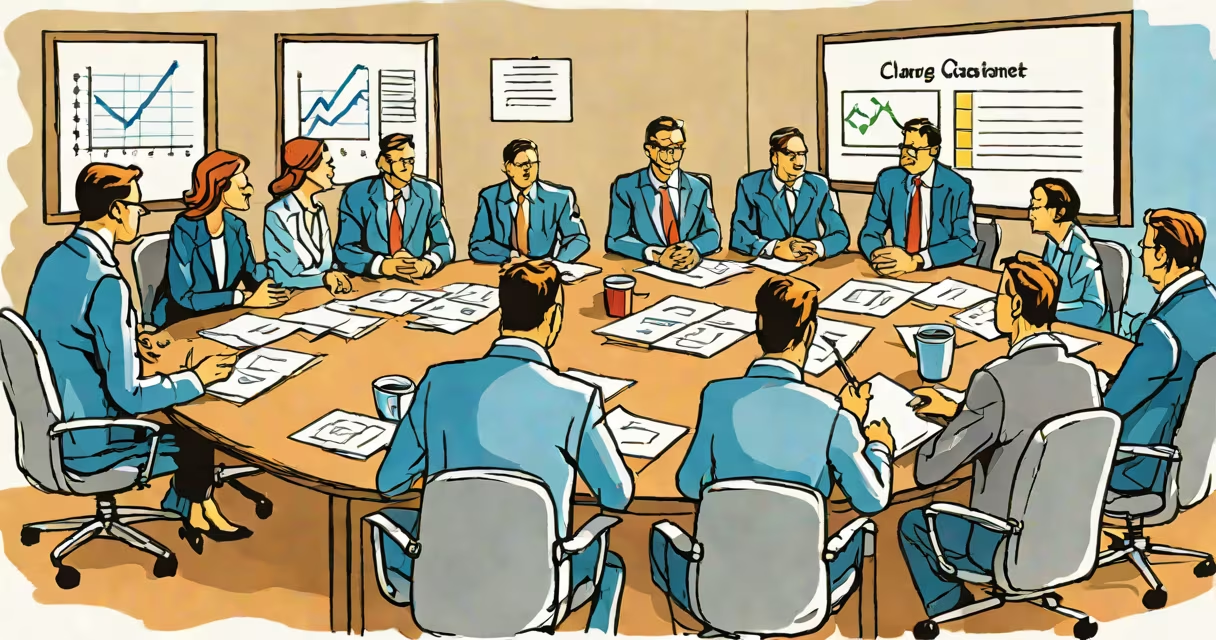
The management of change process is a structured approach to planning, implementing, and sustaining organizational changes while minimizing disruption and resistance. It helps transitions-from new software rollouts to restructuring teams-are executed efficiently, with clear roles, timelines, and communication strategies.
This process is not a single event but a sequence of deliberate actions. It begins with identifying the need for change, assessing risks, developing a strategy, executing the plan, and evaluating outcomes. Without it, organizations risk project failure, employee disengagement, and operational breakdowns.
According to the Project Management Institute (PMI), 70% of change initiatives fail due to poor management-not technical issues. The management of change process addresses this by embedding human and procedural factors into every phase of transformation.
Change doesn't happen in isolation. It requires coordination between leadership, teams, and stakeholders. The management of change process operates through five core phases: identification, planning, execution, monitoring, and evaluation.
Identification starts with diagnosing the problem or opportunity. For example, a retail chain may notice declining sales due to outdated inventory systems. This triggers a formal request to upgrade to a cloud-based system.
Planning involves defining goals, assigning responsibilities, setting deadlines, and mapping out communication. A detailed change impact assessment identifies which departments will be affected and what training they'll need. The PMI's *A Guide to the Project Management Body of Knowledge (PMBOK® Guide)* emphasizes that change plans must include stakeholder analysis and risk mitigation.
While the process is consistent, frameworks provide structure. Two widely adopted models are Kotter's 8-Step Change Model and ADKAR, developed by Prosci.
| Structure | Core Stages | Best For |
|---|---|---|
| Kotter's 8-Step | 1. Create urgency 2. Build a coalition 3. Form a vision 4. Communicate the vision 5. Help action 6. Generate short-term wins 7. Sustain acceleration 8. Institute change |
Large-scale cultural shifts, mergers, rebranding |
| ADKAR | 1. Awareness 2. Desire 3. Knowledge 4. Ability 5. Reinforcement |
Individual and team-level adoption, technology rollouts |
ADKAR focuses on the individual's readiness to change. In a hospital switching to electronic health records, ADKAR helped reduce clinician resistance by ensuring staff understood the benefits and received hands-on training before go-live.
A common mistake is treating change as purely technical. But research from McKinsey & Company shows that 70% of change efforts fail not because of flawed strategy, but because of inadequate people management. The management of change process corrects this by prioritizing communication, feedback loops, and emotional intelligence.
Organizations across industries apply the management of change process. In healthcare, it supports patient safety improvements. In tech, it enables secure software updates. In manufacturing, it manages equipment upgrades without halting production.
For example, when a utility company replaced legacy billing systems, it used the management of change process to avoid customer service surges. They trained call center agents in advance, created FAQs, and rolled out the system in phases. Result: 98% of customers completed transactions without error during the first month.
Another example: a global bank implemented a new compliance system after regulatory changes. Using Kotter's model, leadership created urgency by sharing real-world penalties from similar institutions. They formed cross-functional teams, ran pilot tests, and celebrated early wins. Post-implementation surveys showed 85% of employees felt informed and supported.
Without this process, change becomes reactive. Teams scramble, miscommunication spreads, and morale drops. With it, change becomes predictable and sustainable.
Many confuse the management of change process with project management. While both involve planning and timelines, project management focuses on deliverables and budgets. The management of change process centers on behavior, culture, and long-term adoption.
Another misconception is that change is a one-time event. In reality, it's iterative. Employees may adopt a new tool initially but revert to old habits without reinforcement. The management of change process includes ongoing support and performance tracking to prevent regression.
There's also a tendency to skip the "reinforcement" stage. After rollout, leaders often assume success. But sustained change requires recognition, rewards, and continuous feedback. A study published in the Harvard Business Review found that organizations that reinforced change through regular check-ins saw 40% higher adoption rates over 12 months.
One non-obvious fact: the most effective change managers aren't the ones with the loudest voices. They're the quiet facilitators who listen to frontline concerns and adjust plans accordingly. During a factory automation rollout, a supervisor noticed workers were afraid of job loss. Instead of pushing forward, she held small group sessions, clarified roles, and involved workers in testing. The project launched on time-and with 90% employee buy-in.
Change is inevitable. How organizations manage it determines whether they adapt or collapse under pressure. The management of change process turns uncertainty into control, turning disruption into progress.