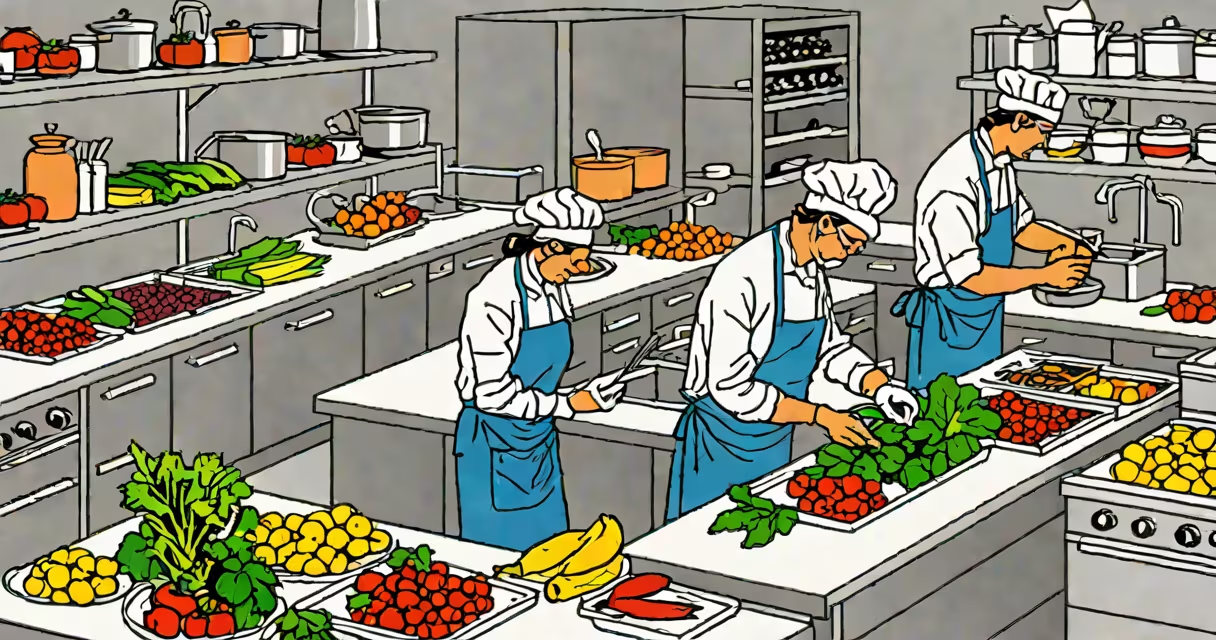
Food handler safety guidelines are standardized procedures enforced by health departments and regulatory bodies to prevent foodborne illness by ensuring proper hygiene, temperature control, and contamination prevention during food handling.
These guidelines are legally binding in most U.S. states and required for anyone who prepares, serves, or handles food in public settings. They cover everything from handwashing frequency to safe storage temperatures and allergen labeling. Failure to follow them can result in fines, temporary closure, or criminal charges in cases of widespread illness outbreaks.
The FDA Food Code, updated every four years, serves as the national benchmark. States adopt it with local modifications. For example, California enforces stricter handwashing protocols than Florida, though both require handwashing after touching raw meat, using the restroom, or handling waste.
Guidelines operate through a combination of mandatory training, documented procedures, and routine inspections. Every food establishment must designate at least one employee trained in food safety principles. This person typically holds a food safety level 2 certification, which includes advanced topics like pathogen growth rates and sanitation verification.
During inspections, health officials verify compliance through direct observation and document review. A restaurant may pass if staff wear clean uniforms and store cold foods below 41°F (5°C), but fail if records show no daily thermometer checks were logged. Documentation is as critical as behavior.
For example, a deli worker at a chain in Chicago was cited for leaving sliced turkey at room temperature for 4.5 hours. The violation stemmed from failing to follow the 2-hour/4-hour rule: perishable food cannot remain between 40°F and 140°F for more than 2 hours, or 4 hours if kept below 70°F. The incident led to a 3-day closure and mandatory retraining.
Food handler safety guidelines fall into five core categories:
| Category | Specific Requirements | Enforcement Body |
|---|---|---|
| Personal Hygiene | Wash hands for 20 seconds after contact with raw ingredients, after using the restroom, and before starting tasks. No jewelry except plain metal bands. | State health department |
| Temperature Control | Cold storage: ≤41°F (5°C); hot holding: ≥135°F (57°C). Reheat leftovers to 165°F (74°C) within 2 hours. | FDA Food Code, state inspectors |
| Cross-Contamination Prevention | Use color-coded cutting boards: red for raw meat, green for produce, blue for seafood. Clean surfaces with 200 ppm chlorine solution after each task. | Local health authority |
| Sanitation | Disinfect all food contact surfaces every 4 hours. Wash mops in 200 ppm bleach solution after use. | Facility manager, auditor |
| Allergen Management | Label all menu items containing the top eight allergens (milk, eggs, fish, shellfish, tree nuts, peanuts, wheat, soy). Train staff to recognize symptoms of allergic reactions. | FDA, USDA |
Some facilities implement HACCP (Hazard Analysis and Critical Control Points) systems, which go beyond basic guidelines by identifying specific risks in their workflow and setting measurable thresholds. A sushi bar might designate "raw salmon storage" as a critical control point, requiring daily logs showing temperature stays below 38°F (3°C).
Non-compliance often stems from confusion between similar terms. "Food handler safety guidelines" are distinct from "restaurant hygiene standards," which focus on cleanliness of dining areas and restrooms. Guidelines apply directly to food preparation zones. Also, while "food handler permit" is sometimes used colloquially, it's not a formal term-certification is issued by accredited providers, not government agencies.
These guidelines are mandatory in restaurants, cafeterias, grocery stores, food trucks, and catering operations. They are not optional for businesses serving more than 10 meals per day.
Failure to comply leads to immediate consequences. In 2022, a New York City café was shut down after an inspection revealed employees using the same knife to slice raw chicken and then tomatoes without washing it. The outbreak caused 17 confirmed cases of Salmonella. The owner later paid $12,000 in fines and lost $45,000 in revenue during the closure.
Proper implementation reduces risk. A study published in the Journal of Food Protection found that restaurants with certified food handlers reported 68% fewer foodborne illness incidents over two years compared to those without certification. The difference wasn't due to better equipment-it was consistent adherence to handwashing and surface cleaning schedules.
Many assume that food handler safety guidelines are only about cleanliness. That's incorrect. While hygiene is central, the guidelines also regulate time, temperature, and documentation. A single lapse in timing-like leaving cooked chicken at 120°F for 3 hours-can allow Clostridium perfringens to multiply to dangerous levels, even if the food looks and smells fine.
Another myth is that gloves eliminate the need for handwashing. Gloves are not a substitute. A 2021 CDC report showed that 43% of food workers who wore gloves still transferred pathogens from hands to food because they didn't change gloves between tasks. Gloves can harbor bacteria if not changed properly.
I once observed a bakery in Portland where staff used the same apron to wipe counters and handle dough. During a surprise audit, the inspector noted the apron had visible flour residue and tested positive for Listeria monocytogenes. The facility was ordered to close until all linens were replaced and staff retrained. The incident highlighted that even non-food-contact items can become vectors if not managed under the guidelines.
Training is not a one-time event. The FDA recommends refresher courses every 12 months. Some states, like Texas, require annual recertification for all food handlers. Without ongoing education, knowledge gaps emerge-especially among seasonal or temporary workers.
Food handler safety guidelines exist to protect consumers. They are not bureaucratic hurdles-they are evidence-based protocols proven to reduce illness. Following them consistently prevents outbreaks, avoids legal penalties, and builds customer trust. Adherence begins with awareness, continues with discipline, and ends with accountability.