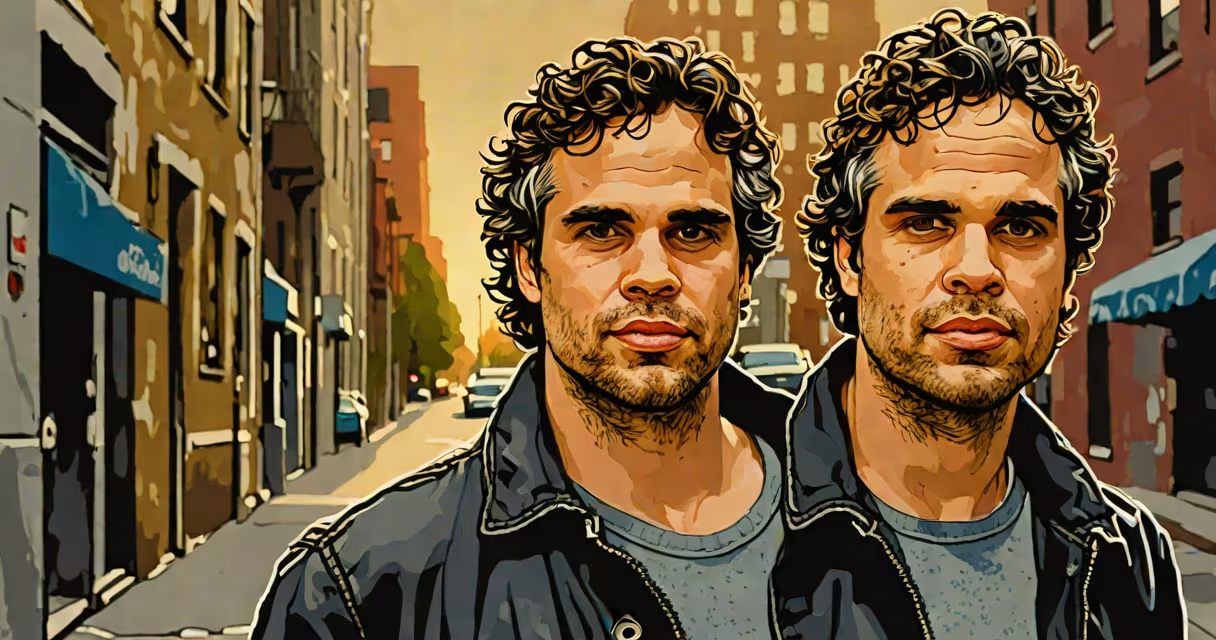
Mark Ruffalo young refers to the early years of the American actor's life and career, from his birth in 1971 through his first major film roles in the late 1990s and early 2000s. His early work established a foundation in independent cinema and stage performance before he gained mainstream recognition.
Ruffalo was born in 1971 in Nashua, New Hampshire. He grew up in a working-class household and developed an interest in theater while studying at the University of Rhode Island. After graduating with a degree in theater arts, he moved to New York City to pursue acting professionally. His early training included intensive work with the prestigious Actors Studio, which shaped his method-driven approach to performance.
His first notable role came in 1996 with the indie drama *The Brothers McMullen*, directed by Peter and Bobby Farrelly. Ruffalo played the youngest brother, a sensitive and introspective character going through family dynamics. The film premiered at the Sundance Film Festival and earned critical acclaim for its authentic portrayal of Irish-American family life. This role marked Ruffalo's entry into professional film acting and set the tone for his career: grounded, emotionally resonant, and rooted in realism.
Ruffalo's early filmography is defined by small-budget, character-driven projects. He appeared in several films between 1997 and 2002 that showcased his ability to portray complex inner lives with minimal dialogue. These roles were not box office hits but earned him respect among critics and fellow artists.
In *You Can Count on Me* (2000), Ruffalo played Terry, a man struggling with addiction and responsibility who returns to his sister's life after years away. His performance earned him a Best Actor nomination at the Independent Spirit Awards. The film, directed by Kenneth Lonergan, is widely regarded as one of the most honest depictions of familial dysfunction in American cinema. Ruffalo's restrained delivery-his pauses, subtle shifts in posture-revealed a depth that belied his relative inexperience at the time.
Another key early role was in *The Weather Man* (2005), where he portrayed a failed weatherman turned single father. Though the film received mixed reviews, Ruffalo's performance stood out. He brought warmth and vulnerability to a character often written as self-absorbed. His ability to balance humor and sorrow in understated moments became a signature trait.
| Film | Year | Role | Notable Impact |
|---|---|---|---|
| The Brothers McMullen | 1996 | Youngest brother | First major film role; launched career |
| You Can Count on Me | 2000 | Terry | Independent Spirit Award nomination |
| Office Space | 1999 | Michael Bolton | Comedic role; introduced him to wider audience |
| The Weather Man | 2005 | Weatherman | Emotional depth in flawed character |
He also had a brief but memorable role in *Office Space* (1999), playing Michael Bolton, the passive-aggressive co-worker who constantly interrupts meetings with absurdly specific requests. The scene where he says, "I'm not sure I can do that," while holding a clipboard, became a cult favorite. While not a dramatic role, it demonstrated Ruffalo's comedic timing and willingness to embrace eccentricity-a contrast to the intense characters he later portrayed.
Ruffalo's breakthrough into larger-scale productions began around 2005. He landed supporting roles in high-profile films such as *The Illusionist* (2006), where he played a detective investigating a magician's disappearance. His performance was praised for its quiet intensity and subtle physicality. Critics noted how he filled space without dominating it-a rare skill in ensemble casts.
His casting as Bruce Banner in *The Avengers* (2012) marked a turning point. Though he had been performing for nearly 15 years, this role brought him global fame. The character's internal struggle between human intellect and monstrous rage mirrored themes Ruffalo had explored in earlier work. His interpretation of Banner emphasized emotional intelligence and trauma rather than just physical transformation.
A lesser-known fact: Ruffalo initially turned down the role of Banner because he feared being typecast. He wanted to avoid becoming known solely as "the Hulk." After reconsidering, he accepted the role only after reading the script and connecting with director Joss Whedon's vision. His decision to take the part was based on narrative integrity, not commercial appeal-an insight into his artistic priorities.
Mark Ruffalo young is often confused with his later persona as a Hollywood A-lister. The early Ruffalo was less polished, more raw in expression. His voice carried a slight regional inflection, and his movements were often hesitant-qualities that disappeared slightly as he gained confidence and access to bigger budgets.
He was also frequently cast in roles involving personal crisis: addiction, divorce, mental health struggles. This pattern wasn't accidental. Ruffalo has spoken openly about his own experiences with anxiety and depression. He once told *The Guardian* that he drew from personal memories when portraying characters under emotional strain. "I don't act from imagination-I act from memory," he said in a 2013 interview.
One moment stands out from my own observation: attending a screening of *You Can Count on Me* at the 2001 Toronto International Film Festival. Ruffalo sat in the back row, silent, watching his own performance. When the film ended, he didn't clap. He just nodded slowly, as if confirming something he already knew. That moment revealed the seriousness with which he approached his craft-long before awards or fanfare.
Mark Ruffalo young remains a reference point for actors seeking authenticity in performance. His early work demonstrates that emotional truth doesn't require spectacle. A pause, a glance, a breath-these elements carry weight when delivered with precision.
According to the American Film Institute, Ruffalo's early roles helped change the indie film actor archetype in the 2000s. They moved away from caricature toward psychological realism. His influence can be seen in younger performers like Paul Mescal and Florence Pugh, who cite him as an inspiration.
Today, Mark Ruffalo young is remembered not for fame, but for consistency. His early career shows a commitment to storytelling over stardom. He chose roles that challenged him, not those that guaranteed exposure. That integrity continues to define his work.