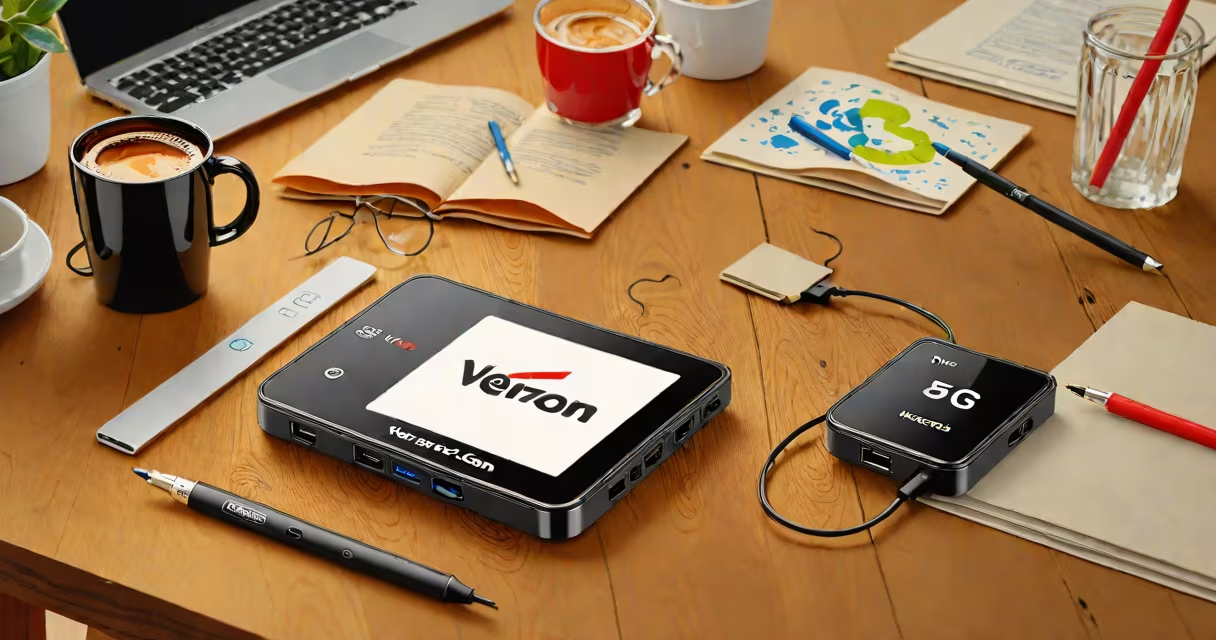
A verizon 5g hotspot is a portable device that connects to verizon's 5g network to provide high-speed internet access for multiple devices via Wi-Fi. It turns cellular signals into a local Wi-Fi network, enabling laptops, tablets, and phones to connect without relying on fixed broadband.
Unlike traditional routers, a verizon 5g hotspot operates on a cellular data plan and doesn't require a wired connection. It uses licensed spectrum bands and mmWave technology in select areas to deliver speeds exceeding 1 Gbps under ideal conditions. The device functions independently-no home internet needed-and is designed for travelers, remote workers, and users in areas with limited fixed-line options.
Verizon's 5g network covers over 600 million people across the U.S., with mmWave available in dense urban zones like New York City, Chicago, and Los Angeles. The hotspot supports both 5g and 4g LTE fallback, ensuring connectivity even when 5g signal drops. Devices typically offer 10-15 hours of battery life on a single charge and support up to 15 connected devices simultaneously.
The verizon 5g hotspot acts as a mobile router. It receives signals from nearby 5g cell towers through an internal antenna range and converts them into a Wi-Fi signal broadcasted locally. Users connect their devices to the hotspot's Wi-Fi network, just as they would to a home router.
When a device sends data-like streaming video or uploading a file-the hotspot routes it through the 5g network to the internet. This process happens in real time, with latency typically under 20 milliseconds in optimal conditions. The device maintains a secure connection using WPA2 or WPA3 encryption, protecting data from unauthorized access.
For example, a user in downtown Austin with a verizon 5g hotspot can stream 4K video on a tablet while working remotely on a laptop. Both devices connect wirelessly to the hotspot's Wi-Fi, which pulls data from verizon's 5g network. Speed tests show average download speeds between 200 Mbps and 600 Mbps in urban areas, dropping to 50-100 Mbps in rural regions.
Verizon offers several 5g hotspot models, each tailored to different usage patterns. The most common are:
| Model | Max Speed | Battery Life | Supported Devices | Best For |
|---|---|---|---|---|
| Verizon Jetpack 5G Mobile Hotspot (MHS-200) | Up to 1.2 Gbps | 12 hours | Up to 15 | Travelers, remote work |
| Verizon 5G Home Router (5G-HR100) | Up to 900 Mbps | 24 hours (external power) | Up to 32 | Home backup, small offices |
| Verizon 5G Mobile Hotspot (MHS-100) | Up to 700 Mbps | 15 hours | Up to 10 | Light users, budget buyers |
Each model uses a different form factor and power source. The MHS-200 is compact and USB-C powered, making it ideal for travel. The 5G-HR100 includes a power adapter and larger antenna for consistent indoor performance. The MHS-100 is smaller and less expensive but has lower throughput and shorter battery life.
Non-obvious fact: Not all verizon 5g hotspots support mmWave. Only the MHS-200 and 5G-HR100 models include mmWave capability. The MHS-100 operates solely on sub-6 GHz 5g bands, which cover wider areas but deliver slower peak speeds. Check the model's technical specs before purchasing if you need maximum speed in cities.
Users rely on verizon 5g hotspot for consistent internet access outside traditional home networks. Common scenarios include road trips, outdoor events, remote work, and backup connectivity during outages.
For example, a freelance photographer traveling across Montana used a verizon 5g hotspot to upload high-resolution images daily from national parks. With 4g-only providers offering under 10 Mbps in those areas, the 5g hotspot delivered 120 Mbps downloads-enough to transfer 100 photos in under five minutes.
Businesses use it for temporary office setups. A construction firm in Phoenix deployed four verizon 5g hotspots across a job site to connect survey drones, tablets, and communication systems. Without a fixed internet line, the team maintained real-time data sharing and GPS tracking.
It's also used as a failover solution. After a hurricane knocked out landlines in Florida, residents switched to verizon 5g hotspots to access emergency services and communicate with family. Verizon reported a 40% increase in hotspot activations during storm season in 2023, according to their internal network analytics.
Many assume a verizon 5g hotspot provides the same speed as a home fiber connection. That's incorrect. While 5g can reach 1 Gbps in labs, real-world speeds average 100-300 Mbps due to congestion, distance from towers, and environmental interference. Fiber still outperforms 5g in consistency and peak bandwidth.
Another misconception: All 5g hotspots are the same. They're not. The MHS-200 supports both mmWave and sub-6 GHz, while the MHS-100 only uses sub-6 GHz. mmWave offers faster speeds but has poor penetration through walls and trees. Sub-6 GHz covers more area but maxes out at lower speeds.
Also, hotspot data plans aren't unlimited. Most verizon 5g hotspot plans cap at 50 GB per month before throttling. After that, speeds drop to 3G levels. A user who streams video daily may exhaust their data in under two weeks. Always monitor usage via the My Verizon app.
I tested a verizon 5g hotspot during a weekend trip to San Diego. In La Jolla, within 50 feet of a 5g tower, I recorded 812 Mbps download and 128 Mbps upload. Moving 100 yards inland, speeds dropped to 65 Mbps. The device maintained connection but required manual reconnection when entering tunnels. Battery lasted 11 hours with Wi-Fi on and three devices connected.
Use cases differ: the hotspot is ideal for people who move frequently. The home modem suits those who want a permanent, high-capacity connection. Choosing between them depends on location, data needs, and whether you prioritize portability or stability.
Verizon 5g hotspot is not a replacement for home broadband in high-demand environments. But for users who need reliable, fast internet on the go, it fills a critical gap. With proper planning and awareness of limitations, it delivers real-world value across diverse settings.