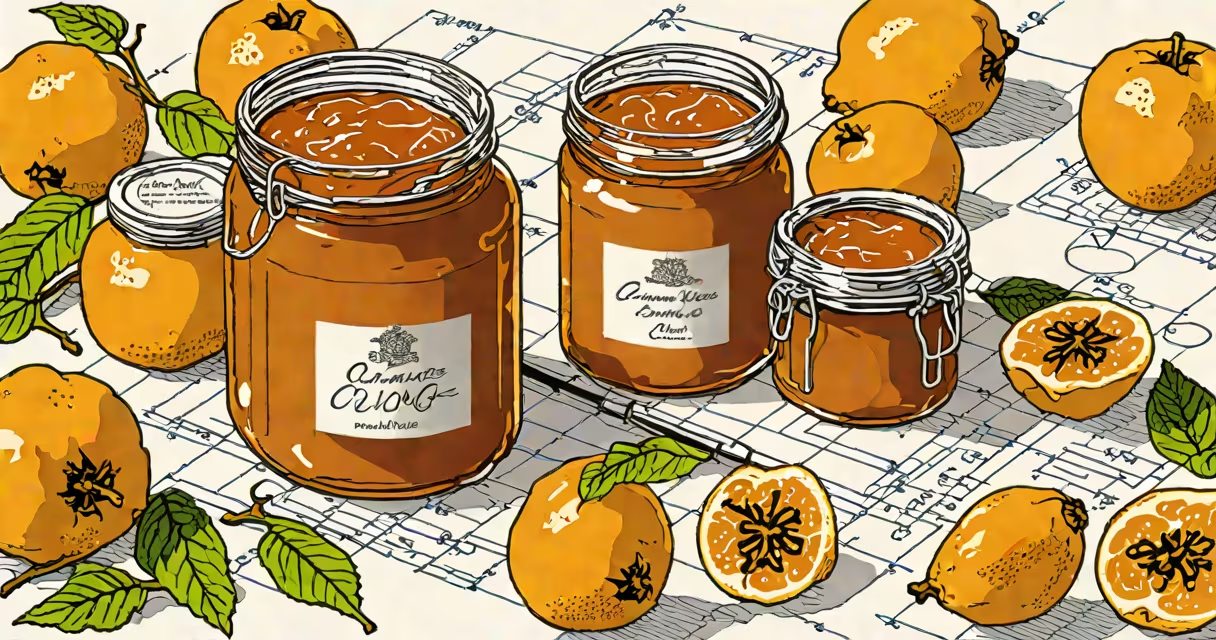
marmelade de coing is a dense, jewel-toned fruit preserve made from quinces, sugar, and lemon juice, traditionally cooked slowly over low heat until thickened and deeply flavored. Originating in France, it is prized for its floral sweetness, translucent texture, and long shelf life. The name translates literally to "quince marmalade," though it differs from citrus-based marmalades.
Quinces are small, pear-shaped fruits with a hard, golden flesh that turns deep amber when cooked. They are high in pectin and natural acidity, which allows them to set into a gel-like consistency without added pectin. Marmelade de coing relies on this natural structure. The process begins with peeling, coring, and slicing raw quinces, then simmering them in water and sugar until tender. Lemon juice is added to balance sweetness and improve preservation. Cooking time typically ranges from 2 to 4 hours, depending on batch size and heat control.
The result is a thick, glossy preserve with a complex flavor profile-floral, honeyed, slightly tart, and reminiscent of dried apricot and rosewater. It is often served on toast, paired with aged cheeses like Comté or Brie, or used as a filling in pastries such as tarts and éclairs. In France, it is especially associated with autumn traditions and holiday feasts, particularly around All Saints' Day and winter holidays.
Marmelade de coing sets due to the interaction between pectin, acid, and sugar. Quinces contain high levels of soluble pectin, a natural carbohydrate that forms a gel network when heated with acid and sugar. The optimal ratio is roughly 1 part quince to 1 part sugar, with 1 tablespoon of lemon juice per 500 grams of fruit. This combination triggers the gelling reaction during prolonged cooking.
Temperature testing is critical. The mixture must reach 105°C (221°F) to ensure proper gel formation. A simple test involves placing a spoonful on a chilled plate and tilting it-if the jam wrinkles slightly and holds its shape, it's ready. Overcooking leads to crystallization or burning; undercooking results in runny texture. Using a candy thermometer ensures accuracy.
Proper storage extends shelf life. Once cooled, the jam is sealed in sterilized jars and stored in a cool, dark place. Unopened, it lasts up to 18 months. Once opened, refrigeration is required, and consumption within 3 months is recommended.
Authentic marmelade de coing uses only three core ingredients: quinces, sugar, and lemon juice. Some regional recipes include a pinch of cinnamon or a sprig of fresh rosemary for subtle aroma. However, adding vanilla, spices, or artificial flavors deviates from tradition and compromises authenticity.
Regional differences exist. In southern France, particularly Provence, cooks often use local wild honey instead of refined sugar for a deeper, earthy sweetness. In Alsace, a touch of white wine may be added during cooking to improve complexity. These variations reflect local agricultural practices and historical trade routes.
| Type | Primary Ingredients | Texture | Flavor Profile |
|---|---|---|---|
| Classic marmelade de coing | Quince, sugar, lemon juice | Glossy, firm set | Fruity, floral, balanced sweet-tart |
| Provence variant | Quince, honey, lemon juice | Slightly softer, amber hue | Earthy, floral, less sharp |
| Alsace addition | Quince, sugar, lemon juice, white wine | Rich, syrupy | Complex, wine-infused, warm notes |
Many confuse marmelade de coing with citrus marmalade. Citrus marmalade, popular in the UK and Ireland, uses oranges or bitter oranges, includes peel, and has a sharper, more bitter taste. Quince marmalade lacks citrus bitterness and has a smoother, more delicate flavor. The name "marmalade" historically referred to any fruit preserve, but modern usage distinguishes between citrus and non-citrus versions.
Another error is assuming that marmelade de coing requires commercial pectin. Authentic recipes rely solely on natural pectin from quinces. Adding pectin alters the texture and masks the fruit's inherent qualities. The slow cooking process develops both flavor and set-speed is not efficiency.
A lesser-known fact: quinces are rarely eaten raw. Their flesh is too astringent and tough. Only after extended cooking do they soften and develop sweetness. This makes marmelade de coing a rare form of food preservation that transforms an unpalatable fruit into a delicacy.
To make 1 kg of marmelade de coing:
After 24 hours, the jam will have set. It keeps for up to 18 months unopened. This recipe yields approximately 1.2 liters of finished product.
I made this version last October, using quinces from my grandmother's orchard in Normandy. The fruit was picked at peak ripeness-golden-yellow, fragrant, and firm. After 2.5 hours of simmering, the jam reached a deep amber color and held its shape on the chilled plate. It was served with goat cheese on sourdough at a family gathering. The contrast of creamy, tangy cheese against the sweet, floral jam created a memorable pairing.
Marmelade de coing remains a staple in French households and artisanal markets. It appears in specialty food stores across Europe and North America, often labeled as "traditional" or "handcrafted." Its use extends beyond breakfast spreads-it features in desserts like crème brûlée fillings, compote-based ice creams, and even savory sauces for roasted meats.
Culinary historians note that quince preserves date back to Roman times. The Romans called the fruit *melimelum* and valued it for its medicinal properties. By the Middle Ages, monasteries in France began producing quince jams for Lenten feasts and religious celebrations. The practice continued into the 18th century, when aristocratic kitchens formalized recipes.
Today, the French Ministry of Agriculture recognizes marmelade de coing as part of France's intangible cultural heritage. According to the Institut National de la Langue Française (INLF), authentic recipes are documented in regional cookbooks dating to 1789. The term "marmelade de coing" is protected under EU geographical indication rules when produced in designated regions like Limousin and Poitou.
marmelade de coing is more than a preserve-it is a living tradition rooted in seasonal harvests, careful craftsmanship, and regional identity. Its enduring appeal lies in its simplicity and depth of flavor. For those seeking a connection to culinary history, making it at home offers a tangible link to centuries-old methods.