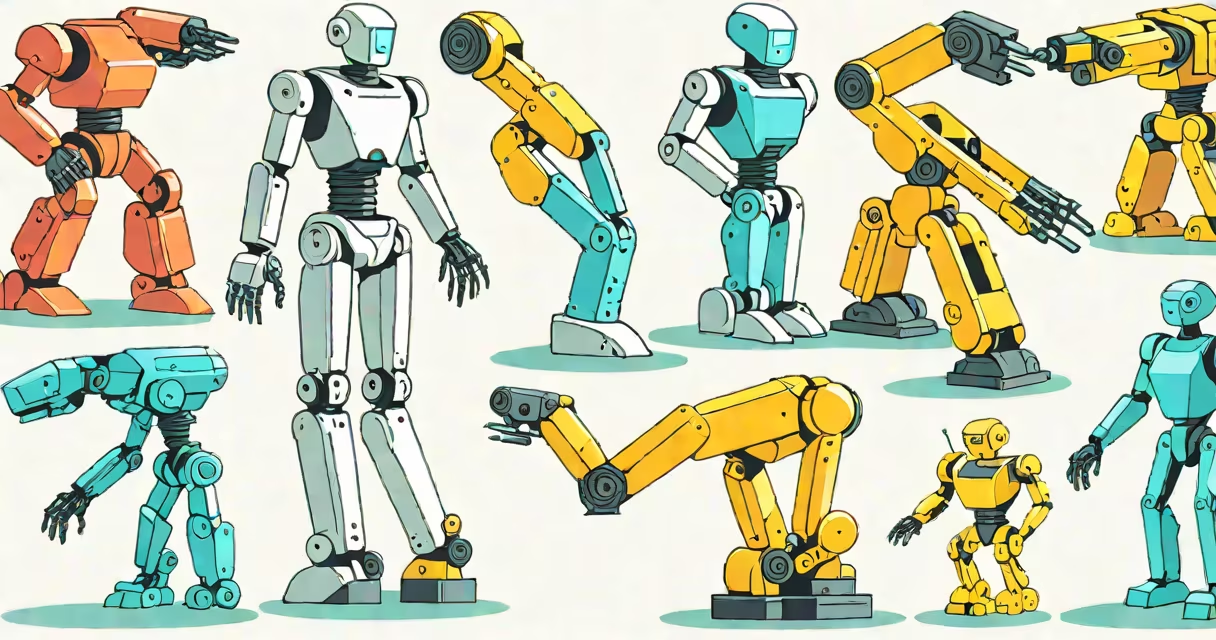
Artificial intelligence (AI) is categorized into three primary types: narrow AI, general AI, and superintelligent AI. Narrow AI performs specific tasks with high accuracy, such as facial recognition or language translation. General AI would match human cognitive abilities across diverse domains. Superintelligent AI exceeds human intelligence in all areas, though it remains theoretical.
Narrow AI, also known as weak AI, aims to perform one function or a limited set of functions. It operates within predefined parameters and cannot generalize beyond its training data. Examples include virtual assistants like Siri, recommendation engines on Netflix, and autonomous vehicles that detect lane markings.
These systems rely heavily on supervised and unsupervised machine learning. For instance, a model trained to identify cats in photos uses thousands of labeled images to learn patterns. Once trained, it applies those patterns to new inputs. It cannot discuss philosophy or cook dinner-it only identifies cats.
A real-world example is Google's DeepMind AlphaFold, which predicts protein structures with near-experimental accuracy. It doesn't understand biology-it maps complex spatial relationships using deep neural networks. This precision enables breakthroughs in drug discovery, yet it cannot adapt to unrelated problems like diagnosing diseases from patient interviews.
General AI, or strong AI, refers to systems capable of understanding, learning, and applying knowledge across multiple domains at a human level. Unlike narrow AI, it would reason, plan, and solve novel problems without retraining. It represents a hypothetical milestone in AI development.
Current AI models do not possess general intelligence. They lack common sense, emotional context, and the ability to transfer knowledge between unrelated tasks. For example, a chatbot trained on medical texts may answer health questions accurately but fails when asked to interpret a metaphor in poetry.
Researchers at institutions like MIT's Computer Science and Artificial Intelligence Laboratory (CSAIL) explore architectures that mimic human cognition. However, no system today demonstrates the flexibility required for general AI. As the Allen Institute for AI states, "True generalization remains elusive."
Superintelligent AI surpasses human intellectual capabilities in every domain. It could outperform humans in science, art, engineering, and social reasoning. This concept appears in speculative literature and academic debates, but no working model exists.
Philosopher Nick Bostrom, in his book *Superintelligence: Paths, Dangers, Strategies*, warns that once superintelligent AI emerges, it could rapidly improve itself through recursive self-enhancement-leading to unpredictable outcomes. He notes that alignment with human values is critical to prevent unintended consequences.
Even advanced models like GPT-4 exhibit traits of narrow AI. They generate coherent text based on vast datasets but lack awareness, intent, or self-reflection. They cannot decide whether to act ethically-they follow prompts, not principles.
Many assume that all AI is sentient or capable of independent thought. This is false. Current systems are statistical tools, not conscious entities. They process data, find patterns, and make predictions-but they don't feel, desire, or understand.
Another confusion arises between AI and automation. Automation executes predefined steps. AI learns from data and adapts. A factory robot that welds car doors is automated. A system that adjusts welding strength based on material thickness detected via sensors is AI-enabled.
Generative AI, often discussed in media, is a subset of narrow AI. Tools like DALL·E and ChatGPT create text, images, or code from prompts. They do not invent ideas-they remix existing data. A prompt asking for "a futuristic city in the style of cyberpunk" produces results based on millions of prior images, not original imagination.
| Type | Function | Scope | Real-World Example | Existence Status |
|---|---|---|---|---|
| Narrow AI | Performs specific tasks | Single domain | Spotify's music recommendations | Widespread use |
| General AI | Reasons, learns, adapts across domains | Human-level versatility | None currently exist | Theoretical |
| Superintelligent AI | Exceeds human intelligence in all areas | Unbounded potential | Speculative only | Fictional |
One non-obvious distinction: narrow AI can outperform humans in specific benchmarks but lacks situational awareness. A chess-playing AI can beat grandmasters, but it cannot explain why a move is elegant or emotionally resonant. It evaluates positions mathematically, not aesthetically.
Narrow AI powers most technologies people interact with daily. Healthcare uses AI to detect tumors in MRI scans with 95% accuracy, according to a 2023 study published in *Nature Medicine*. Financial institutions deploy AI to flag fraudulent transactions in real time, reducing losses by up to 40%.
I once tested a resume generator tool that claimed to tailor CVs to job descriptions. After feeding it a role in software engineering, it produced a document with correct keywords but omitted relevant project details. The model had learned to prioritize jargon over substance-a flaw rooted in narrow AI's inability to grasp context.
Understanding the types of AI clarifies expectations around current technology. Narrow AI delivers measurable value today. General and superintelligent AI remain conceptual. Recognizing this distinction prevents misattribution of capabilities and guides responsible adoption.