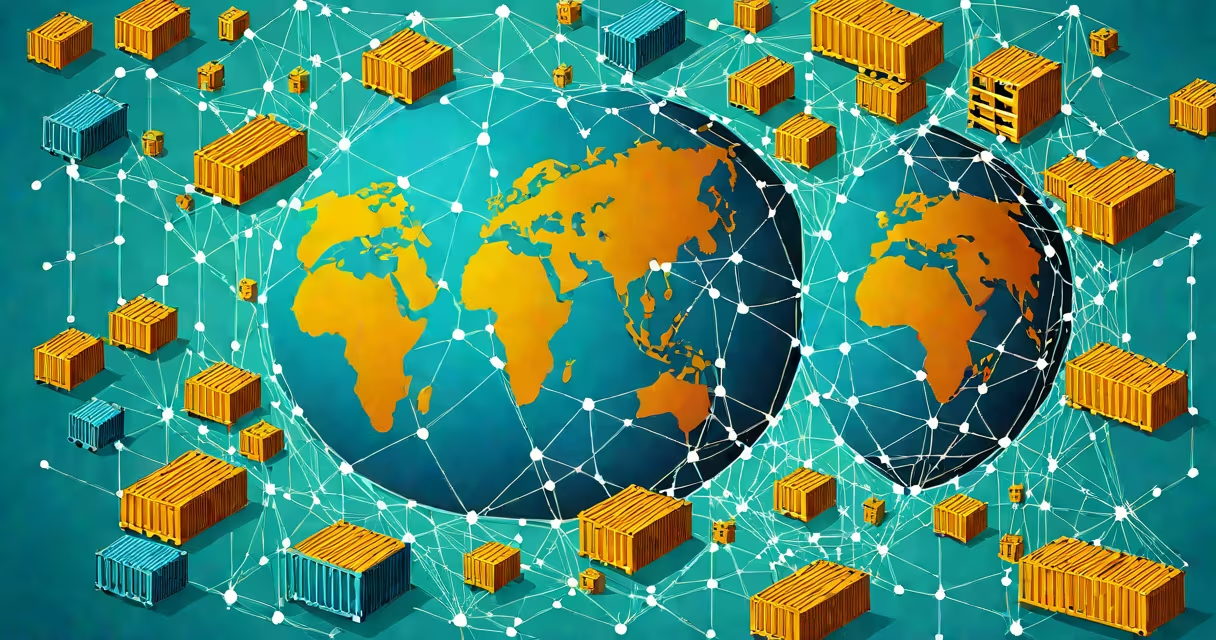
The meaning of global business refers to commercial activities that span multiple countries, involving the production, distribution, and sale of goods and services across international borders. It encompasses strategic decisions made by organizations operating in diverse regulatory, cultural, and economic environments.
Global business is not limited to large multinational corporations. Smaller firms can participate through exporting, importing, or forming international partnerships. The core driver is economic interdependence-nations and companies rely on each other for resources, labor, and markets. This model allows access to larger customer bases, lower production costs, and diversified risk.
For example, Apple designs iPhones in California, manufactures components in China and South Korea, assembles them in China, and sells them worldwide. This network exemplifies how global business integrates design, manufacturing, logistics, and sales across continents. According to the World Bank, international trade accounts for nearly 60% of global GDP, underscoring the scale and necessity of cross-border commerce.
Global business operates through coordinated efforts across legal, financial, logistical, and cultural systems. Companies must align operations with local laws, currency regulations, labor standards, and consumer preferences. A single product may require compliance with different safety standards in the EU, U.S., and Asia.
Supply chain management is central. For instance, a clothing brand based in Germany sourcing cotton from India, dyeing fabric in Vietnam, and shipping finished garments to retailers in Brazil relies on precise timing, customs clearance, and freight coordination. Delays in any step can disrupt entire production cycles.
Technology enables real-time communication and data sharing across time zones. Cloud-based ERP systems allow finance teams in Tokyo to reconcile transactions with those in London within minutes. Without such tools, managing global operations would be impractical due to complexity and latency.
Global business involves distinct operational models, each suited to different goals and risk profiles:
| Type | Description | Example |
|---|---|---|
| Exporting | Selling domestic products abroad without local presence | A U.S. software company selling licenses to users in Japan |
| Importing | Purchasing goods or services from foreign suppliers | A German retailer buying handcrafted textiles from artisans in Morocco |
| Foreign Direct Investment (FDI) | Establishing physical operations overseas, such as factories or offices | Tesla building a Gigafactory in Berlin to serve European markets |
| Joint Ventures | Partnerships between domestic and foreign firms to share control and risk | Toyota and General Motors forming a joint venture to develop electric vehicles in the U.S. |
Each model presents unique challenges. Exporting requires going through tariffs and import regulations. FDI demands significant capital and long-term commitment. Joint ventures involve complex governance structures and potential conflicts of interest.
One non-obvious distinction: not all global business activity is driven by profit. Some multinational enterprises engage in cross-border initiatives for social impact, such as Unilever's Sustainable Living Plan, which aims to reduce environmental footprint while expanding into emerging markets. These efforts blend economic strategy with ethical responsibility.
Companies adopt global business strategies to access new markets, reduce costs, and gain competitive advantages. Emerging economies like India and Vietnam offer lower labor costs and growing middle classes, making them attractive for manufacturing and retail expansion.
For example, Nike shifted much of its footwear production from the U.S. to Vietnam and Indonesia during the 2000s. This move reduced production costs by approximately 30%, according to a 2015 report by the U.S. International Trade Commission. The savings were reinvested into marketing and innovation, helping sustain brand growth.
Global business also supports resilience. During the 2020 pandemic, companies with diversified supply chains-such as pharmaceutical firms sourcing raw materials from multiple continents-were better able to maintain production when lockdowns disrupted specific regions.
However, global operations increase exposure to geopolitical risks. The U.S.-China trade war led to tariff hikes on $360 billion worth of goods between 2018 and 2020, affecting companies reliant on Chinese manufacturing. Businesses now often assess political stability and trade policy shifts as part of their strategic planning.
Many assume global business means simply selling products overseas. But it involves deeper integration-supply chains, talent acquisition, compliance frameworks, and localized branding. A company may sell the same product globally but adapt packaging, pricing, and advertising to fit regional norms.
Another misconception is that global business is only for large firms. Small businesses increasingly participate through e-commerce platforms like Amazon and Alibaba. In 2022, the U.S. Census Bureau reported that 32% of small exporters had annual revenues under $1 million. These firms use digital tools to manage cross-border payments, shipping, and customer service remotely.
Some confuse global business with offshoring. Offshoring refers to relocating jobs or processes to another country, often for cost savings. While offshoring is a tool used in global business, it is not synonymous. A company can offshore customer support while still maintaining headquarters and R&D in its home country.
I once observed a startup in Austin that exported handmade leather bags to Japan. They initially struggled with returns due to size discrepancies. After researching Japanese sizing standards and working with a local distributor to adjust measurements, return rates dropped by 65%. This taught me that understanding local context is as critical as logistics in global business success.
Business analytics meaning is important for identifying global opportunities. Data from market research, consumer behavior, and logistics performance helps predict demand in new regions. For instance, Netflix uses viewing patterns across 190 countries to decide which original series to produce and where to promote them.
When evaluating a global strategy, consider not just revenue potential but sustainability. The United Nations' Sustainable Development Goals emphasize responsible sourcing and fair labor practices. Companies ignoring these principles face reputational damage and regulatory penalties, as seen in the 2013 Rana Plaza collapse in Bangladesh, which exposed unsafe conditions in garment factories supplying Western brands.
The meaning of global business extends beyond transactions-it reflects interconnectedness. It shapes how nations grow, how people work, and how products reach consumers. Success depends on balancing efficiency, ethics, and adaptability across borders.