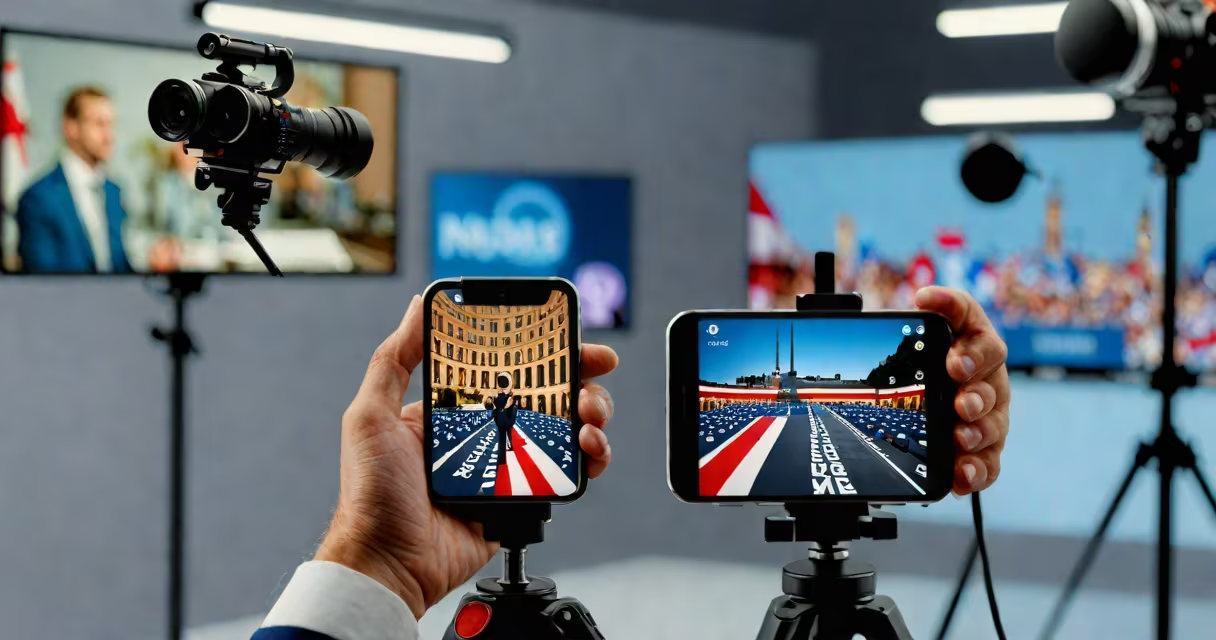
Mass communication is the process of transmitting information to a wide audience through electronic or print media, such as television, radio, newspapers, and online platforms. It enables simultaneous delivery of messages to thousands or millions of people across geographic and demographic boundaries.
The core function of mass communication is not just to inform but to influence attitudes, behaviors, and cultural norms. Unlike interpersonal communication, which occurs between individuals or small groups, mass communication operates at scale. It relies on formalized channels and professional production teams to create content designed for broad consumption.
According to the University of Washington's Department of Communication, mass communication emerged in the 19th century with the invention of the telegraph and the expansion of newspaper circulation. By the 20th century, technologies like radio and television solidified its role in shaping national and global narratives. Today, digital platforms have expanded the reach and speed of mass communication beyond traditional models.
Messages in mass communication follow a structured flow: sender → message → channel → receiver. The sender is typically an organization-such as a news network, government agency, or corporation-rather than an individual. The message is crafted for clarity, emotional resonance, and shareability. Channels include broadcast networks, websites, mobile apps, and social media algorithms.
Reception is often passive. Audiences do not control the timing or format of the message. A viewer watching a prime-time news segment or a social media user scrolling through a feed receives content on a predetermined schedule or algorithmic queue. This lack of immediate feedback distinguishes mass communication from interactive forms like texting or video calls.
A 2021 study by the Pew Research Center found that 55% of U.S. adults get their news from social media platforms, highlighting how digital mass communication now dominates information access. Algorithms prioritize engagement, often amplifying emotionally charged or controversial content, which alters how messages are perceived and retained.
Mass communication takes multiple forms, each with distinct characteristics and applications. The following table outlines major categories:
| Type | Channel | Example | Reach |
|---|---|---|---|
| Print Media | Newspapers, magazines | The New York Times' daily edition | Millions via subscription and distribution |
| Broadcast Media | TV, radio | NBC Nightly News | Over 6 million viewers per episode (Nielsen, 2023) |
| Digital Media | Websites, social platforms | TikTok viral campaign by a brand | Billions of potential views in hours |
| Public Relations | Press releases, corporate announcements | Apple's product launch event livestream | Global audience via YouTube and news outlets |
Each type uses different production standards and audience targeting. Print media requires editorial oversight and physical distribution. Broadcast media depends on airtime licenses and signal coverage. Digital media leverages data analytics to personalize content delivery. Public relations campaigns blend storytelling with strategic messaging to shape perception.
Many assume mass communication is purely informational. In reality, it is inherently persuasive. Messages are shaped not only by facts but by framing, tone, and visual design. A single news story can alter public opinion based on how it is presented, even if the underlying facts remain unchanged.
Another misconception is that mass communication is neutral. Theories like agenda-setting (McCombs & Shaw, 1972) show that media don't just report events-they decide which ones are important. For example, during the 2020 U.S. presidential election, media coverage focused heavily on voter turnout and swing states, influencing how citizens perceived the race's outcome.
People often confuse mass communication with social media interaction. While both involve large audiences, social media allows two-way communication. A tweet from a celebrity may reach millions, but followers can reply, reshare, and comment-creating feedback loops absent in traditional mass media. The meaning of mass communication remains rooted in one-way, large-scale transmission, not dialogue.
During the summer of 2020, mass communication played a central role in spreading awareness of police brutality and racial injustice. Protest footage captured on smartphones was shared globally via Twitter, Instagram, and YouTube. Major news networks aired segments on the movement, often using dramatic visuals and emotional commentary to convey urgency.
One notable example: a video of George Floyd's death, recorded by a bystander, went viral within hours. Within 48 hours, it had been viewed over 100 million times across platforms. News outlets like CNN and BBC covered the incident repeatedly, turning a local event into a global phenomenon. This illustrates how mass communication can amplify marginalized voices and mobilize collective action.
However, the same power can distort context. A 2021 report by the Reuters Institute found that 38% of viral protest videos were edited or taken out of context. Misinformation spread rapidly, sometimes contradicting eyewitness accounts. This shows that while mass communication increases visibility, it also demands critical literacy from audiences.
I once attended a town hall meeting in 2019 where residents discussed a proposed city ordinance. During the session, a local news crew filmed the event. Two days later, the footage aired on the evening news with a headline emphasizing "community unrest." The clip was edited to focus on heated exchanges, omitting calm moments and consensus points. The resulting narrative shifted public perception, leading to increased opposition-even though most attendees supported the measure.
This experience confirmed that mass communication doesn't reflect reality-it interprets it. The selection of scenes, music, and narration all shape how audiences understand events. Even accurate reporting can mislead through omission or framing.
The meaning of mass communication extends beyond the act of sending messages. It encompasses the structure of media systems, the psychology of audience reception, and the societal impact of widespread messaging. It is not simply broadcasting-it is shaping perception at scale.