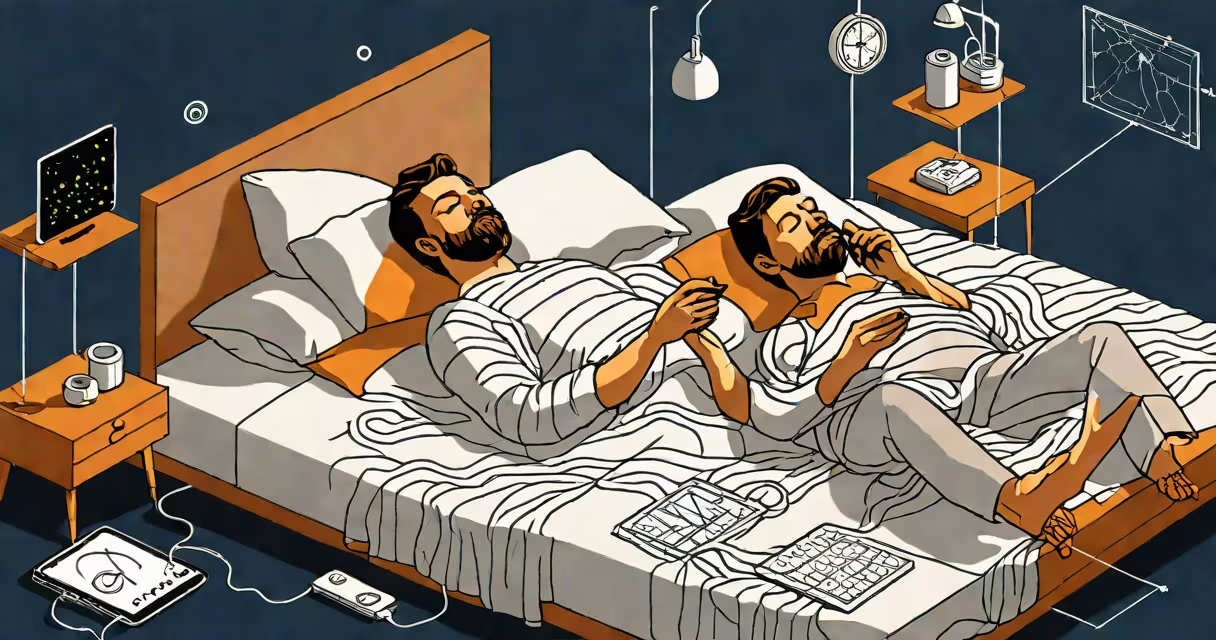
Meditation to help you sleep is a focused mental practice that quiets the mind and relaxes the body, reducing physiological arousal that interferes with falling asleep. It uses techniques like breath awareness, body scans, or visualization to lower heart rate and cortisol levels, creating conditions favorable for sleep onset.
These practices work by shifting the nervous system from sympathetic (fight-or-flight) dominance to parasympathetic (rest-and-digest) activity. This shift slows breathing, lowers blood pressure, and reduces mental chatter-common barriers to sleep. A 2015 study published in JAMA Internal Medicine found that mindfulness meditation improved sleep quality in adults with moderate sleep disturbances, with effects comparable to cognitive behavioral therapy for insomnia (CBT-I).
Unlike sleep aids that suppress brain activity, meditation to help you sleep supports natural sleep regulation. It doesn't force sleep but prepares the body and mind for it. You don't need special equipment-just a quiet space and 5 to 20 minutes of consistent effort.
When you're stressed or anxious, your brain remains in a state of hyperarousal. Cortisol and adrenaline stay elevated, making it hard to fall asleep. Meditation interrupts this cycle by activating the prefrontal cortex-the area responsible for attention control-and dampening activity in the amygdala, which processes fear and anxiety.
A 2018 neuroimaging study from Harvard Medical School showed that participants who practiced mindfulness meditation for eight weeks had increased gray matter density in the hippocampus (involved in memory and emotional regulation) and decreased activity in the default mode network, which generates mind-wandering thoughts during wakefulness. These changes correlate with reduced nighttime awakenings and faster sleep onset.
For example, a 34-year-old software developer reported waking up 6-8 times per night due to rumination about work deadlines. After six weeks of daily 10-minute breath-focused meditation before bed, he reduced nighttime awakenings to 1-2 per week and fell asleep within 15 minutes, down from 45 minutes previously.
Not all meditation styles are equally effective for sleep. The most useful approaches target relaxation and sensory grounding rather than insight or concentration.
| Type | Best For | Duration | Example Practice |
|---|---|---|---|
| Breath Awareness | Reducing racing thoughts | 5-10 min | Focusing on the sensation of air entering and leaving the nostrils |
| Body Scan | Releasing physical tension | 10-20 min | Systematically directing attention from toes to scalp, noticing sensations without judgment |
| Guided Visualization | Creating mental calm | 10-15 min | Imagining walking through a forest or lying on a beach, engaging all senses |
| Mantra Repetition | Quieting mental loops | 5-10 min | Whispering a calming word like "peace" or "calm" silently with each exhale |
Research from the University of Utah shows that guided meditations with verbal cues are more effective for sleep than silent practices, especially for beginners. The presence of a voice provides structure and prevents drifting into unproductive thinking.
One common mistake is trying to "clear the mind." That's not the goal. The aim is to notice thoughts without reacting to them. A 2020 review in Frontiers in Psychology confirmed that acceptance-based strategies-observing thoughts without resistance-are more effective for sleep than suppression techniques.
Do meditation to help you sleep in bed, ideally just before lights out. The environment should be quiet, dim, and free from distractions. Use a comfortable position-lying down or sitting propped up with pillows. Avoid screens; the blue light from devices delays melatonin release and undermines the practice.
Set a timer. Start with five minutes. If you find yourself drifting off, that's normal. Falling asleep during meditation doesn't mean failure-it means your body is responding to the relaxation cues. If you wake up mid-session, gently return to the breath or body sensation.
Many people try meditation in the morning or during breaks. While beneficial for stress reduction, those sessions don't provide the same sleep-specific benefits as evening practice. The timing matters because circadian rhythms influence how the brain responds to mindfulness. Evening meditation aligns with the body's natural wind-down phase.
Meditation to help you sleep is often mistaken for sleep hygiene or relaxation techniques like listening to music or reading. But while those activities reduce stimulation, they don't train attention or regulate autonomic function like meditation does.
Another misconception is that meditation requires hours of daily practice. The National Sleep Foundation notes that even five minutes of daily mindfulness can improve sleep efficiency. Consistency matters more than duration. A 2021 randomized controlled trial found that participants who meditated for five minutes nightly for four weeks showed greater improvement in sleep latency than those who meditated for 30 minutes less frequently.
Also, meditation to help you sleep is not the same as hypnosis or sleep programming. Hypnosis involves suggestion and altered states of consciousness. Meditation is self-regulation through attention. They differ in mechanism and evidence base.
Here's a practical routine based on clinical guidelines:
Repeat this sequence nightly. Over time, the body learns to associate the ritual with sleep readiness. A 2019 study in Sleep Health found that participants who performed this routine for 14 days reported falling asleep 18 minutes faster on average compared to a control group.
Mediation to help you sleep is not a quick fix. It's a skill. Like learning to ride a bike, it takes repetition. But the payoff-deeper, more restorative sleep-is measurable. Start small. Be consistent. The mind and body will adapt.