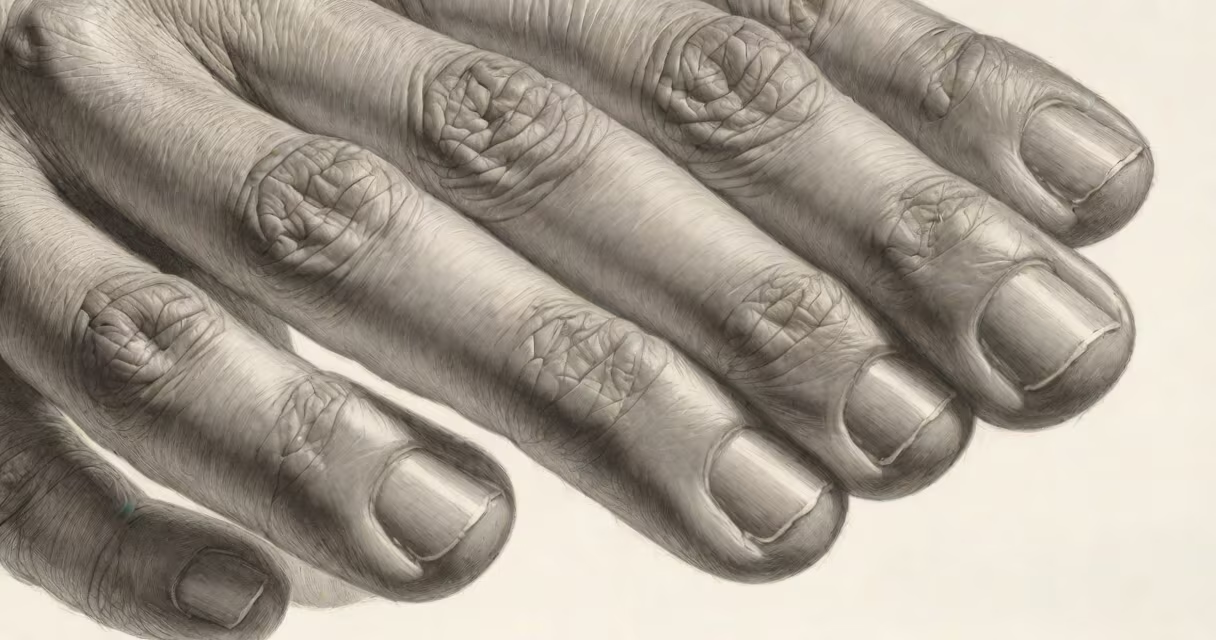
Morning trigger finger is a condition where the finger locks or clicks when bending or straightening, most noticeably upon waking. It results from swelling or thickening of the flexor tendon sheath in the hand, restricting smooth movement.
This issue typically appears in the dominant hand and affects the ring or middle finger most often. Symptoms worsen after periods of inactivity, such as sleep, because the tendon sheath stiffens overnight. The finger may snap into position or remain stuck until manually straightened.
Trigger finger occurs when the A1 pulley-a band of tissue near the base of the finger-narrows, trapping the flexor tendon. This narrowing can result from repetitive gripping, aging, or underlying conditions like diabetes or rheumatoid arthritis. The condition is not rare: the American Academy of Orthopaedic Surgeons reports it affects about 2% of adults, with higher rates in people over 50.
The hand contains tendons that connect muscles in the forearm to the bones in the fingers. These tendons glide through tunnels called pulleys. The A1 pulley, located at the base of the finger, holds the tendon close to the bone for efficient motion.
When the tendon becomes inflamed or thickened-often due to overuse or metabolic factors-it can't slide smoothly through the pulley. As the finger bends, the swollen tendon gets caught behind the pulley. When released, it snaps forward suddenly, creating the "trigger" effect.
During sleep, reduced blood flow and lack of movement cause fluid buildup around the tendon, increasing stiffness. Upon waking, the first few movements are hardest. After repeated motion, the tendon may loosen temporarily, leading to improved function later in the day.
There are three clinical stages of trigger finger:
| Stage | Description | Common Symptoms |
|---|---|---|
| 1 | Initial stiffness and catching | Finger catches at the base; mild pain |
| 2 | Locking occurs | Finger locks in bent position; requires manual straightening |
| 3 | Fixed contracture | Finger remains permanently bent; limited mobility |
While the condition can affect anyone, certain groups are more prone. People with diabetes have a 30% higher risk, according to research published in *The Journal of Hand Surgery*. Repetitive hand use-such as typing, knitting, or using tools-increases strain on the tendons. Women are also twice as likely to develop it compared to men.
A common misconception is that morning trigger finger is caused by poor posture or wrist strain. While ergonomic habits matter, the root cause lies in the tendon sheath itself. It's not a nerve problem, nor is it related to carpal tunnel syndrome. The two conditions share symptoms like hand numbness but differ in location and mechanism.
Consider a 58-year-old office worker who develops morning trigger finger in their right ring finger. They report difficulty unclenching their hand after waking. The finger locks at the knuckle when they try to make a fist. By midday, after several attempts to bend and straighten, the finger moves freely.
An exam reveals a tender nodule at the base of the finger. An ultrasound confirms thickening of the flexor tendon and narrowing of the A1 pulley. The patient has type 2 diabetes and performs repetitive keyboard tasks daily. These factors align with known risk profiles.
After a week of rest and avoiding gripping, symptoms improve slightly. But the locking persists. This progression illustrates why early intervention matters-delaying care increases the chance of permanent locking.
Many confuse morning trigger finger with Dupuytren's contracture. Both cause finger curling, but Dupuytren's involves fibrous cords under the skin that pull the fingers inward, usually affecting the ring and little fingers. Unlike trigger finger, Dupuytren's doesn't involve snapping or catching. It progresses slowly and rarely improves on its own.
Another frequent mix-up is mistaking trigger finger for arthritis. Arthritis causes joint pain and swelling, especially in the knuckles. Trigger finger pain is localized to the palm and base of the finger. Imaging shows tendon thickening, not joint erosion.
One non-obvious fact: trigger finger can occur in children. Pediatric trigger finger is rare but documented, often resolving spontaneously. In one study, 60% of cases in children under 10 resolved within six months without treatment, unlike adult cases which rarely resolve on their own.
If the finger locks repeatedly or cannot be straightened, medical evaluation is needed. Delaying treatment increases the risk of permanent stiffness. Early diagnosis allows for conservative options like splinting or corticosteroid injections.
I've seen patients wait weeks to see a doctor, believing it would go away. One man, a carpenter, ignored his morning trigger finger for five months. By the time he sought care, the ring finger was permanently bent. He required surgery to release the pulley.
Reducing repetitive hand use helps prevent flare-ups. Take breaks every 30 minutes during typing or tool use. Stretch fingers gently in the morning-flex and extend each finger slowly for 10 seconds.
People with diabetes should monitor blood sugar closely. High glucose levels increase collagen cross-linking in tendons, raising the risk of inflammation. Keeping HbA1c below 7% reduces complications.
Simple home remedies include warm compresses applied for 10 minutes before moving the hand. This increases blood flow and reduces stiffness. Avoid cold hands in the morning-keep them covered while getting dressed.
For those learning Spanish, saying "in the morning" is "por la mañana." Knowing this phrase can help when asking a healthcare provider about symptoms. If you're unsure whether your finger lock is normal, ask: "¿Tengo el dedo gatillo por la mañana?"
Early recognition of morning trigger finger prevents long-term disability. If you notice catching or locking, especially in the dominant hand, consult a hand specialist promptly. Ignoring it risks irreversible stiffness.