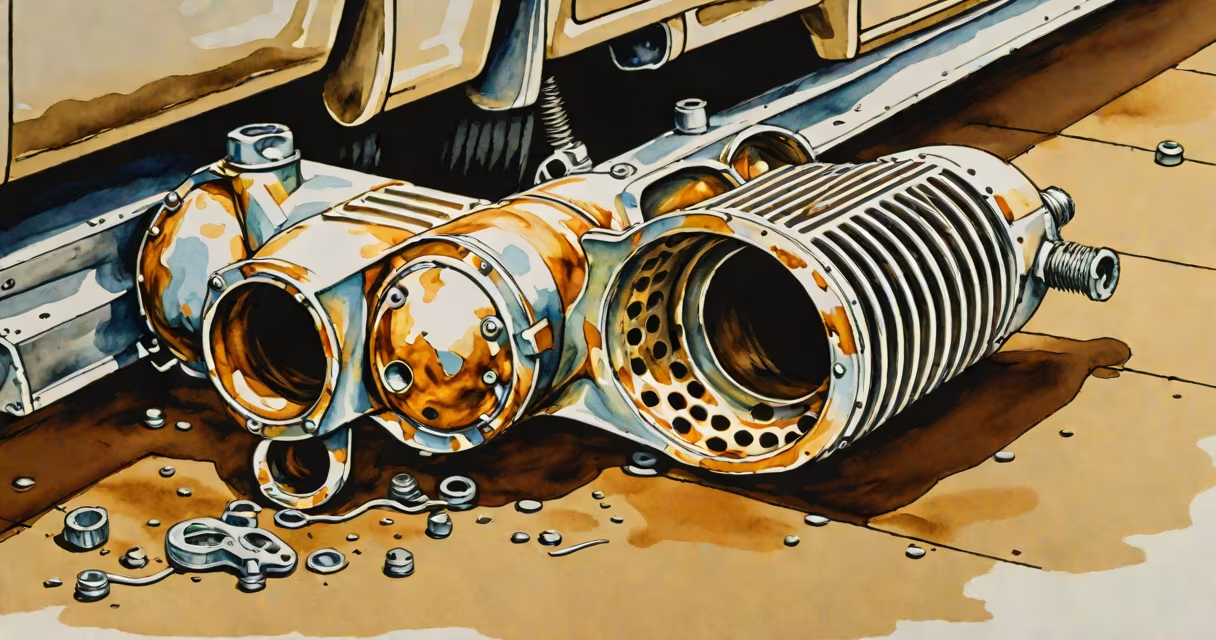
Catalytic converters are stolen because they contain valuable platinum, palladium, and rhodium-precious metals that fetch high prices on the scrap market. Thieves remove them quickly using basic tools, often targeting vehicles parked in driveways or public lots.
Thefts surged between 2019 and 2023, with the National Insurance Crime Bureau reporting a 325% increase in reported incidents. These devices are small enough to carry and heavy enough to make a profit-typically $200 to $600 per unit depending on the vehicle model and metal content.
Most thefts occur in under ten minutes. A thief uses a reciprocating saw or wrench to cut the converter from the exhaust pipe. The process requires minimal skill and leaves little evidence. Police departments across California, Texas, and New York report spikes during winter months when metal prices rise and vehicle access is easier due to lower traffic.
Catalytic converters reduce harmful emissions from internal combustion engines. They use a ceramic honeycomb structure coated with platinum, palladium, and rhodium to convert pollutants like carbon monoxide and nitrogen oxides into less toxic substances such as carbon dioxide and nitrogen.
These metals are rare and essential in industrial processes. Palladium, for example, is used in electronics and fuel cells. Its price fluctuated between $2,000 and $3,000 per ounce in 2022, according to the World Platinum Investment Council. Rhodium reached $15,000 per ounce in early 2023-higher than gold.
A single catalytic converter from a luxury SUV may contain up to 2 grams of palladium. That's worth about $40 at peak prices. For a thief, removing a converter takes five minutes and yields a return of $250 to $500 in scrap metal sales.
Thieves prioritize models with high ground clearance and accessible converters. SUVs and trucks dominate the list. The Toyota Prius, despite being hybrid, still uses a catalytic converter-though its design differs from gasoline-only models.
According to the National Highway Traffic Safety Administration (NHTSA), the Honda CR-V, Ford F-150, and Toyota RAV4 were among the top 10 most stolen vehicles for catalytic converter components in 2022. The Prius ranks high due to its large converter size and high resale value in scrap markets.
| Vehicle Model | Converter Value (Est.) | Common Theft Location |
|---|---|---|
| Toyota Prius (2010-2015) | $350-$500 | Garage, driveway, parking lot |
| Honda CR-V (2017-2021) | $280-$420 | Public parking, apartment complex |
| Ford F-150 (2015-2020) | $300-$450 | Residential streets, shopping centers |
| Subaru Outback (2015-2020) | $220-$380 | High-density neighborhoods |
Hybrids are not immune. The 2016-2020 Prius uses a larger converter than many gas-powered cars, increasing its scrap value. Some thieves mistakenly believe hybrids don't have converters-this is false. All petrol-powered and hybrid vehicles with internal combustion engines require catalytic converters to meet EPA emissions standards.
Many people assume catalytic converter theft only affects older or low-value cars. This is incorrect. High-end models like the BMW X5 and Mercedes-Benz GLE are targeted due to higher metal content and resale value. One 2021 BMW X5 converter sold for $650 on a scrap metal site in Michigan.
Another myth is that installing a visible security device deters theft. While some anti-theft systems work, criminals often avoid homes with cameras or alarms. Instead, they target unmonitored areas-driveways, side streets, and multi-unit housing complexes.
I once observed a theft in my neighborhood where a thief used a reciprocating saw to cut through a Prius's exhaust system. The noise was barely audible over traffic. The owner discovered the missing converter the next morning. The repair cost $1,200, including labor and parts.
Prevention begins with location awareness. Park in well-lit, monitored areas. Avoid leaving your car in isolated spots overnight. Install a physical deterrent like a steel cage around the exhaust system. These cages raise the time needed to steal the converter from five minutes to over 30.
Marking your converter with an etched VIN or ID number increases recovery chances. The National Insurance Crime Bureau tracks stolen converters via serial numbers. If recovered, law enforcement can trace ownership and return the part.
Insurance policies vary. Some complete plans cover catalytic converter theft. Others exclude it unless specified. Check your policy details or ask your provider about adding coverage.
Understanding why thieves steal catalytic converters reveals a growing problem tied to global metal demand and weak vehicle security. The issue isn't limited to one region-it spans urban and suburban areas nationwide. Awareness and prevention are critical steps toward reducing losses.
Knowing the facts about why do thieves steal catalytic converters helps drivers take action. The combination of high metal value, easy access, and low detection risk makes these devices prime targets. Protecting your vehicle starts with recognizing the threat-and acting before it happens.