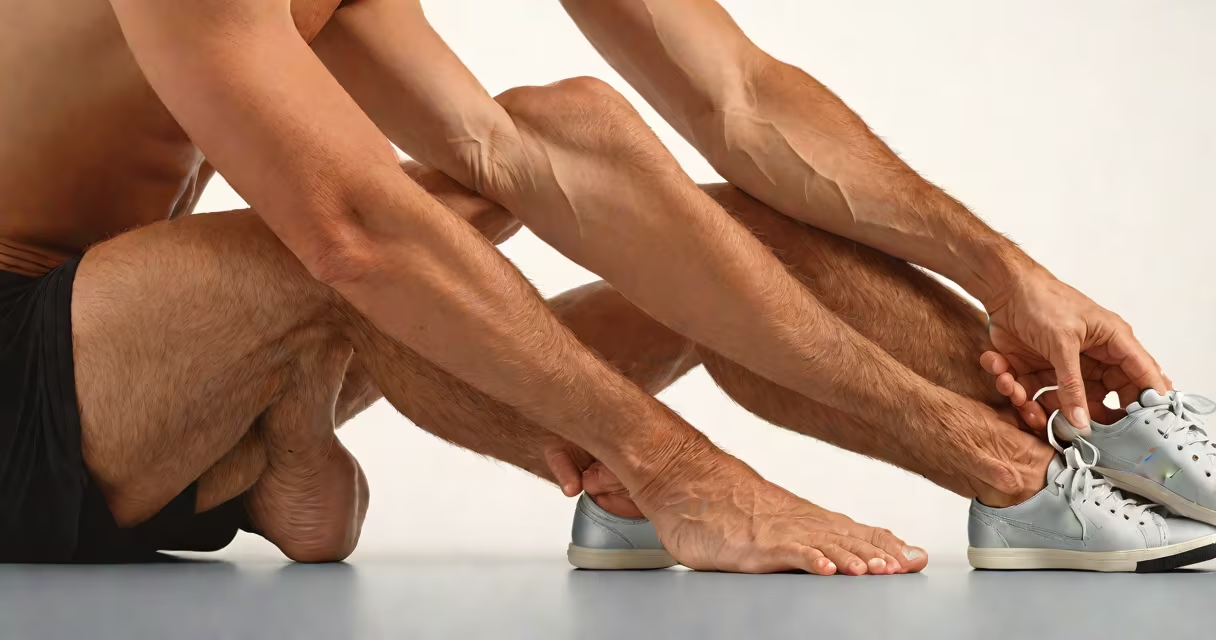
Muscle cramps in legs when stretching are sudden, painful contractions of leg muscles that occur during or immediately after stretching movements, typically affecting the calves, hamstrings, or quadriceps. They result from neuromuscular misfiring, often worsened by dehydration, low electrolytes, or muscle fatigue.
These cramps differ from normal muscle soreness. While soreness develops hours after activity, cramps strike instantly during motion. A contraction may last 5 to 10 seconds but leave lingering tightness for minutes. They're common during yoga, running warm-ups, or even sitting with legs extended.
According to the American Academy of Neurology, about 60% of adults experience leg cramps at least occasionally, with nighttime episodes being most frequent. Stretching-related cramps are often linked to overstretching without proper preparation, especially in cold muscles or dehydrated states.
Cramps arise when motor neurons in the spinal cord fire abnormally, causing sustained muscle fiber activation. This happens despite the brain signaling relaxation. The exact trigger varies, but research points to disrupted nerve signaling during muscle elongation.
When you stretch, muscle spindles-sensors in muscle tissue-detect changes in length. Normally, they send feedback to calm the muscle. But if the system is overloaded or fatigued, signals can misfire, leading to uncontrolled contraction. This is known as a "spike" in alpha motor neuron activity.
A 2021 study in Neurology found that people who experienced cramps during stretching had higher baseline muscle spindle sensitivity. This suggests some individuals are biologically predisposed to cramping under strain.
Not all stretching-related cramps stem from the same cause. The most frequent triggers include:
Some cramps are exercise-specific. For example, runners often report calf cramps during toe-touch stretches before a run. Others happen during static holds-like the seated forward bend in yoga-where the hamstring is stretched under tension.
| Type | Trigger | Duration | Typical Location |
|---|---|---|---|
| Exercise-induced | Overuse or sudden load | 5-15 sec | Calf, quads |
| Nocturnal | Resting muscle tension | 10-30 sec | Calf, hamstring |
| Stretch-specific | Static or ballistic movement | 3-10 sec | Hamstring, soleus |
One non-obvious factor: wearing shoes with poor arch support during stretching can alter foot mechanics, increasing strain on calf muscles. A 2019 study in Foot & Ankle International showed that flat-footed individuals were 3.2 times more likely to report cramps during standing stretches.
People often mistake muscle cramps for strains or tendonitis. A strain involves actual tearing of muscle fibers and causes swelling and bruising. A cramp leaves no tissue damage and resolves quickly. If pain persists beyond 10 minutes or worsens with movement, it's likely not a cramp.
Another confusion: cramps in legs during stretching are not the same as restless leg syndrome (RLS). RLS causes an urge to move legs, usually at rest, and is linked to dopamine regulation. Cramps are sharp, localized, and occur during motion.
I once observed a client in a physical therapy session who reported cramping during a passive hamstring stretch. After checking hydration and electrolyte levels, we discovered her serum potassium was below 3.4 mmol/L-below the normal range. Replenishing fluids and adding a potassium-rich snack reduced cramps within two days.
Prevention starts with hydration. The National Institutes of Health recommends 3.7 liters of total water daily for men and 2.7 liters for women, including fluids from food. Dehydration reduces blood flow to muscles, increasing cramp risk.
Include electrolyte-rich foods: bananas (potassium), spinach (magnesium), and yogurt (calcium). A 2020 review in Journal of the International Society of Sports Nutrition found that athletes who consumed 400 mg of magnesium daily had 30% fewer cramps during training.
Always warm up before stretching. Spend 5 minutes doing light jogging or changing movements like leg swings. This increases blood flow and prepares muscles for elongation.
If a cramp occurs, stop the stretch. Gently contract the opposite muscle group-e.g., point toes upward if the calf is cramped-to reverse the contraction. Hold for 10 seconds, release, and repeat. This technique, called reciprocal inhibition, helps reset neural signals.
muscle cramps in legs when stretching are brief but disruptive events caused by neuromuscular misfiring during muscle elongation. They are preventable through hydration, balanced nutrition, and gradual stretching. Recognizing the signs early avoids unnecessary discomfort and guides effective action.