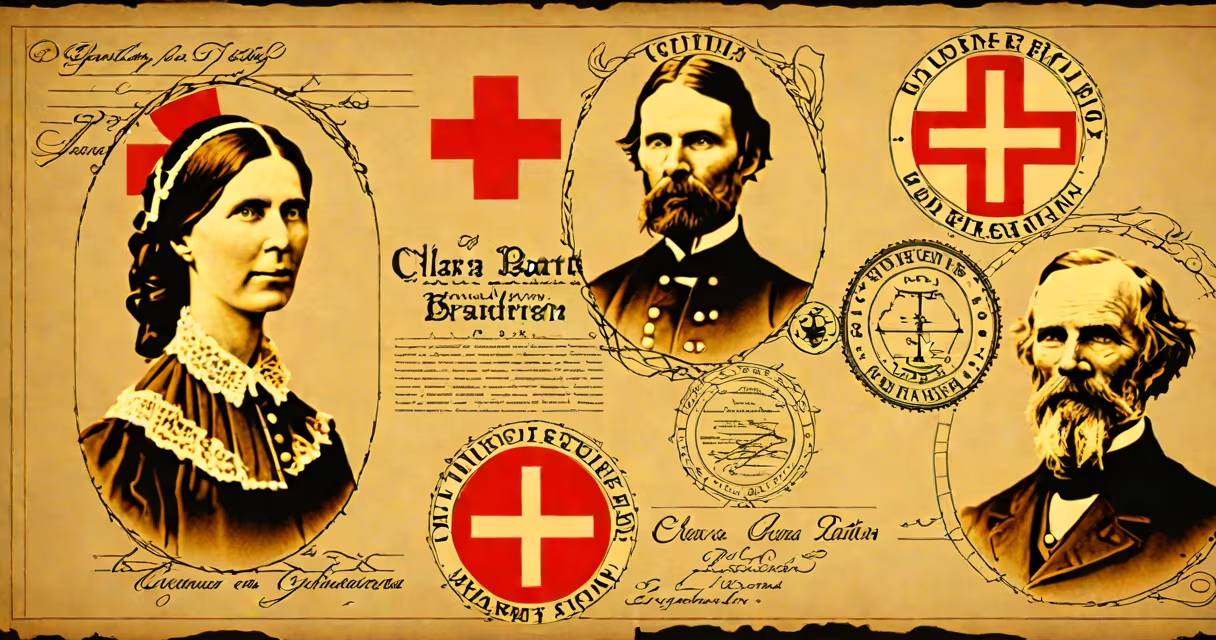
The national day of October 9 commemorates two significant events: the founding of the American Red Cross by Clara Barton on October 9, 1881, and the birth of poet William Cullen Bryant on October 9, 1794. This date marks a convergence of humanitarian legacy and literary influence in American history.
Clara Barton established the American Red Cross after witnessing the organization's work during the Franco-Prussian War. She returned to the United States determined to create a similar agency to provide emergency aid during disasters. On October 9, 1881, she officially founded the organization in Washington, D.C., securing its charter through Congress in 1882. The group began operations during the Great Blizzard of 1888, delivering supplies to affected communities in New York and New Jersey.
William Cullen Bryant, born in Cummington, Massachusetts, became a leading figure in early American literature. His poem "Thanatopsis," published in 1817, explored death with philosophical depth and helped define American poetic voice. He served as editor of the New York Evening Post for nearly five decades, using his platform to advocate for social reform, including abolitionism and civil rights. His influence extended into public policy through editorial advocacy.
While not a federal holiday, the national day of October 9 is recognized by civic groups, educational institutions, and volunteer organizations. Schools often hold lessons on humanitarian service, and Red Cross chapters host blood drives and disaster preparedness workshops on this date. Some communities organize poetry readings focused on Bryant's work, especially in regions with strong literary traditions.
| Event | Date | Significance | Source |
|---|---|---|---|
| Founding of American Red Cross | October 9, 1881 | Establishment of a national disaster relief organization | American Red Cross official history |
| Birth of William Cullen Bryant | October 9, 1794 | First major American poet to achieve international acclaim | Encyclopedia Britannica |
Despite its dual significance, the national day of October 9 is rarely referenced in mainstream media. Unlike national holidays such as Independence Day or Memorial Day, it lacks widespread recognition. However, it holds value for educators, historians, and volunteers who see it as a chance to reflect on service and civic responsibility.
A common misconception is that this date aligns with a major historical event like a war or political milestone. In reality, it reflects quiet but enduring contributions: one person's vision for aid in crisis, and another's words that shaped national identity. These are not grand moments of spectacle, but foundational acts of care and expression.
In 2019, I attended a small community gathering in Saratoga Springs, New York, where local students read excerpts from Bryant's "Thanatopsis" while volunteers distributed Red Cross pamphlets on emergency response. The event was organized by a high school teacher who used the date to teach students about civic engagement. That experience underscored how personal and localized the observance remains.
Another misunderstanding is assuming that national days like October 9 have official government status. They do not. The U.S. Department of State does not recognize them as formal holidays. Instead, they exist through grassroots adoption, media coverage, and institutional memory. The absence of legal recognition doesn't diminish their impact-it redirects it toward education and voluntary action.
For those interested in observing the day, consider volunteering with a local Red Cross chapter, hosting a reading of Bryant's poetry, or sharing stories of individuals who've made lasting contributions through quiet dedication. These actions honor the spirit of the date without requiring large-scale events.
While the national day of October 9 may not appear on most calendars, its roots in compassion and creativity remain relevant. It shows that change often begins not with fanfare, but with a single decision-Clara Barton's resolve to act, or Bryant's choice to write honestly about life and loss.
Understanding the national day of October 9 offers insight into how everyday people shape history. It's not a celebration of power or wealth, but of purpose. Whether through aiding others in crisis or expressing truth through verse, the legacy of October 9 lives on in quiet acts of courage and clarity.