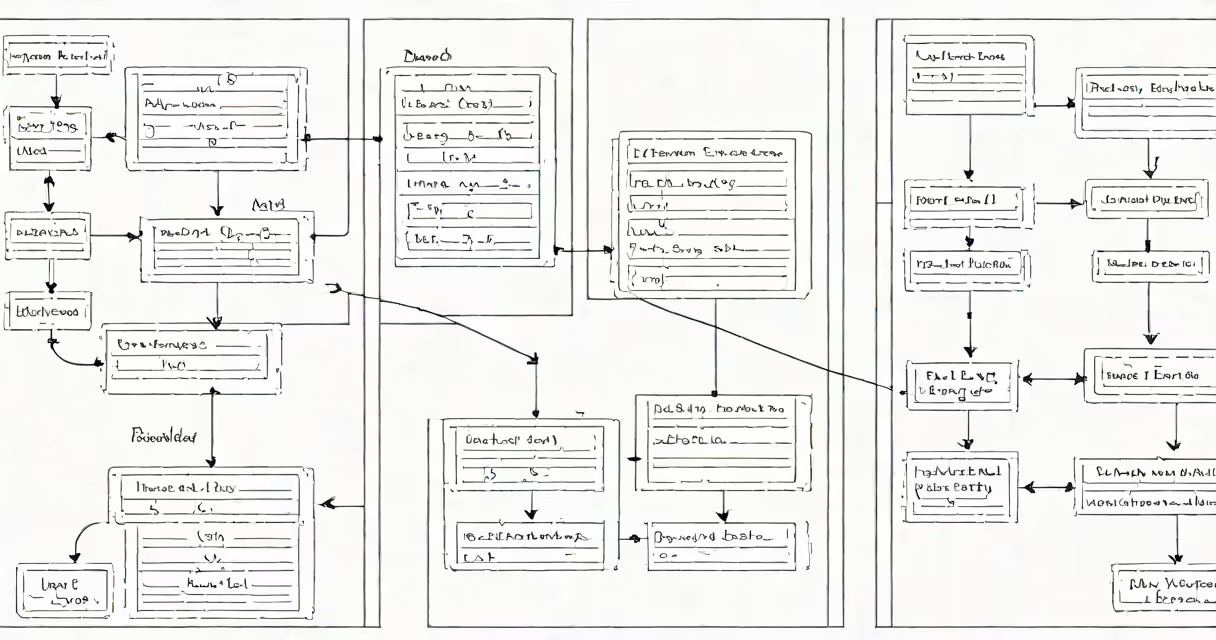
A NoSQL database stores data in flexible, non-tabular formats like documents, key-value pairs, or graphs, while a relational database organizes data into rigid tables with predefined schemas. NoSQL excels at handling unstructured or rapidly changing data at scale; relational databases prioritize consistency and complex queries using SQL.
NoSQL databases emerged to address limitations of relational systems under high-volume, high-velocity workloads. They sacrifice strict schema enforcement and ACID guarantees for horizontal scalability and flexibility. Relational databases enforce data integrity through foreign keys, transactions, and normalization-features critical for financial systems and inventory tracking.
The core difference lies in data modeling. A relational database treats data as rows and columns in tables. Relationships between entities are defined via joins. A NoSQL database stores data as nested objects or collections, often without requiring a fixed schema. This allows developers to store JSON-like documents directly, reducing the need for complex joins.
Relational databases use SQL (Structured Query Language) to define and manipulate data. Queries specify operations on tables, such as joining customer records with order histories. These systems ensure atomicity, consistency, isolation, and durability (ACID) in transactions. For example, transferring $100 between bank accounts requires both debits and credits to succeed or fail together.
NoSQL databases use varied access patterns depending on their model. Document databases like MongoDB store data as JSON-like documents. Key-value stores like Redis use simple key-to-value mappings. Column-family stores like Apache Cassandra organize data by column families, ideal for time-series data. Graph databases like Neo4j represent relationships as nodes and edges, making social network analysis efficient.
When a system needs to process millions of user events per second-such as tracking clicks on a live streaming platform-relational databases struggle with write scaling. NoSQL systems distribute load across multiple servers, allowing linear scaling. For instance, Netflix uses Cassandra to manage user viewing history across global data centers.
Each database type serves distinct application needs. The table below outlines major categories and typical implementations.
| Type | Model | Use Case Example | Real-World System |
|---|---|---|---|
| Document | JSON-like documents | User profiles with changing fields | MongoDB in e-commerce product catalogs |
| Key-Value | Simple key-to-value mapping | Caching session data | Redis in real-time chat apps |
| Column-Family | Rows grouped by column families | Time-series analytics | Cassandra in IoT sensor data pipelines |
| Graph | Nodes and edges | Social network recommendations | Neo4j in fraud detection systems |
Relational databases remain dominant in finance, healthcare, and enterprise resource planning. Their ability to maintain referential integrity prevents data corruption during updates. For example, a hospital's electronic health record system relies on relational constraints to ensure patient IDs match across lab results, prescriptions, and appointments.
One non-obvious distinction: NoSQL databases don't eliminate consistency-they trade off consistency for availability and partition tolerance (CAP theorem). This means a NoSQL system may return slightly stale data during network partitions. In contrast, relational databases prioritize consistency, sometimes at the cost of availability under heavy load.
Many assume NoSQL databases are inherently faster or better than relational ones. That's false. Performance depends on workload. A relational database handles complex aggregations-like monthly sales reports across regions-more efficiently than most NoSQL systems due to optimized query planners.
Another myth: NoSQL eliminates the need for schema design. While NoSQL allows schema-free documents, poor data modeling still leads to inefficiency. Storing unstructured logs as flat documents without indexing causes slow retrieval. Proper schema design in NoSQL involves choosing appropriate document nesting, embedding versus referencing, and defining indexes.
I once built a mobile app using MongoDB to store user preferences. Initially, we stored all settings as a single document. As users added more features, the document grew beyond 16MB-the limit for BSON in MongoDB. We had to refactor into smaller, related collections. This taught me that flexibility doesn't mean freedom from design discipline.
Choose a relational database when data relationships are complex, consistency is mandatory, and queries involve multiple joins. Financial ledgers, airline reservation systems, and HR databases rely on ACID compliance and structured queries. PostgreSQL and MySQL are widely used in these domains.
Select a NoSQL database when data volume grows quickly, structures change frequently, or low-latency reads are essential. Social media feeds, real-time analytics dashboards, and device telemetry systems benefit from NoSQL's horizontal scaling and flexible schema. AWS DynamoDB powers many serverless applications requiring consistent sub-100ms response times.
Hybrid approaches exist. Some companies use a relational database for transactional data and a NoSQL store for analytics. For example, a retail chain might use a relational DB for order processing and a document store like Amazon DocumentDB for analyzing customer behavior patterns.
Understanding nosql db vs relational db isn't about picking one over the other. It's about matching the tool to the problem. The right choice reduces latency, improves reliability, and lowers long-term maintenance costs.