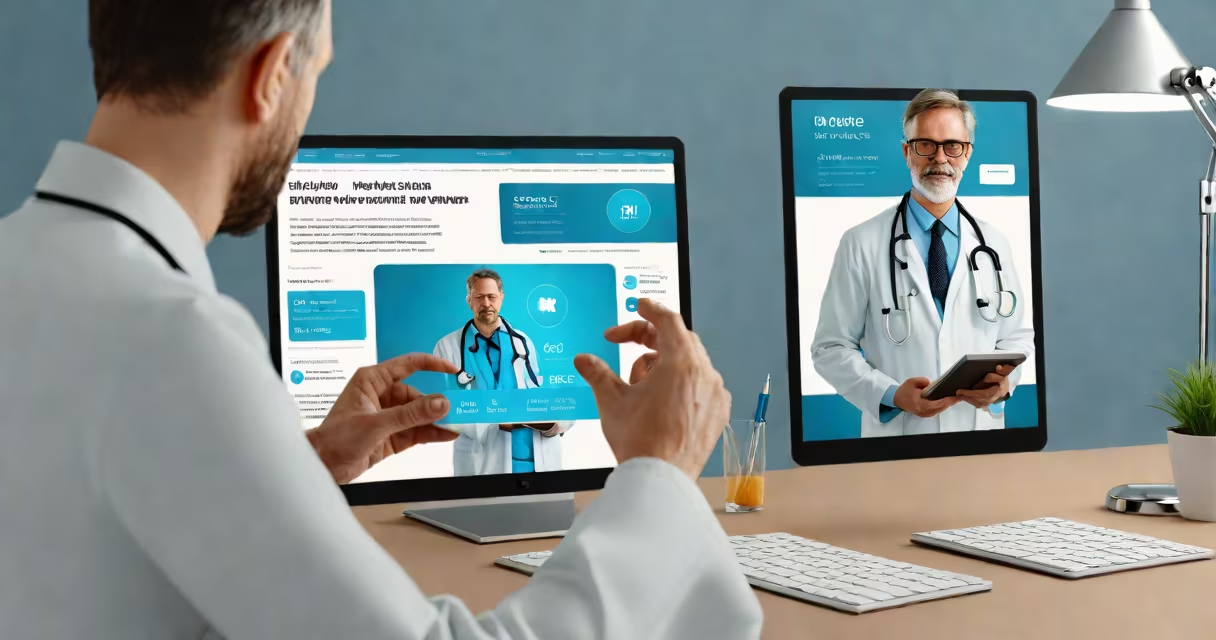
Online marketing for doctors uses digital channels-such as websites, search engines, social media, and email-to attract patients, build credibility, and support clinical practice growth. It's not just advertising; it's strategic visibility where relevant information reaches people actively seeking care.
Modern patients begin their healthcare process online. A 2023 Pew Research Center study found that 81% of adults in the U.S. have searched for health information online, and 62% have looked for a doctor or specialist using internet tools. This shift makes digital presence essential for medical professionals who want to remain competitive and accessible.
Doctors don't need to be web developers or social media experts to succeed. Instead, they apply focused strategies-like optimizing Google Business profiles, publishing informative blog content, and managing online reviews-that align with patient behavior and search intent. These actions improve discoverability and trust.
When a patient searches "best dermatologist near me" or "treatment for chronic back pain," Google surfaces results based on relevance, location, and authority. Online marketing for doctors ensures a practice appears in those results through structured optimization.
Key mechanics include:
A primary goal is not just attracting traffic but converting it into appointments. For example, a pediatrician in Austin who optimized their website with location-specific content saw a 47% increase in appointment requests within six months. That growth came from ranking higher for queries like "pediatrician in South Austin" and offering clear scheduling links.
Online marketing for doctors isn't a single tactic-it's a layered system combining technical setup, content creation, and ongoing engagement. The most effective practices blend several approaches.
| Type | Focus Area | Example |
|---|---|---|
| Search Engine Optimization (SEO) | Ranking in organic search results | Optimizing service pages with keywords like "knee replacement surgery in Denver" |
| Social Media Engagement | Patient education and community building | Sharing infographics on heart health via Instagram Stories |
| Pay-Per-Click (PPC) Advertising | Targeted ads that drive immediate traffic | Running Google Ads for "urgent care near me" during flu season |
| Email Marketing | Retention and outreach | Sending monthly wellness tips to existing patients |
Each component serves a different stage of the patient process. SEO brings in early-stage seekers. Social media nurtures trust. PPC captures urgent needs. Email keeps patients engaged long-term.
One often-overlooked element is consistency. A practice that posts weekly on Facebook but only updates their website once a year creates mixed signals. Patients notice inconsistency. It erodes credibility faster than no presence at all.
Many doctors assume online marketing for doctors is expensive or requires constant content creation. This is false. Success doesn't depend on volume-it depends on alignment with patient needs and platform norms.
For example, a family physician in rural Maine used only three tools: a verified Google Business profile, a simple website with service listings, and a monthly email newsletter. After nine months, their appointment bookings rose by 31%, with no paid ads or social media activity. The difference was accuracy and consistency-not scale.
Another misconception is that online marketing replaces personal care. In reality, it supports it. A study published in the Journal of Medical Internet Research (2022) showed that patients who found a doctor through a well-optimized website were 2.3 times more likely to report high satisfaction with their initial visit compared to those who found a provider through word-of-mouth alone.
Some also confuse online marketing with spam. A legitimate campaign avoids misleading claims ("miracle cure"), aggressive pop-ups, or unsolicited messages. Ethical online marketing for doctors follows FTC guidelines and HIPAA-compliant communication standards.
In 2022, Dr. Elena Torres, a board-certified internist in San Diego, launched her online presence after noticing declining new patient referrals. Her office had been listed on directories but lacked updated photos, consistent hours, or patient testimonials.
She began with three steps:
Within 11 months, her practice's Google rating improved from 3.8 to 4.9. Website traffic increased by 180%. New patient inquiries rose by 54%, with 68% coming from Google search results.
"I didn't expect this," she said during a follow-up interview. "Patients were finding me because I answered questions they already had. They weren't just searching for a doctor-they were looking for someone who understood their condition."
This outcome reflects a core principle: online marketing for doctors works best when it answers real questions, not just sells services.
Even small clinics can start with low-cost tools. Google Business Profile is free. WordPress offers affordable website builders. Mailchimp provides basic email automation at no cost. The barrier to entry is lower than ever.
Online marketing for doctors isn't about flashy campaigns. It's about being visible where patients look, providing trustworthy information, and making it easy to connect. The result is not just more appointments-but better care outcomes.
Success begins not with a budget, but with clarity: define your audience, understand their search habits, and deliver value through trusted digital channels. That's the foundation of effective online marketing for doctors.