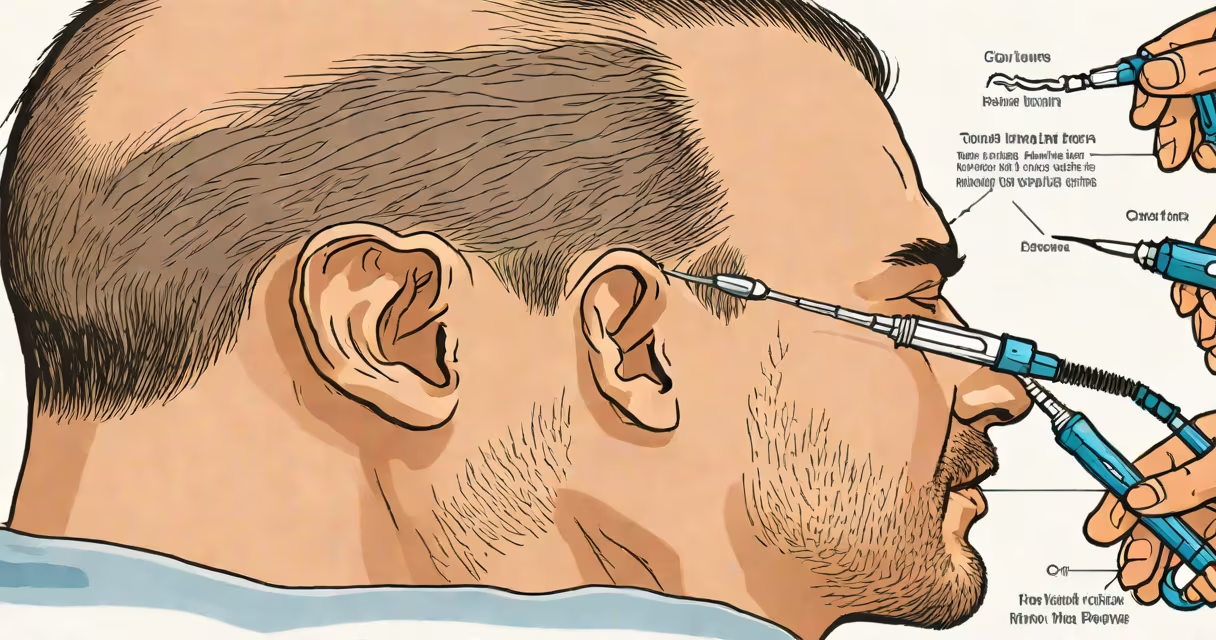
Options for hair transplant refer to the surgical methods used to move healthy hair follicles from a donor area-typically the back of the scalp-to areas affected by thinning or baldness. These procedures restore natural-looking hair growth through precise placement of individual follicular units.
Follicular Unit Extraction (FUE) is the most widely used technique today. It involves extracting individual follicles using a small punch tool, then implanting them into recipient sites. This method leaves minimal scarring and allows for shorter hairstyles. A typical session removes 1,500 to 3,000 grafts, depending on the patient's donor supply and desired density.
Follicular Unit Transplantation (FUT), also known as strip harvesting, involves removing a narrow strip of skin from the donor area. The strip is then dissected under a microscope into individual follicular units. While FUT yields more grafts per session and is often faster, it results in a linear scar at the donor site. Patients choosing FUT must avoid tight hairstyles that pull on the back of the head.
| Technique | Scarring | Grafts per Session | Recovery Time | Best For |
|---|---|---|---|---|
| FUE | Minimal, dot-like scars | 1,500-3,000 | 3-5 days | Short haircuts, low-density restoration |
| FUT | Linear scar, hidden by hair | 3,000-6,000+ | 7-10 days | Larger coverage, high-density goals |
| Robotic FUE | Same as manual FUE | 1,500-4,000 | 3-5 days | High precision, consistent results |
Robotic FUE uses AI-guided systems to automate the extraction process. The robot identifies follicles based on angle, depth, and diameter, reducing human error. Studies show robotic systems achieve 98% graft survival rates, compared to 92-95% in manual FUE, according to research published in the *Journal of Cosmetic Dermatology* (2022).
Another option is Direct Hair Implantation (DHI), a variation of FUE where follicles are implanted using a specialized pen-like tool called the Choi implanter. This allows for greater control over angle and depth during placement. DHI is ideal for creating natural hairlines and treating small areas, such as the temples or crown.
Donor hair quality matters. A person with fine, sparse donor hair may not have enough viable grafts for a dense result. The Norwood scale grades male pattern baldness from Stage I to VII. Patients at Stage IV or higher often require multiple sessions. A single session typically restores 20-30% of lost volume, with full results visible after 9-12 months.
A common misconception is that options for hair transplant work immediately. Grafted follicles enter a resting phase (shock loss) within 2-4 weeks. New growth begins around 3 months, peaks at 9-12 months, and stabilizes after 18 months. Results depend heavily on surgeon skill, patient health, and post-op care.
I once observed a patient with advanced thinning undergo a combined FUT and FUE session. The surgeon used FUT to harvest 4,500 grafts from the back of the scalp, then applied FUE for finer detail in the frontal region. After six months, the patient had a natural-looking hairline with 85% of grafts surviving. The recovery was smoother than expected due to proper hydration and anti-inflammatory medication.
Some clinics offer PRP (platelet-rich plasma) therapy alongside transplantation. PRP injections stimulate blood flow and promote healing. Clinical trials show patients receiving PRP pre- and post-op report 15% higher graft survival. However, PRP is not a substitute for surgical restoration.
Options for hair transplant are not one-size-fits-all. Success hinges on accurate diagnosis, realistic expectations, and personalized planning. Understanding the differences between techniques ensures better decisions and lasting results.