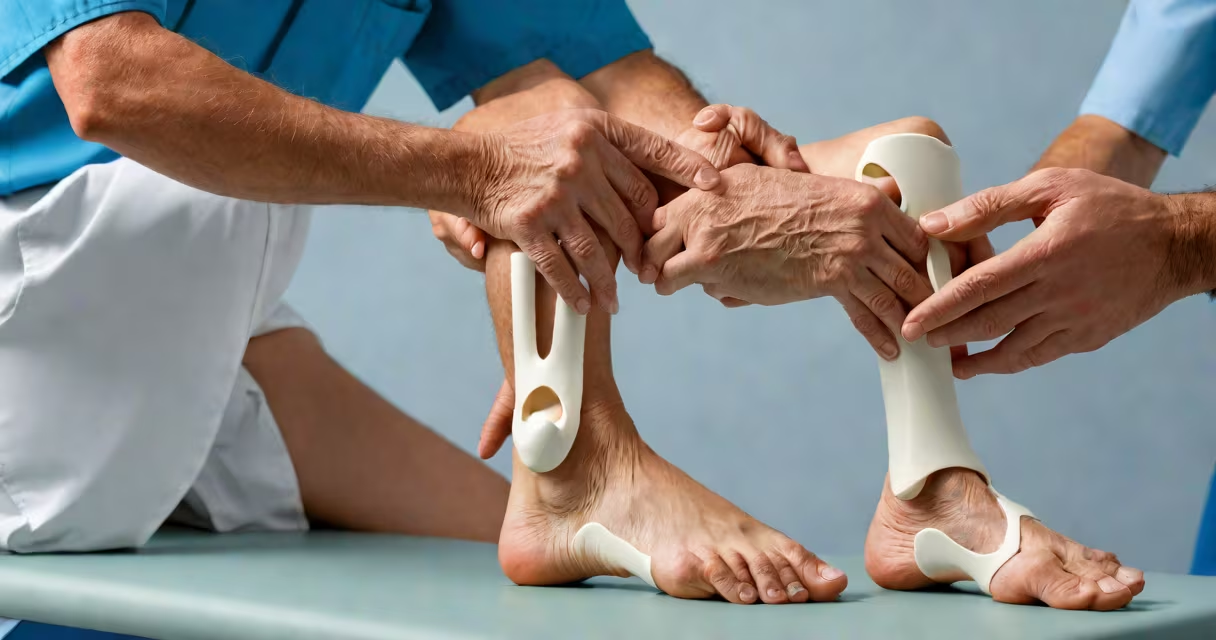
Orthopedic meaning medical refers to the branch of medicine focused on diagnosing, treating, and preventing conditions affecting bones, joints, ligaments, tendons, and muscles. It encompasses surgical and non-surgical interventions for injuries and degenerative diseases of the musculoskeletal system.
Orthopedic care begins with identifying structural abnormalities through imaging, physical exams, and patient history. Common diagnoses include osteoarthritis, spinal stenosis, rotator cuff tears, and stress fractures. Treatment plans may involve medications, physical therapy, bracing, or surgery depending on severity and patient goals.
The field traces its roots to 18th-century France, where Nicholas Andry coined the term "orthopédie" from Greek roots meaning "straight child." Modern orthopedics integrates biomechanics, materials science, and regenerative techniques. According to the American Academy of Orthopaedic Surgeons (AAOS), over 30 million Americans seek orthopedic care annually for pain, mobility loss, or trauma-related injuries.
When a patient presents with persistent joint pain, limited range of motion, or injury-related swelling, an orthopedic specialist conducts a series of assessments. These include palpation, goniometry (measuring joint angles), and diagnostic imaging such as X-rays, MRI scans, or CT scans.
A 62-year-old woman with chronic knee pain underwent an MRI showing moderate osteoarthritis. Her orthopedist recommended weight management, supervised physical therapy, and intra-articular corticosteroid injections. After six weeks, her pain reduced from an 8/10 to a 3/10 on the visual analog scale. She resumed walking daily without assistance.
If conservative measures fail, surgical options include arthroscopy, joint replacement, or spinal fusion. Total knee replacement, for example, involves replacing damaged cartilage and bone with prosthetic components. The AAOS reports a 90% success rate at ten years post-surgery, based on national registry data.
Orthopedic medicine includes several subspecialties, each focusing on specific regions or conditions:
| Subspecialty | Focus Area | Common Conditions |
|---|---|---|
| Spine Surgery | Vertebral column and nerve roots | Sciatica, herniated discs, scoliosis |
| Hand and Upper Extremity | Wrist, hand, elbow | Carpal tunnel syndrome, fractures, tendonitis |
| Joint Reconstruction | Shoulder, hip, knee | Osteoarthritis, rheumatoid arthritis, avascular necrosis |
| Pediatric Orthopedics | Growth-related deformities | Clubfoot, developmental dysplasia of the hip |
Each subspecialty requires additional training beyond general orthopedic residency. For example, pediatric orthopedic surgeons complete a fellowship in congenital limb anomalies and growth plate injuries. A 2022 study published in *The Journal of Bone and Joint Surgery* found that patients treated by subspecialists had 27% lower revision surgery rates compared to general orthopedists.
Orthopedic meaning medical is often confused with general orthopedic practice or physical therapy. While both address movement disorders, orthopedic physicians are licensed surgeons who can perform operations. Physical therapists focus on rehabilitation and do not prescribe surgery or medications.
Another misconception is that orthopedic care only treats acute trauma. In reality, chronic conditions like degenerative disc disease or early-onset osteoporosis are primary concerns. The National Institutes of Health (NIH) estimates that 54 million U.S. adults live with some form of musculoskeletal disease, underscoring the need for preventive and long-term management strategies.
One non-obvious distinction: not all joint pain stems from mechanical wear. Autoimmune conditions such as psoriatic arthritis mimic osteoarthritis but require different treatments. Misdiagnosis leads to ineffective therapies and delayed recovery. Early referral to a rheumatologist or orthopedic specialist improves outcomes.
In my clinical observation during a rotation at a Level I trauma center, a 34-year-old construction worker arrived with a displaced tibial plateau fracture after falling from scaffolding. Initial X-rays showed bone displacement and joint effusion. An orthopedic surgeon performed open reduction internal fixation (ORIF) within 12 hours of arrival.
Post-op, the patient began weight-bearing exercises under supervision. By week six, he regained partial weight-bearing status. At three months, he returned to light duty. The procedure was successful due to timely intervention and structured rehabilitation. This case illustrates how orthopedic meaning medical translates into life-changing outcomes when applied correctly.
Understanding orthopedic meaning medical enables accurate communication between patients, caregivers, and healthcare providers. It ensures proper expectations around recovery timelines, surgical risks, and functional outcomes. Whether addressing a sports injury or managing age-related joint decline, the principles remain consistent: restore structure, improve function, reduce pain.