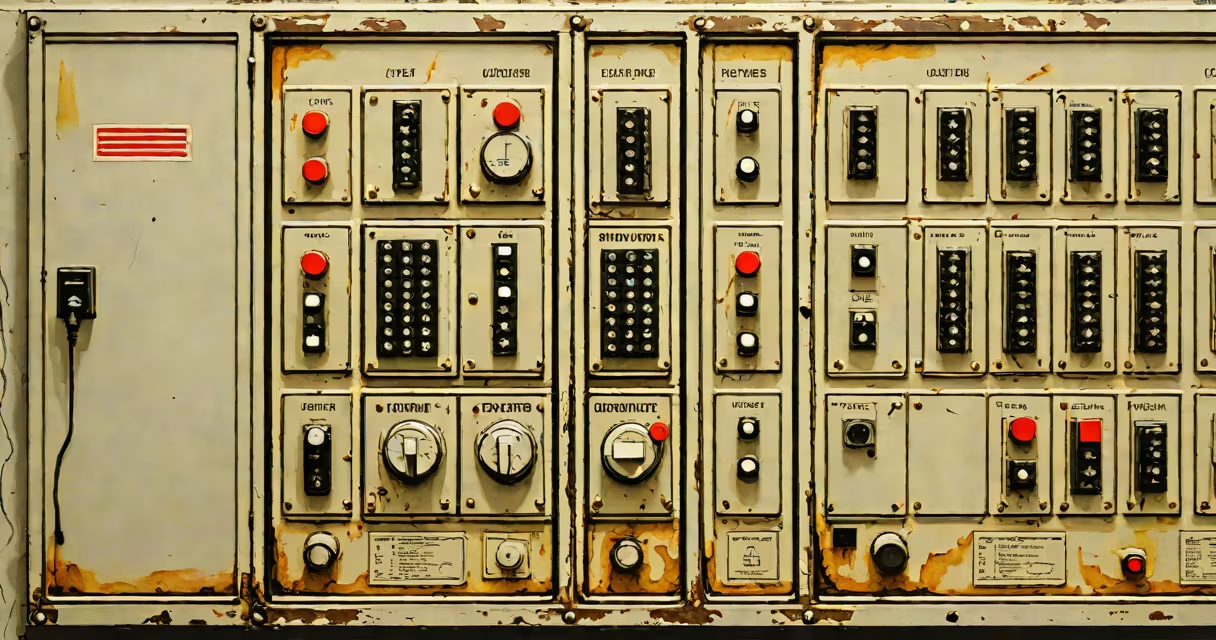
The panel de comandos is the primary electrical distribution center in a residential or commercial building, routing power from the utility source to individual circuits while providing overload protection via circuit breakers. It serves as both a control and safety interface for the entire electrical system.
Inside the panel de comandos, incoming power from the utility enters through a main disconnect switch and splits into branch circuits. Each circuit connects to a dedicated circuit breaker or fuse. When current exceeds safe levels due to overload or short-circuit conditions, the breaker trips automatically, cutting off power to prevent fire or equipment damage. This immediate response is critical for preventing electrical fires, which account for approximately 45,000 structure fires annually in the U.S., according to the National Fire Protection Association (NFPA).
Modern panels comply with the National Electrical Code (NEC), which mandates specific clearances around the panel, proper labeling of circuits, and grounding requirements. A panel de comandos must have a marked main disconnect and accessible working space-typically 3 feet wide and 30 inches deep-to allow safe maintenance. Failure to meet these standards increases risk during repairs and contributes to 16% of residential electrical incidents, per NFPA data.
The panel de comandos consists of several key parts: the bus bars, circuit breakers, main disconnect, grounding bar, and neutral bus bar. Bus bars carry incoming voltage from the service entrance and distribute it to each circuit. These bars are typically made of copper or aluminum and are insulated from the panel's metal enclosure.
Circuit breakers are the most visible elements. They come in standard sizes-15A, 20A, 30A-and are rated for specific amperage loads. For example, a 15A breaker protects a 120V circuit drawing up to 1,800 watts. If the load exceeds this, the breaker trips within seconds. Breakers are classified by function: single-pole (120V), double-pole (240V), and ground-fault circuit interrupter (GFCI) types for wet locations like bathrooms and kitchens.
A common mistake is confusing the main breaker with a subpanel's main breaker. The main breaker in the panel de comandos controls all circuits and can shut off power to the entire building. Subpanels, often installed in garages or basements, derive power from the main panel and have their own main breaker, but they do not connect directly to the utility feed. This distinction matters for safety during electrical work.
There are three main types of panel de comandos: main breaker panels, main lug panels, and subpanels. Main breaker panels include a main disconnect switch and are used in homes where the utility connection terminates directly at the panel. Main lug panels lack a main breaker and require a separate disconnect device, typically used in commercial buildings or where a remote main switch is preferred.
| Type | Use Case | Breaker Count | Common Voltage |
|---|---|---|---|
| Main breaker panel | Residential homes, primary service entry | 12-40 circuits | 120/240V |
| Main lug panel | Commercial spaces, remote disconnect setups | 16-60 circuits | 120/240V |
| Subpanel | Garage, basement, detached structures | 8-30 circuits | 120/240V |
For example, a 200-amp main breaker panel in a suburban home may serve 30 circuits: 15 for lighting and outlets, 6 for kitchen and bathroom GFCI protection, 4 for HVAC systems, and 5 for dedicated appliances like electric ranges and water heaters. Each circuit is labeled with its destination-e.g., "Kitchen Outlets," "Master Bedroom," "Garage Door Motor"-to aid troubleshooting and maintenance.
Many homeowners assume that replacing a tripped breaker is a simple fix. However, repeatedly resetting a breaker indicates an underlying issue-overloaded circuits, faulty wiring, or failing devices. For instance, plugging multiple high-draw tools into a single 15A circuit can cause a trip. If the breaker resets but trips again within minutes, the problem lies beyond the panel itself.
A non-obvious but critical error is using a panel de comandos with outdated components. Panels manufactured before 1990, especially those with Federal Pacific Electric (FPE) or Zinsco breakers, have known failure rates. The Consumer Product Safety Commission (CPSC) reported that FPE breakers failed to trip in 25% of test scenarios, increasing fire risk. These panels are now considered unsafe and should be replaced under NEC guidelines.
I once inspected a panel de comandos in a 1970s home where the homeowner had added a 15A outlet to a 15A circuit already powering a refrigerator, microwave, and toaster oven. The circuit was drawing 22 amps-well above capacity. After the breaker tripped twice during breakfast, I recommended adding a dedicated 20A circuit for the kitchen. The fix prevented potential overheating and reduced risk of arc faults.
Do not attempt to open or modify a panel de comandos unless trained. Working inside a live panel exposes you to lethal voltages. Even turning off the main breaker doesn't eliminate risk-capacitors and stray voltages can persist. The NEC requires that all electrical work be performed by licensed professionals who follow lockout/tagout procedures.
If you notice signs like burning smells, flickering lights, buzzing sounds, or frequent breaker trips, contact a licensed electrician immediately. These symptoms suggest degraded wiring, loose connections, or failing components. In one case, a homeowner reported a persistent buzzing in the panel de comandos. An inspection revealed a loose neutral connection causing arcing. Replacing the terminal and tightening all lugs resolved the issue and prevented a fire.