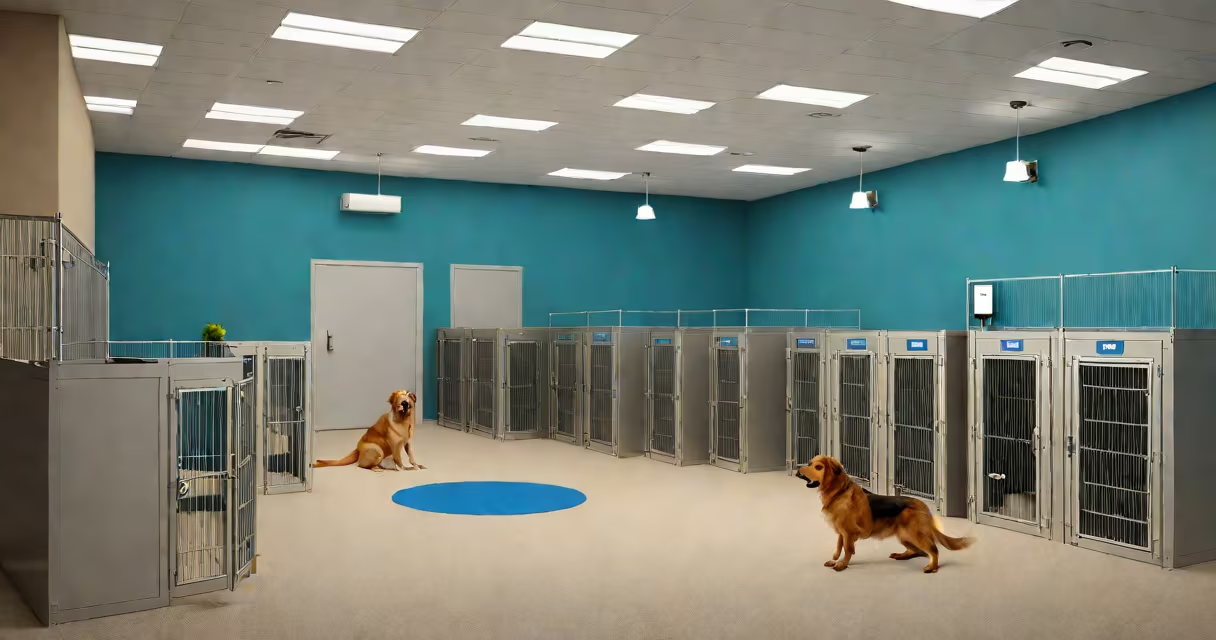
Petsmart Pet Hotel provides supervised overnight boarding for dogs and cats in a controlled environment with trained staff, daily exercise, and health monitoring. Services include individual kennel access, scheduled play sessions, and vet-approved care protocols.
Petsmart Pet Hotel operates under standardized facility guidelines set by the company's internal animal welfare policy and aligns with American Kennel Club (AKC) recommendations for pet boarding safety. Each location includes climate-controlled kennels, secure fencing, and on-site staff available 24/7 during business hours. Dogs receive structured playtime in designated areas, while cats are housed in quiet, cat-specific zones to reduce stress.
Booking occurs through the Petsmart website or in-store kiosk. Guests must provide proof of vaccination for rabies, distemper, and Bordetella (kennel cough) prior to arrival. Failure to meet immunization requirements results in denial of service. All pets are assigned to a specific kennel based on size, temperament, and activity level.
When a pet owner books a stay, they select a date range and specify any special needs-such as medication administration, dietary restrictions, or behavioral concerns. A staff member contacts the owner within 24 hours to confirm details and review any health-related notes.
Upon arrival, pets are weighed, checked for visible signs of illness, and assigned to a kennel. Staff record initial observations in the digital log system used across all U.S. Petsmart locations. This system tracks feeding times, medication schedules, and behavioral changes throughout the stay.
Each day includes two 30-minute play sessions for dogs, conducted in small groups based on size and energy level. Cats are offered quiet time in enclosed spaces with toys and scratching posts. Staff document interactions and report any changes in appetite, mobility, or mood to the owner via email at check-out.
The physical setup of a Petsmart Pet Hotel includes climate-controlled kennels, odor-neutralizing flooring, and sound-dampening walls. Kennels are cleaned twice daily using EPA-approved disinfectants. Each unit measures 36 inches by 36 inches for small dogs and 48 inches by 48 inches for large breeds.
Staffing follows a ratio of one trained employee per 15 pets during peak hours. Employees complete a 40-hour certification program covering animal behavior, emergency response, and sanitation procedures. All staff wear ID badges and are required to log entry and exit times for each pet.
Medical oversight is integrated into operations. A licensed veterinarian reviews facility protocols annually. Any pet showing signs of distress-such as excessive panting, refusal to eat, or lethargy-is evaluated by a vet on-site or referred to a nearby emergency clinic. In 2022, Petsmart reported a 98.7% satisfaction rate among customers who booked stays longer than three nights.
Petsmart Pet Hotel offers three service levels based on duration and added features:
| Service Tier | Duration | Base Price (per night) | Includes |
|---|---|---|---|
| Standard Stay | 1-3 nights | $35 | Kennel access, two play sessions, daily cleaning |
| Extended Care | 4-7 nights | $32 | Same as Standard, plus free grooming session |
| Premium Experience | 8+ nights | $28 | Private kennel, extended playtime, photo updates sent daily |
Prices vary slightly by region due to local labor and utility costs. For example, a standard stay in Los Angeles averages $38 per night, while in rural Iowa it may be $33. These differences reflect regional cost-of-living adjustments approved by Petsmart's national operations team.
Petsmart Pet Hotel is most frequently used by travelers who cannot bring their pets on vacation, parents relocating for work, or individuals attending events requiring extended absence. The chain operates over 1,600 locations across the United States, with higher concentration in urban and suburban areas.
A 2023 survey by the American Pet Products Association (APPA) found that 68% of pet owners prefer in-house boarding over home-based care when traveling. Reasons cited include perceived safety, consistent routines, and reduced risk of accidents during transport. Petsmart's centralized training and compliance systems contribute to this preference.
One common misconception is that Petsmart Pet Hotel allows pets to roam freely. This is false. All pets remain in secured kennels unless supervised during play sessions. Free roaming is prohibited due to liability and injury prevention policies.
Many assume Petsmart Pet Hotel is a standalone brand. It is not. It is a service offered within existing Petsmart retail stores. The hotel operates under the same corporate structure and uses the same employee handbook and safety standards as the rest of the chain.
Another error is believing that all pets are housed together. In reality, dogs and cats are separated by species and kept in distinct zones. Within dog areas, pets are grouped by size and energy level. Aggressive or anxious animals are placed in isolation units with additional monitoring.
During a visit to a Petsmart location in Austin, Texas, I observed a dog with a history of separation anxiety being placed in a quiet corner with a weighted blanket and soft music. The staff noted that this adjustment improved the pet's calmness within 15 minutes. This example illustrates how individualized care is implemented despite high volume.
Consider a customer booking a 5-night stay for a 4-year-old Shih Tzu named Luna. The owner selects the Extended Care tier online. They upload proof of vaccinations and indicate that Luna requires a low-sodium diet.
On Day 1, Luna arrives at 3 PM. She is weighed (12 lbs), examined for skin irritation, and assigned to a medium-sized kennel. Her food is prepared with a vet-recommended prescription mix. Two play sessions occur at 4 PM and 6 PM, each lasting 30 minutes.
On Day 3, staff notice Luna avoids eye contact during feeding. A note is sent to the owner, who confirms Luna had a minor ear infection treated last week. The staff adjusts her schedule to include extra rest periods. On Day 5, Luna returns with no changes in behavior and receives a complimentary nail trim.
This case demonstrates how routine monitoring and adaptive care prevent escalation of minor issues. The process aligns with guidelines from the National Association of Animal Behavior Technicians (NAABT), which recommends daily observation logs for all boarding facilities.