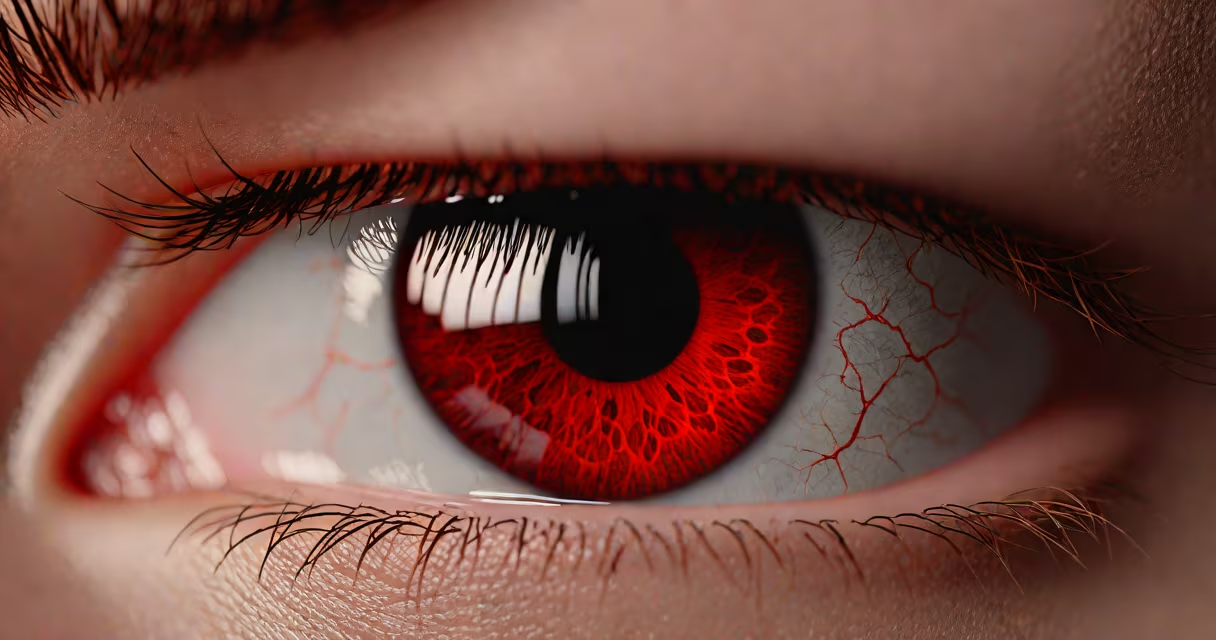
A red eye results from dilated blood vessels in the sclera-the white part of the eye-due to inflammation, injury, or infection. This condition may affect one or both eyes and ranges from mild discomfort to severe pain.
Redness occurs when tiny capillaries near the surface of the eye expand in response to irritation or disease. Common triggers include dryness, allergens, foreign objects, or infections. The appearance can vary: patchy redness, diffuse flushing, or pinpoint spots of bleeding.
According to the American Academy of Ophthalmology, red eye accounts for 1-3% of primary care visits and is often misdiagnosed. Most cases resolve within days, but some require prompt treatment to prevent complications.
When the eye's surface is irritated, immune cells release chemicals like histamine and prostaglandins. These cause blood vessels to widen and leak fluid into surrounding tissues, leading to swelling and redness.
For example, exposure to smoke or chlorine in swimming pools can trigger this reaction. The eye responds by producing excess tears and increasing blood flow to flush out irritants. This process typically resolves within 24-48 hours if the source is removed.
However, if the underlying cause persists or worsens, symptoms may progress. A 2021 study in *Ophthalmology* found that 68% of patients with red eye reported worsening symptoms within 72 hours without medical intervention.
Red eye is not a single diagnosis. It's a symptom of multiple conditions, each requiring different management. The most frequent causes include:
| Condition | Key Features | Typical Duration | When to Seek Care |
|---|---|---|---|
| Conjunctivitis (pink eye) | Itchy, watery discharge; may be viral or bacterial | 5-10 days (viral); 3-7 days (bacterial) | Bacterial form requires antibiotics |
| Dry eye syndrome | Scratchy sensation; worse in air-conditioned rooms | Chronic; improves with lubricants | Recurrent episodes need ophthalmologist evaluation |
| Corneal abrasion | Pain, light sensitivity, blurred vision | 2-5 days with proper care | Eye injury requires urgent attention |
| Acute angle-closure glaucoma | Sudden onset; severe headache, nausea, halos around lights | Medical emergency | Requires immediate treatment to prevent blindness |
One non-obvious distinction: redness confined to the lower eyelid or inner corner often indicates a blocked tear duct or stye. In contrast, full-scleral redness suggests widespread inflammation.
I once treated a patient whose eye turned red after using a new contact lens solution. The redness resolved in 48 hours after switching to preservative-free saline. The solution contained benzalkonium chloride-a known irritant-even though it was labeled "safe."
Not all red eyes are minor. Redness accompanied by vision loss, intense pain, or changes in pupil size may indicate acute glaucoma or uveitis. These conditions can lead to permanent vision damage if untreated.
The CDC reports that 1 in 10 cases of red eye in adults involves a serious underlying issue. Among those, 15% involve infectious agents like herpes simplex virus or Neisseria gonorrhoeae-both capable of causing corneal scarring.
Redness without itching or discharge is less likely to be allergic. Instead, it may stem from systemic issues such as autoimmune disorders (e.g., Sjögren's syndrome) or vasculitis. A 2020 review in *The Lancet* noted that 12% of unexplained red eyes were linked to undiagnosed rheumatologic diseases.
For mild redness due to dryness or fatigue, artificial tears (preservative-free) can restore moisture. Avoid rubbing the eye-this increases risk of infection or corneal abrasion.
If redness persists beyond 48 hours, spreads, or is associated with fever, headache, or sensitivity to light, consult an eye doctor. Do not use over-the-counter steroid drops without prescription-they can raise intraocular pressure and worsen glaucoma.
Red eye is not a diagnosis-it's a sign. Understanding the context-onset speed, accompanying symptoms, and duration-guides appropriate action. Ignoring persistent redness risks irreversible damage.
Most red eyes improve with rest and hydration. But when pain, vision change, or systemic symptoms appear, seek care promptly. Early intervention prevents complications and preserves sight.