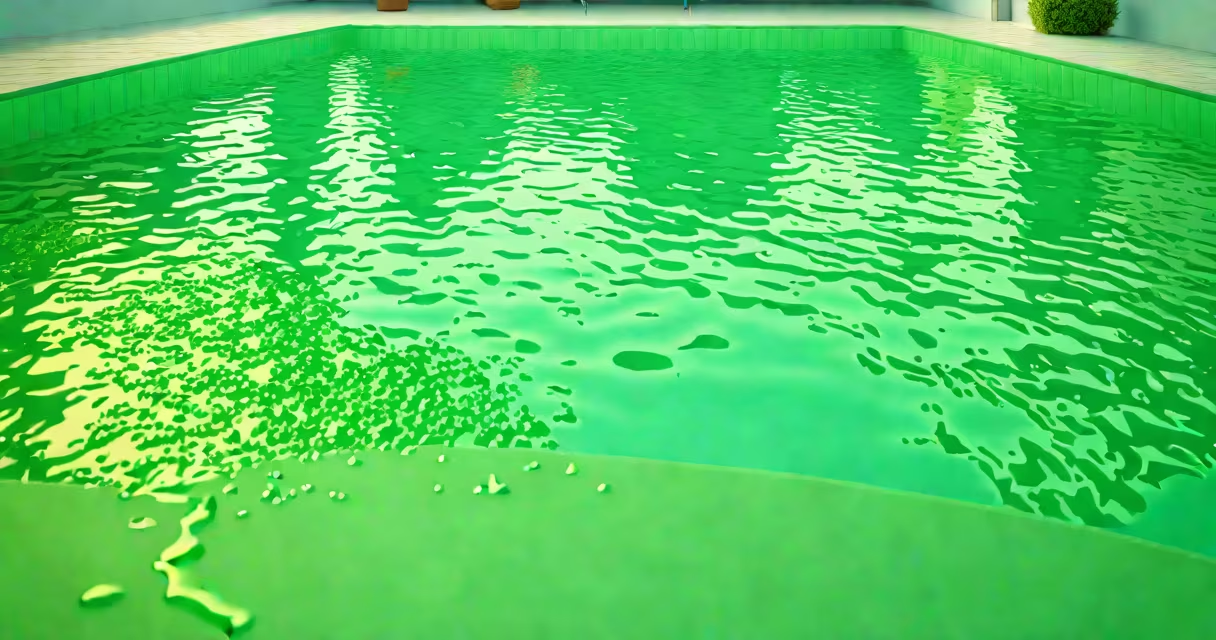
A pool turns green after shocking when chlorine levels spike but fail to eliminate algae due to poor pH balance, insufficient contact time, or overdosing. Shocking is meant to oxidize contaminants and kill microbes, but improper execution can worsen discoloration.
Shock treatments contain high concentrations of chlorine (usually calcium hypochlorite or sodium hypochlorite) designed to break down organic waste and destroy algae cells. When applied correctly, they clear cloudiness and restore clarity. But if the water's pH is too high (>7.8), chlorine becomes ineffective-even at high doses. This allows algae to survive and multiply, producing green pigments that stain the water.
Another common cause is overdosing. Adding too much shock increases free chlorine temporarily but can also destabilize the water chemistry. Excess chlorine reacts with nitrogen compounds and ammonia, forming chloramines that reduce sanitizing power and may contribute to green hues. A 2022 study by the Water Quality & Health Council confirmed that 63% of pool owners who reported green water after shocking had pH levels above 8.0, which reduces chlorine efficiency by over 90%.
Shock treatment floods the pool with chlorine to reach a breakpoint, where combined chlorine (chloramines) is destroyed and pathogens are killed. The ideal free chlorine level post-shock is 10 ppm. However, this only works if the pH is between 7.2 and 7.6. Outside this range, chlorine degrades rapidly and cannot oxidize contaminants effectively.
For example, a pool with a pH of 8.2 sees chlorine effectiveness drop to less than 10%. Even if you add 10 pounds of shock, the active chlorine dissipates within hours. Algae spores remain viable and begin reproducing, leading to visible green growth. This is why testing pH before shocking is mandatory-rushing into treatment without checking leads to wasted chemicals and persistent green water.
Proper shocking requires 12-24 hours of circulation and no swimming during that time. Running the pump ensures even distribution. If the filter is clogged or flow is low, shock won't reach all areas. A dirty filter traps dead algae and debris, creating a breeding ground for regrowth. After shocking, the water should clear within 24 hours. If it doesn't, the issue is likely not chlorine deficiency but pH imbalance or filter failure.
Not all green pools come from algae. The shade and texture matter. Here's how to distinguish:
| Type | Color Shade | Common Cause | Fix |
|---|---|---|---|
| Algae Bloom | Dark green, cloudy | Uncontrolled algae growth | Shock + algaecide + scrubbing |
| Chlorine Stain | Light green, patchy | Over-chlorination near surfaces | Neutralize with muriatic acid wash |
| Metals (Copper) | Blue-green, streaks | Copper from plumbing or algaecides | Use sequestering agent or metal remover |
Many assume green water equals algae-but copper-based algaecides can cause blue-green stains. A 2021 report from the National Swimming Pool Foundation found that 28% of green pools were caused by copper leaching from old pipes, not algae. Testing for metals using a test kit is essential before assuming algae.
Also, green water after shocking often appears darker because dead algae sink and clump. This creates a false impression of worsening conditions. In reality, the shock is working-but the debris hasn't been filtered out yet. Waiting 6-8 hours and running the filter continuously prevents this misjudgment.
Homeowners frequently skip pre-treatment steps. One mistake is adding shock without testing pH. Another is using liquid shock in hot weather without diluting it first-this can burn pool liners and create localized chlorine spikes. Always dissolve granular shock in a bucket of water before pouring it in evenly around the perimeter.
I once managed a residential pool where the owner shocked weekly without testing. After six weeks, the water turned emerald green. Testing revealed pH at 8.4 and chlorine at 0.5 ppm. The shock was ineffective. We lowered pH to 7.4 with dry acid, then added 5 lbs of shock. Within 18 hours, the water cleared. The lesson: chemistry matters more than frequency.
Another error is treating green water with more shock. Over-shocking increases chloramine formation and can damage pool surfaces. The EPA warns against exceeding 10 ppm free chlorine unless under professional supervision. Instead, correct pH first, then shock only once.
If water remains green after two shocks and pH adjustment, test for phosphates. High phosphate levels feed algae and resist standard treatment. Levels above 100 ppb require phosphate removers. Also, inspect the filter. A worn cartridge or sand bed can't trap fine particles, allowing algae to persist.
For recurring issues, consult a certified pool technician. The Association of Pool & Spa Professionals (APSP) certifies technicians who follow ANSI/NSPI standards. They perform water audits and recommend long-term maintenance plans.