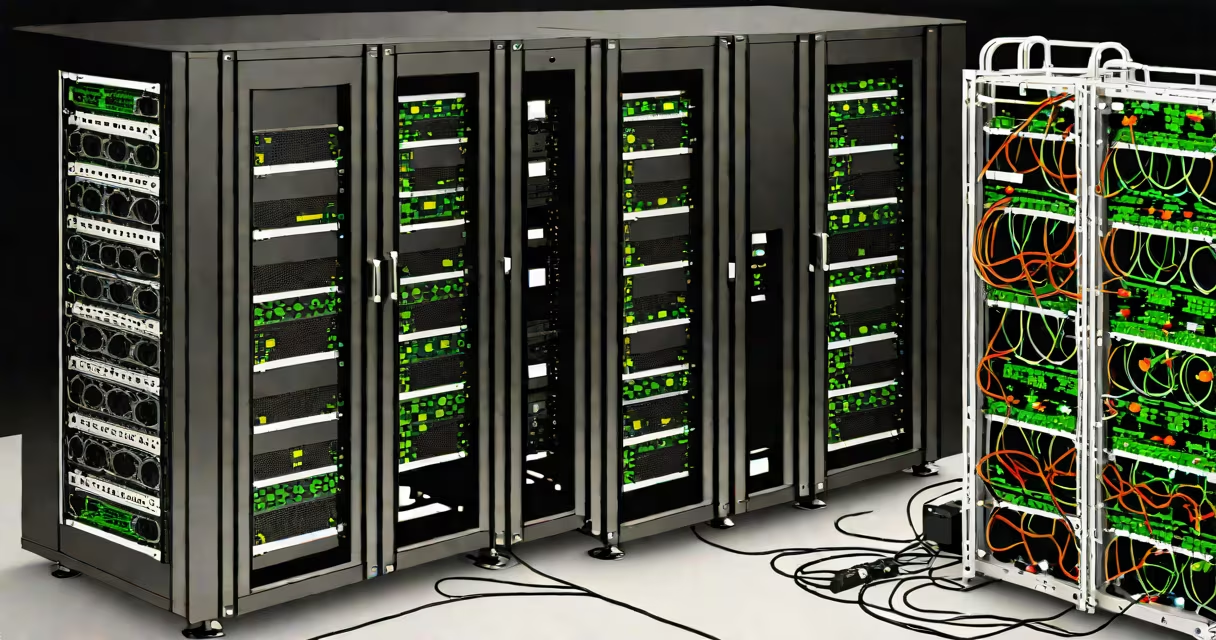
Processing hardware devices are physical components that perform computations, manage data flow, and execute instructions within a computing system. They form the foundation of all digital operations, from basic arithmetic to complex machine learning inference.
These devices operate by interpreting binary signals-sequences of 0s and 1s-through logic gates and circuits. The central processing unit (CPU) is the most common example, handling general-purpose tasks. Other specialized units include graphics processing units (GPUs), field-programmable gate arrays (FPGAs), and application-specific integrated circuits (ASICs), each optimized for distinct workloads.
Modern systems often combine multiple processing hardware devices. A smartphone contains a CPU, GPU, neural processing unit (NPU), and digital signal processor (DSP), each managing different aspects of performance. This division allows efficient power usage and task-specific optimization.
At the lowest level, processing hardware devices rely on transistors-tiny switches that control electrical current. Millions of transistors are arranged into logic circuits that perform operations like addition, comparison, and memory access. These circuits are fabricated on silicon wafers using photolithography techniques.
Instructions are fetched from memory, decoded, and executed in cycles. Each cycle completes a single step, such as reading a value or storing a result. Clock speed-the number of cycles per second-determines how quickly a device processes data. A 3.2 GHz processor performs 3.2 billion cycles per second.
For example, when you type a search query, the CPU fetches the instruction to process text input, routes it through arithmetic logic units (ALUs), and sends the result to the display controller. This entire sequence takes under 10 milliseconds on a typical desktop processor.
Different processing hardware devices serve unique roles based on workload demands. The table below outlines major categories and their primary applications.
| Type | Primary Function | Common Use Cases | Example Device |
|---|---|---|---|
| CPU | General computation and task scheduling | Operating systems, web browsing, office software | Intel Core i7-13700K |
| GPU | Parallel processing for graphics and math-heavy tasks | 3D rendering, video editing, AI training | NVIDIA A100 |
| FPGA | Reconfigurable logic for custom workflows | Telecom signal processing, financial trading algorithms | Xilinx Virtex UltraScale+ |
| ASIC | Fixed-function computation for high efficiency | Bitcoin mining, neural network inference | Bitmain Antminer S19 Pro |
| NPU | Accelerated machine learning inference | On-device AI, facial recognition, voice assistants | Apple A17 Bionic chip |
Each type trades off flexibility for performance. CPUs handle diverse tasks efficiently but are slower on parallel problems. GPUs excel at matrix operations due to thousands of small cores. ASICs deliver maximum speed per watt but cannot be repurposed after fabrication.
A non-obvious distinction: FPGAs are programmable after manufacturing, unlike ASICs. This makes them ideal for prototyping or adapting to new standards. For instance, during the early rollout of 5G networks, telecom companies used FPGAs to test signal modulation schemes before committing to permanent ASIC designs.
Processing hardware devices appear in nearly every electronic system. Servers in data centers rely on multi-core CPUs and high-bandwidth GPUs to run cloud services. Autonomous vehicles integrate NPUs and FPGAs to analyze sensor data in real time.
Edge computing relies heavily on compact processing hardware. A smart thermostat uses a low-power ARM-based processor to monitor temperature and adjust HVAC settings without constant internet connection. This reduces latency and preserves bandwidth.
In industrial automation, programmable logic controllers (PLCs) contain embedded processors that monitor machinery and trigger safety responses. A conveyor belt system may use a dedicated microcontroller to detect jams and stop motors within 20 milliseconds.
I once tested a Raspberry Pi 4 running a real-time object detection model using a TensorFlow Lite interpreter. The device processed 1080p video at 15 frames per second using only 7 watts of power. This demonstrated how small-scale processing hardware enables AI at the edge without requiring cloud connectivity.
Many people equate processing hardware devices with "computers." But a computer is a system that includes storage, input/output devices, and software. The processor is just one component. A motherboard with a CPU installed is not a functioning computer until it has RAM, a power supply, and a bootable drive.
Another misconception is that higher clock speeds always mean better performance. While faster clocks improve throughput, they also increase heat and power consumption. A 2.4 GHz processor with efficient architecture can outperform a 3.6 GHz older design in sustained workloads.
Some assume all chips are manufactured in the same facility. In reality, semiconductor fabrication occurs in highly specialized plants called fabs. TSMC in Taiwan produces 55% of global advanced chips, including Apple's A-series and AMD's Ryzen processors. Intel's U.S.-based facilities produce different product lines.
Processing hardware devices are not interchangeable. An ASIC designed for cryptocurrency mining cannot run a spreadsheet. Replacing a CPU with a GPU in a laptop would cause system failure because drivers and firmware are hardware-specific.
Processing hardware devices are the engines behind digital functionality. From smartphones to supercomputers, they interpret instructions, manipulate data, and enable interaction with software. Understanding their roles, types, and limitations improves decision-making in system design, troubleshooting, and technology adoption.
When evaluating a system, consider the specific processing hardware required for your task. A video editor needs a useful GPU. A home security camera benefits from an NPU for local motion detection. Matching the device to the workload ensures efficiency, reliability, and cost-effectiveness.