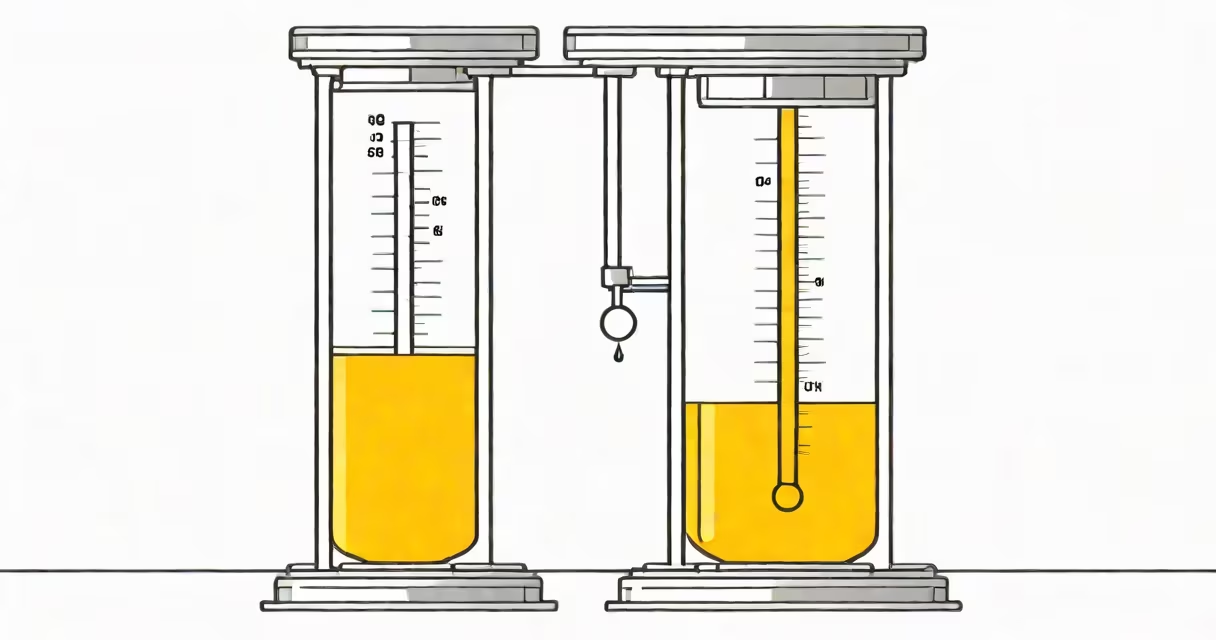
Specific gravity (sg) of sulphuric acid is the ratio of its density to that of water at a specified temperature, typically 20°C. It directly indicates the concentration of H₂SO₄ in a solution, with higher values corresponding to greater acid strength. This value is essential for accurate handling, storage, and industrial use.
Specific gravity is measured using a hydrometer or digital densitometer. For sulphuric acid, the standard reference is water at 4°C (density 1.000 g/mL). A reading of 1.84 means the acid is 1.84 times denser than water. This measurement is independent of volume and temperature, making it ideal for lab and production settings.
For example, concentrated sulphuric acid (98% w/w) has an sg of approximately 1.84 at 20°C. A diluted solution at 50% concentration has an sg around 1.39. These values are standardized in technical references such as the CRC Handbook of Chemistry and Physics and the International Union of Pure and Applied Chemistry (IUPAC) guidelines.
Testing sg requires calibrated equipment. A glass hydrometer floats in the acid; the level it reaches on the scale gives the specific gravity. Digital instruments use oscillating U-tube sensors to measure density with high precision. Both methods require temperature control-results are adjusted to 20°C using published tables.
Manual testing is common in labs and small-scale operations. Industrial facilities use automated systems integrated into process lines. For instance, a battery manufacturing plant monitors sg in real time during electrolyte preparation to ensure consistent cell performance.
A key point often missed: sg reflects mass per unit volume, not molarity. Two solutions with the same sg may differ in molar concentration if impurities are present. Always cross-check with titration or refractive index measurements for high-accuracy work.
Sulphuric acid is sold in several grades based on concentration and purity. The specific gravity varies accordingly:
| Grade | Concentration (w/w) | Specific Gravity (20°C) | Common Use |
|---|---|---|---|
| Technical grade | 93-96% | 1.83-1.84 | Industrial cleaning, fertilizer production |
| Concentrated (analytical) | 98% | 1.84 | Laboratory reagents, synthesis |
| Diluted (50%) | 50% | 1.39 | Electroplating baths, pH adjustment |
| Low-grade (used in batteries) | 30-35% | 1.22-1.24 | Lead-acid battery electrolytes |
These values are consistent across industry standards. The American Society for Testing and Materials (ASTM) D1125 specifies procedures for measuring sg in commercial acids.
In chemical manufacturing, sg determines reaction rates and yields. A 1% error in concentration can reduce product efficiency by up to 15%, according to a 2021 study by the European Chemical Industry Council (CEFIC).
For example, in phosphate fertilizer production, sulphuric acid is reacted with rock phosphate. The correct sg ensures complete conversion to ammonium sulfate. Too low a concentration leads to incomplete reaction; too high causes excessive heat and corrosion.
Another non-obvious fact: sg changes with temperature. A 1°C rise reduces sg by about 0.0005 units. Ignoring this causes errors in batch formulation. Always record temperature during measurement and apply corrections using standard tables.
Many assume sg equals molarity. They don't. A 1.84 sg solution is ~18 M H₂SO₄, but a 1.39 sg solution is ~7 M. Confusing the two leads to incorrect dilutions and hazardous reactions.
Some users think sg can be estimated from visual appearance. Darkening or cloudiness indicates contamination, not concentration. Always test with proper tools. I once saw a technician pour a sample into a beaker and guess the sg based on color-resulting in a failed batch and a $12,000 loss.
Also, never assume all sulphuric acid is the same. Impurities like iron or arsenic affect both sg and reactivity. High-purity acid used in semiconductor etching has stricter sg tolerances than industrial-grade.
Accurate sg measurement underpins safety in handling. Concentrated sulphuric acid reacts violently with water-adding water to acid causes boiling and splattering. Proper dilution requires slow addition of acid to water while monitoring sg.
Industries rely on sg for quality control. In oil refining, sulphuric acid treats feedstocks to remove impurities. The correct sg ensures optimal removal without damaging catalysts.
Always store sulphuric acid in corrosion-resistant containers, away from bases and organic materials. Label each container with current sg and date of last measurement.