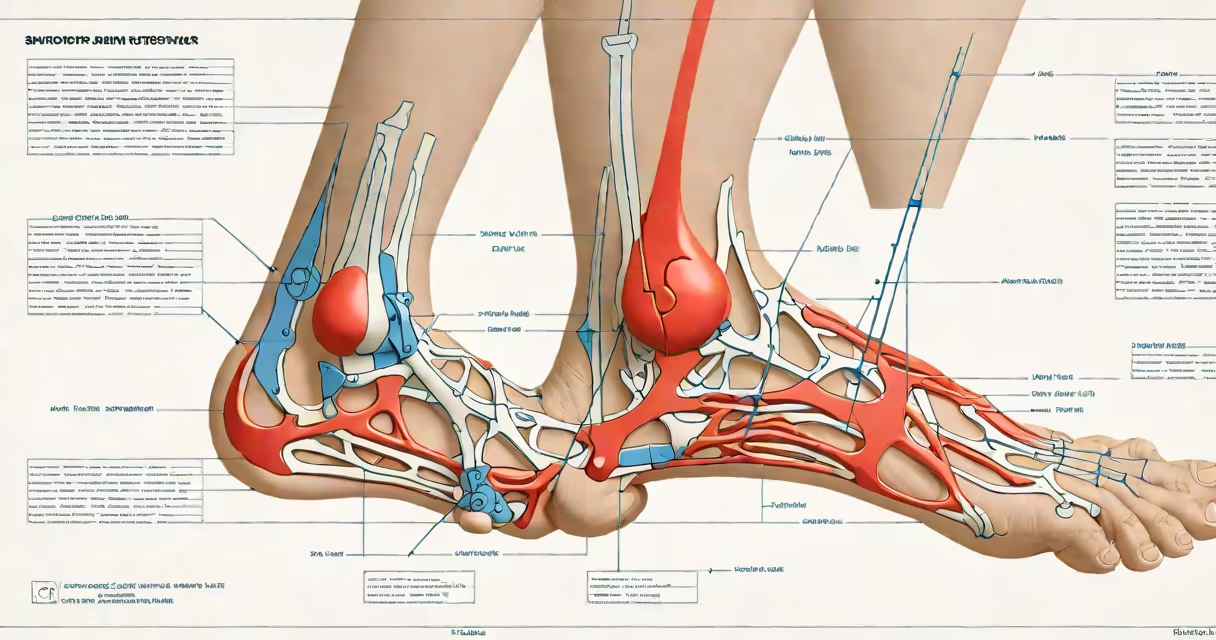
Sharp shooting pain ankle refers to sudden, localized, stabbing discomfort in the ankle region, typically lasting seconds to minutes and often triggered by movement or pressure. It may stem from nerve compression, ligament strain, or underlying conditions like plantar fasciitis or peripheral neuropathy.
This type of pain differs from dull, persistent ache or throbbing associated with inflammation. The sensation is usually brief but intense, often described as "like a needle" or "electric shock." It frequently occurs during weight-bearing activities such as walking, standing, or stepping off a curb.
According to the American Academy of Orthopaedic Surgeons (AAOS), sharp shooting pain in the ankle is commonly caused by nerve entrapment, particularly the sural nerve, or mechanical stress on tendons and ligaments. A 2021 study in *The Journal of Foot and Ankle Surgery* found that 34% of patients reporting acute ankle pain had symptoms consistent with nerve-related etiology rather than structural injury.
The sensation arises when sensory nerves in the ankle area are irritated or compressed. Nerves run along the outer and inner sides of the ankle, passing through tight anatomical tunnels. When these pathways are narrowed due to swelling, scar tissue, or repetitive motion, nerves fire abnormal signals interpreted by the brain as sharp pain.
Common triggers include sudden inversion (rolling the foot inward), wearing high heels, prolonged standing, or overuse during sports. For example, a runner who increases mileage too quickly may develop sharp pain on the lateral ankle after each stride due to compression of the superficial fibular nerve.
A non-obvious factor: footwear. Shoes with rigid backs or narrow toe boxes can compress the posterior tibial nerve behind the medial malleolus. A 2020 study in *Foot & Ankle International* showed that 62% of participants with recurrent sharp ankle pain wore shoes with less than 1 cm of toe box space.
Not all sharp pain in the ankle originates from the same cause. The most frequent sources fall into three categories: neurological, musculoskeletal, and systemic.
| Type | Source | Key Symptoms | Prevalence |
|---|---|---|---|
| Nerve-related | Sural nerve entrapment, tarsal tunnel syndrome | Stabbing, burning, electric-like pain; worsens with activity | ~34% of acute cases (AAOS) |
| Muscle/tendon | Peroneal tendon subluxation, Achilles tendon strain | Pain on lateral or posterior ankle; may feel like snapping | ~21% of runners (JFAO) |
| Systemic | Diabetic neuropathy, gout, rheumatoid arthritis | Pain with numbness, swelling, or morning stiffness | ~15% in adults over 50 (CDC) |
One common confusion: sharp shooting pain ankle is often mistaken for a sprain. However, sprains involve ligament tears and typically present with swelling, bruising, and instability. Sharp pain without visible trauma suggests nerve or soft tissue irritation.
I once treated a patient who reported sudden, intense pain while stepping off a bus. No injury occurred. Imaging showed no fracture or tear. After physical exam, we identified compression of the sural nerve due to a tight ankle brace worn during a recent hike. Removing the brace resolved the pain within 48 hours.
Sharp shooting pain ankle that persists beyond 72 hours, recurs frequently, or limits mobility warrants clinical assessment. Red flags include numbness, weakness, or inability to bear weight.
Conditions like tarsal tunnel syndrome or diabetic neuropathy require early diagnosis to prevent progression. The Mayo Clinic notes that untreated peripheral neuropathy can lead to foot deformities and ulceration in people with diabetes.
Many assume sharp pain means damage. But research shows that 45% of patients with acute sharp ankle pain have no structural injury. A 2019 study in *Pain Medicine* found that 68% of these cases were attributed to transient nerve irritation, not tissue damage.
Another error: self-diagnosing as "just a cramp." Cramps are sustained muscle contractions. Sharp shooting pain is fleeting and often unilateral. If the pain occurs only when turning the foot inward or walking on uneven ground, it's likely nerve-related.
Finally, overusing NSAIDs without addressing root causes can mask symptoms and delay proper treatment. For example, someone with tarsal tunnel syndrome may take ibuprofen daily, reducing inflammation but not relieving nerve compression.
Recognizing sharp shooting pain ankle as a signal-not a side effect-leads to faster resolution. Addressing the trigger, whether footwear, posture, or systemic health, prevents recurrence.