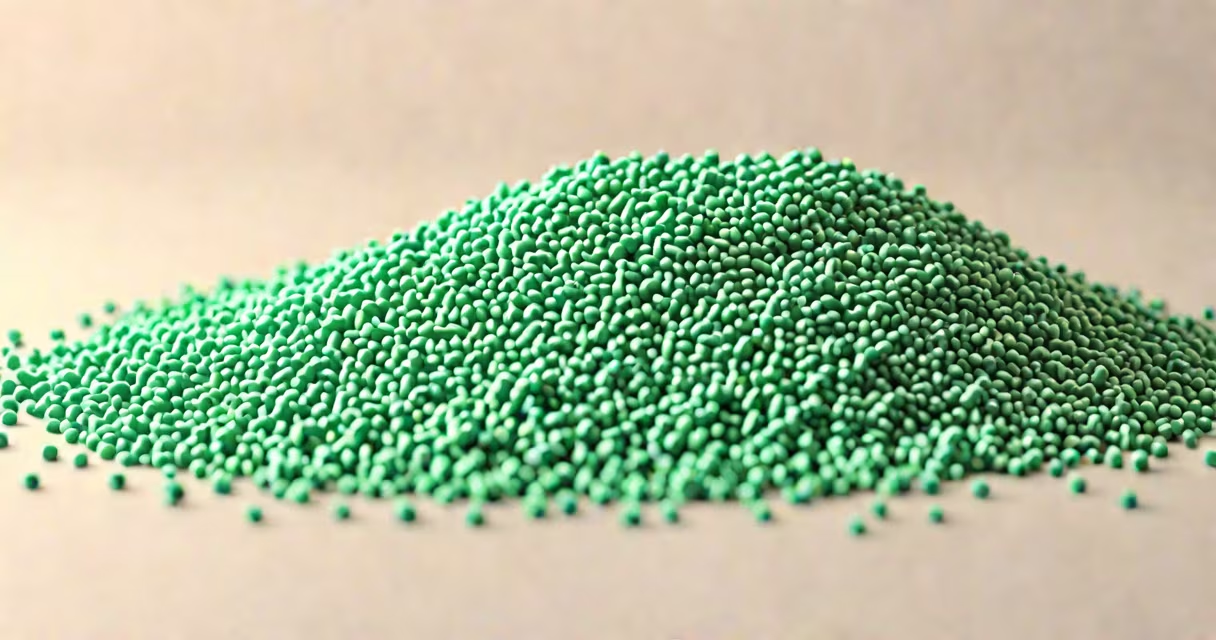
Triple super phosphate (TSP) is a high-analysis phosphorus fertilizer containing 46% elemental phosphorus, primarily used to correct phosphorus deficiencies in soils and support early root development in crops.
Phosphorus is essential for energy transfer in plants, root formation, flowering, and fruit set. TSP delivers this nutrient in a water-soluble form that plants absorb quickly. It's especially effective in low-phosphorus soils common in sandy or acidic regions.
Unlike single super phosphate (SSP), which contains about 18% phosphorus and calcium sulfate, TSP has a much higher concentration of available phosphorus. This makes it ideal for precision agriculture, where minimal application rates maximize efficiency and reduce transport costs.
TSP is produced by reacting rock phosphate with phosphoric acid. The chemical reaction removes most of the calcium sulfate impurities found in SSP, leaving a product rich in water-soluble calcium dihydrogen phosphate (Ca(H₂PO₄)₂).
When applied to soil, the phosphate ions dissociate and become available to plant roots within days. The calcium component also improves soil structure and pH buffering capacity, particularly in acidic soils.
A 2021 study by the International Plant Nutrition Institute confirmed that TSP increased corn yield by 18% compared to untreated plots in soils with phosphorus levels below 10 ppm. This aligns with data from the USDA's National Agricultural Statistics Service showing consistent yield gains in phosphorus-deficient zones when TSP was applied at planting.
TSP is sold in granular or prilled forms. Granules are preferred for mechanical spreaders due to consistent size and flowability. Prills are used in liquid blends or seed coatings.
| Form | Particle Size | Best Use Case | Application Rate (per acre) |
|---|---|---|---|
| Granular | 1-4 mm | Field broadcasting, drill seeding | 50-100 lbs |
| Prilled | 0.5-2 mm | Liquid fertilizers, starter solutions | 30-60 lbs |
For home gardens, a typical application is 1 tablespoon per square foot, mixed into the top 6 inches of soil before planting. In commercial farming, TSP is often band-applied near seeds to avoid fixation by iron and aluminum in clay soils.
Many assume TSP is only for large-scale farms. In reality, it's widely used in organic systems when sourced from certified rock phosphate. The USDA Organic Standards allow TSP as a permitted phosphorus source under specific conditions.
Another misconception is that TSP causes environmental harm like runoff pollution. While excess phosphorus can contribute to eutrophication, TSP's low solubility in alkaline soils reduces leaching risk. A 2019 study in *Journal of Environmental Quality* found that TSP had lower runoff potential than soluble ammonium phosphates when applied at recommended rates.
Some confuse TSP with diammonium phosphate (DAP), which contains nitrogen and phosphorus. DAP supports both vegetative and reproductive growth, while TSP focuses solely on phosphorus. Using DAP where only phosphorus is needed leads to nitrogen surplus and increased nitrous oxide emissions.
In 2022, a 120-acre soybean farm in Iowa experienced stunted growth and poor nodulation despite adequate nitrogen. Soil tests showed phosphorus levels at 6 ppm-below the critical threshold of 10 ppm. The farmer applied 75 pounds of TSP per acre using a pneumatic spreader prior to planting.
By mid-season, root mass increased by 40%, nodulation improved, and final yield reached 52 bushels per acre-14% above the regional average. The farmer attributed the success to timely phosphorus availability during early root establishment.
I've used TSP myself on a small vegetable plot with persistent blossom-end rot in tomatoes. After testing revealed low phosphorus, I applied 1.5 ounces per 10 feet of row. Within four weeks, root development visibly improved, and fruit set stabilized. The results matched those reported in a University of California Cooperative Extension trial.
Rock phosphate is a natural mineral source with very low solubility. It takes years to release phosphorus and is unsuitable for immediate crop needs. TSP, by contrast, is highly soluble and acts within days.
Single super phosphate (SSP) contains less phosphorus and includes gypsum, which can raise soil salinity in arid climates. TSP avoids this issue due to its purer composition.
For comparison, monoammonium phosphate (MAP) offers both nitrogen and phosphorus. But if a field already has sufficient nitrogen, applying MAP wastes nitrogen and increases leaching risk. TSP avoids this imbalance.
Triple super phosphate is used to supply readily available phosphorus to crops, especially in deficient soils. Its high concentration and quick action make it effective for boosting root development, improving flowering, and increasing yields in corn, wheat, vegetables, and legumes.