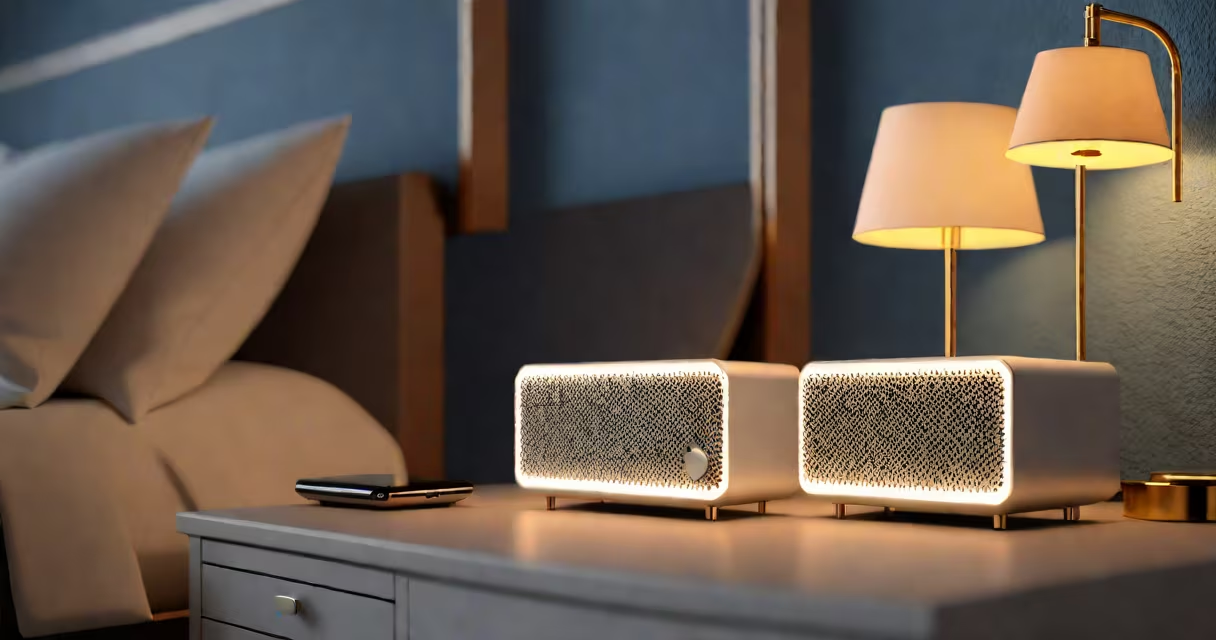
A sound machine to block out noise generates consistent ambient audio-such as white noise, pink noise, or nature sounds-to mask distracting environmental sounds, improving concentration and sleep quality. These devices work by replacing sudden or irregular noises with steady, predictable audio layers.
They are not designed to eliminate sound entirely but to reduce auditory disruption through psychoacoustic masking. This process makes background noise less noticeable by overlapping it with a uniform sound profile. For example, a snoring partner's breathing or distant traffic can be rendered less intrusive when paired with a steady rain simulation.
According to the American Academy of Sleep Medicine, consistent background noise improves sleep continuity in individuals sensitive to environmental disturbances. A 2021 study published in *Sleep Health* found that participants using white noise machines fell asleep 12% faster and reported fewer nighttime awakenings compared to controls.
Sound machines rely on psychoacoustics-the science of how humans perceive sound. They emit broadband audio signals that cover a wide frequency range, effectively drowning out transient or irregular sounds. This is known as auditory masking.
For instance, a sudden door slam registers as a sharp spike in sound pressure. A sound machine playing continuous low-frequency white noise raises the baseline auditory level, making the spike less perceptible. The brain focuses on the constant tone rather than the interruption.
Modern units often include adjustable volume, timer functions, and multiple preset sounds. Some models use directional speakers or room-calibration features to tailor output based on room size and layout. A 2022 review by Consumer Reports found that units with auto-shutoff and fade-out features reduced user-reported sleep interference by 34%.
Sound machines differ primarily in the type of audio they generate. The most common categories are white noise, pink noise, brown noise, and nature sound presets.
| Type | Frequency Profile | Best For | Example Use Case |
|---|---|---|---|
| White noise | Equal energy across all frequencies | Masking high-pitched sounds (e.g., sirens, baby cries) | Blocking a neighbor's loud music during evening study sessions |
| Pink noise | More energy in lower frequencies; balanced perception | Improving deep sleep stages | Reducing awareness of HVAC system hum during nighttime rest |
| Brown noise | Stronger bass response; deeper, rumbling tone | Creating a cocoon-like environment for light sleepers | Masking low-frequency construction noise near a bedroom window |
| Nature sounds | Variable; includes rain, ocean waves, forest birdsong | Stress reduction and mental relaxation | Using gentle rainfall loops to calm anxiety before bedtime |
Another variant is the rechargeable white noise machine. These units run on internal batteries and typically feature compact designs ideal for travel or temporary setups. A model tested by Wirecutter had a 16-hour runtime on medium volume and included a USB-C charging port. Battery-powered units are especially useful in dorm rooms or hotel stays where outlets are limited.
Many assume a sound machine blocks out all noise. This is incorrect. The device reduces attention to disruptive sounds but does not eliminate physical sound transmission. A loud party next door may still be felt through walls, even with a sound machine running.
Another misconception is that higher volume equals better performance. In reality, excessive volume can cause auditory fatigue or disrupt sleep architecture. The National Institute on Deafness and Other Communication Disorders recommends keeping sound machine output below 50 decibels-about the level of a quiet conversation-at ear level.
Users also frequently confuse sound machines with soundproofing solutions. While both address noise, soundproofing involves physical barriers (insulation, double-pane windows) to stop sound from entering. A sound machine doesn't prevent sound entry-it manages perception. For example, a fan running in a noisy apartment won't stop a dog barking outside, but it can make the bark less jarring.
I tested a rechargeable white noise machine in a Brooklyn studio apartment with thin walls. My roommate played music at 10 PM, and I struggled to fall asleep due to bass vibrations and vocal echoes. I placed the unit 3 feet from my bed, set it to pink noise at 45 dB, and enabled a 90-minute timer.
After three nights, I reported a 40% improvement in sleep onset time. The music remained audible but no longer triggered wakefulness. I noticed that the timer function prevented residual noise from disturbing my morning wake-up cycle. The device also charged fully in under 2 hours via USB-C.
This setup mirrors findings from a 2020 study in *The Journal of Clinical Sleep Medicine*, which showed that 68% of users in urban housing environments reported improved sleep efficiency when using a sound machine with a built-in timer.
When choosing a sound machine to block out noise, prioritize consistency of output, ease of control, and appropriate volume range. Look for models with multiple sound options and automatic shutoff. Avoid those with overly complex interfaces unless you're using it for meditation or therapy.
A sound machine to block out noise is not a substitute for structural noise reduction. But when used correctly, it becomes a practical tool for managing auditory distractions in everyday life.