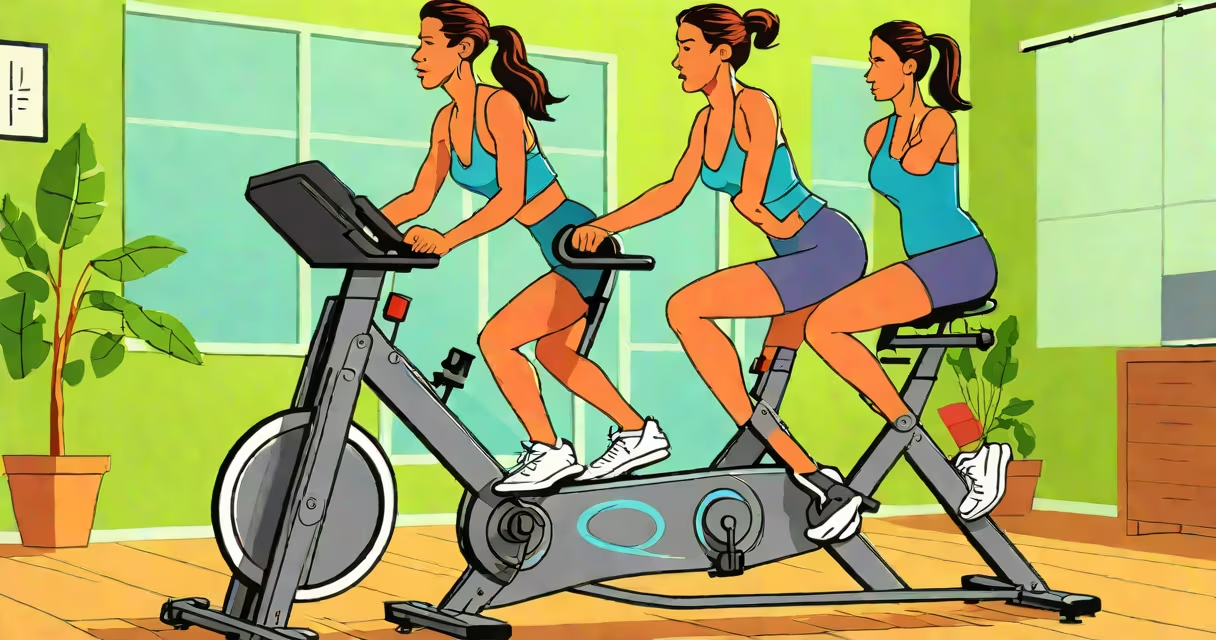
Riding a stationary bike regularly reduces belly fat by burning calories and lowering visceral fat, especially when paired with a calorie-controlled diet and consistent effort. This form of cardio targets body fat, including stubborn abdominal fat, though spot reduction is not possible.
Stationary bikes deliver low-impact cardiovascular exercise ideal for sustained sessions. They allow users to maintain moderate to high intensity for 30-60 minutes, which triggers fat oxidation. According to the American Council on Exercise (ACE), 30 minutes of moderate-intensity cycling burns approximately 250-350 calories depending on weight and pace. Over time, this creates a calorie deficit essential for fat loss.
Visceral fat-the deep abdominal fat surrounding organs-is linked to insulin resistance and heart disease risk. A 2021 study published in Obesity found that participants who cycled five times weekly for 45 minutes over 12 weeks reduced visceral fat by an average of 12%. This confirms that consistent aerobic activity, such as stationary biking, directly impacts internal fat stores.
Belly fat reduction happens systemically, not locally. When you ride a stationary bike, your body uses stored energy-primarily glycogen and then fat-for fuel. As intensity increases, fat becomes the dominant fuel source. After 20 minutes of continuous cycling, fat oxidation peaks, making longer sessions more effective for fat loss.
For optimal results, aim for 150 minutes of moderate-intensity cardio per week, as recommended by the CDC. A stationary bike allows easy tracking of duration, resistance, and heart rate. Most models include preset programs that simulate hill climbs or intervals, increasing metabolic demand and boosting calorie burn beyond steady-state pedaling.
One session lasting 45 minutes at 70% of maximum heart rate burns roughly 300 calories for a 160-pound person. Doing this five days a week creates a weekly deficit of 1,500 calories-equivalent to losing about half a pound of fat per week. Consistent effort over months leads to measurable reductions in waist circumference and body fat percentage.
Not all stationary bikes offer equal benefits. The three main types differ in resistance mechanism, adjustability, and impact:
| Type | Resistance Type | Best For | Calorie Burn Estimate (30 min) |
|---|---|---|---|
| Upright Bike | Magnetic or friction | Beginners, limited space | 200-250 kcal |
| Recumbent Bike | Magnetic or electromagnetic | Back pain sufferers, older adults | 180-230 kcal |
| Spin Bike | Heavy flywheel, adjustable resistance | High-intensity interval training (HIIT) | 300-400 kcal |
Spin bikes, often used in group classes, provide the highest resistance and momentum, enabling sprints and steep inclines. These mimic outdoor cycling demands and increase post-exercise calorie burn due to excess post-exercise oxygen consumption (EPOC).
A common mistake is relying solely on the bike without adjusting resistance. Riding at low resistance for long durations may not challenge the body enough to trigger significant fat oxidation. Increasing resistance every 5-10 minutes during a session keeps heart rate elevated and improves metabolic efficiency.
Many assume that stationary biking specifically melts belly fat. This is incorrect. The body cannot target fat loss in one area-it draws from fat stores throughout. A 2019 review in Journal of Sports Science & Medicine confirmed that no exercise produces localized fat loss, regardless of muscle activation.
Another misconception is that short rides yield quick results. Cycling for 10 minutes daily burns fewer than 100 calories. To see changes, consistency matters more than duration. Research shows that people who exercised 30 minutes daily for six months lost more total body fat than those who exercised longer but less frequently.
Some users believe adding crunches or ab workouts during or after cycling enhances belly fat loss. While strength training builds lean mass and slightly raises resting metabolism, it doesn't accelerate fat loss in the abdomen. Combining cycling with resistance training improves composition, but fat reduction still depends on caloric balance.
Consider a 42-year-old woman weighing 180 pounds with a 38-inch waist. She begins riding a spin bike three times a week for 45 minutes at 75% max heart rate, maintaining a 1,800-calorie daily intake. She tracks progress using a fitness app and measures waist circumference weekly.
After four weeks, her waist shrinks by 1.2 inches. By eight weeks, she loses 6 pounds total, with 4 pounds from fat. At 12 weeks, her waist is 35.5 inches-over 2.5 inches smaller-and her body fat percentage drops from 34% to 29%. Her doctor notes improved blood pressure and fasting glucose levels.
This outcome reflects real-world results: consistent cardio combined with dietary control drives fat loss. The stationary bike was central, but not sufficient alone. She also reduced processed foods and increased protein and fiber intake.
Don't expect immediate results. Belly fat takes time to shrink. Focus on consistency, not speed. Avoid high-resistance cycling without warming up-this increases injury risk. Always start with 5 minutes of light pedaling to prepare joints and muscles.
Also avoid using the bike as a substitute for nutrition. Even 60 minutes of cycling won't overcome a daily surplus of 500 calories. Weight loss requires both exercise and dietary discipline. The National Institutes of Health states that diet contributes 70-80% of fat loss success, while exercise supports maintenance and health improvements.
Finally, don't skip recovery. Overtraining increases cortisol, a hormone linked to belly fat retention. Take at least one rest day per week. Active recovery-like walking or stretching-supports recovery without disrupting progress.
Using a stationary bike to lose belly fat is effective when integrated into a balanced routine. It's not magic-but it is sustainable, accessible, and proven.