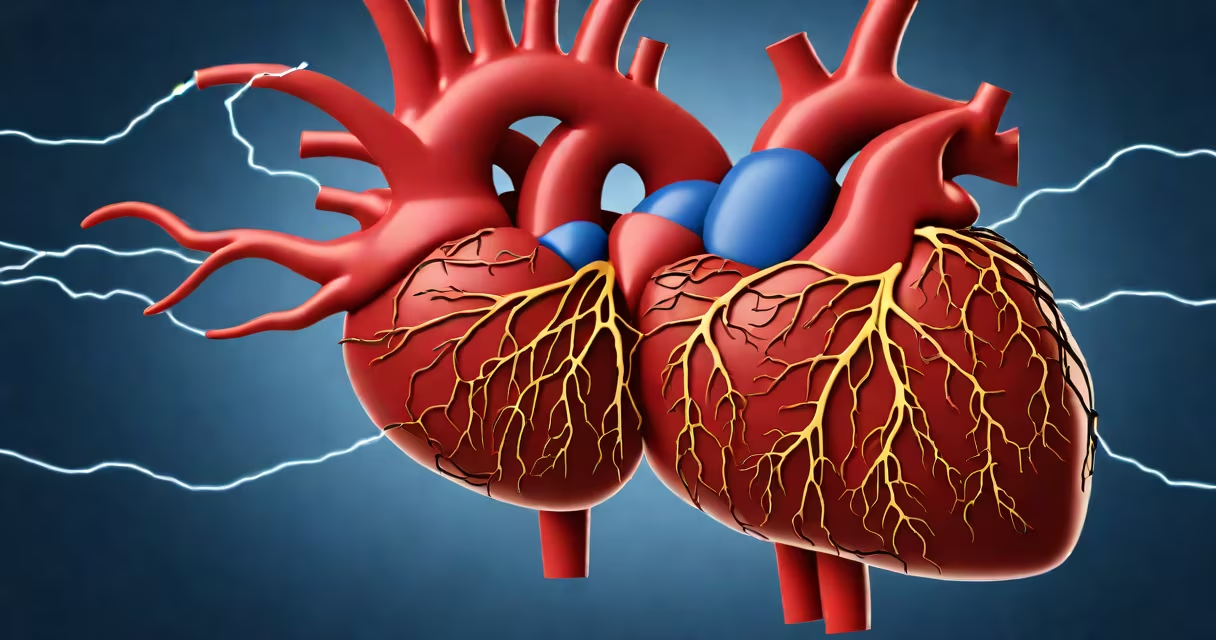
Supraventricular tachycardia (SVT) is a type of abnormal heart rhythm where the heart beats faster than normal due to electrical signals that start in the atria or the AV node, not in the ventricles. Episodes typically begin and stop suddenly, lasting from seconds to hours. Heart rates during SVT often exceed 150 beats per minute.
SVT occurs when an extra electrical pathway or faulty pacemaker cell in the upper chambers of the heart triggers rapid firing. This disrupts the normal sequence of heart contractions. Most cases involve re-entry circuits-where electrical impulses loop back through tissue they've already passed through-causing sustained rapid beats. The most common forms include AV nodal reentrant tachycardia (AVNRT), AV reentrant tachycardia (AVRT), and focal atrial tachycardia.
While SVT is usually not life-threatening, it can cause significant discomfort and reduce blood flow to important organs. People may describe it as a racing heart, chest tightness, dizziness, or fainting. Episodes often resolve on their own but can require medical intervention if they persist or recur frequently. Diagnosis relies on electrocardiogram (ECG) during an episode, which shows a regular, narrow-complex tachycardia with no visible P waves or inverted P waves in leads II, III, and aVF.
The heart's electrical system controls each beat. Normally, the sinoatrial (SA) node in the right atrium generates a signal that travels through the atria, pauses briefly at the AV node, then moves into the ventricles. In SVT, this pathway is disrupted by an abnormal circuit or ectopic focus.
For example, in AVNRT, two pathways exist within the AV node-one fast and one slow. A premature beat can travel down the slow pathway and return via the fast one, creating a loop. This re-entry mechanism sustains the rapid rhythm until interrupted by medication, vagal maneuvers, or cardioversion.
A 2022 study published in the Journal of the American College of Cardiology found that 60% of patients with SVT reported symptom onset before age 30. The condition affects approximately 1 in 250 people annually, with higher prevalence in women and individuals with no structural heart disease.
SVT is categorized by the location of the abnormal electrical impulse or the mechanism involved. The three primary types are:
| Type | Origin | Key Feature | Prevalence |
|---|---|---|---|
| AV nodal reentrant tachycardia (AVNRT) | AV node | Double pathway in AV node; most common form | ~60% |
| AV reentrant tachycardia (AVRT) | Accessory pathway (e.g., Wolff-Parkinson-White syndrome) | Extra electrical connection between atria and ventricles | ~20% |
| Focal atrial tachycardia | Atrial tissue | Abnormal focus in atria; less common | ~15% |
Common triggers include caffeine, alcohol, stress, sleep deprivation, and dehydration. Some medications-such as decongestants, asthma inhalers, and certain antidepressants-can also provoke episodes. A 2021 review in Circulation noted that 30% of SVT patients had identifiable lifestyle triggers, with caffeine being the most frequent.
SVT is often misdiagnosed as anxiety or panic attacks. Patients may undergo multiple psychiatric evaluations before a correct cardiac diagnosis is made. One case series from the Mayo Clinic showed that 25% of initial SVT patients were incorrectly diagnosed with panic disorder.
Diagnosing SVT requires capturing the rhythm during an episode. An outpatient Holter monitor or event recorder may be used if symptoms are infrequent. During a symptomatic episode, a 12-lead ECG reveals a regular, narrow-complex tachycardia with a rate of 150-250 beats per minute and absent or retrograde P waves.
Treatment depends on severity and frequency. For acute episodes, vagal maneuvers such as the Valsalva maneuver (bearing down as if having a bowel movement) can terminate SVT in up to 40% of cases. If ineffective, intravenous adenosine-a drug that briefly blocks the AV node-is the first-line treatment. It halts the re-entry circuit within seconds.
For recurrent episodes, oral medications like beta-blockers (e.g., metoprolol), calcium channel blockers (e.g., diltiazem), or antiarrhythmics (e.g., flecainide) are prescribed. Catheter ablation, a minimally invasive procedure that destroys the abnormal pathway, is curative in over 95% of cases. The procedure is recommended for patients with frequent symptoms or those who cannot tolerate long-term medication.
I performed a catheter ablation on a 28-year-old woman with daily SVT episodes triggered by work stress. She had undergone multiple emergency room visits and was on daily beta-blockers. After ablation, she remained asymptomatic at 18-month follow-up with no medication.
Seek immediate medical attention if SVT lasts longer than 15 minutes, causes chest pain, severe dizziness, or fainting. These signs suggest reduced cardiac output and potential risk of complications such as heart failure or stroke.
Patients with known heart disease, diabetes, or hypertension are at higher risk for adverse outcomes during prolonged episodes. Even in otherwise healthy individuals, frequent episodes can lead to tachycardia-induced cardiomyopathy-a weakening of the heart muscle due to sustained high rates.