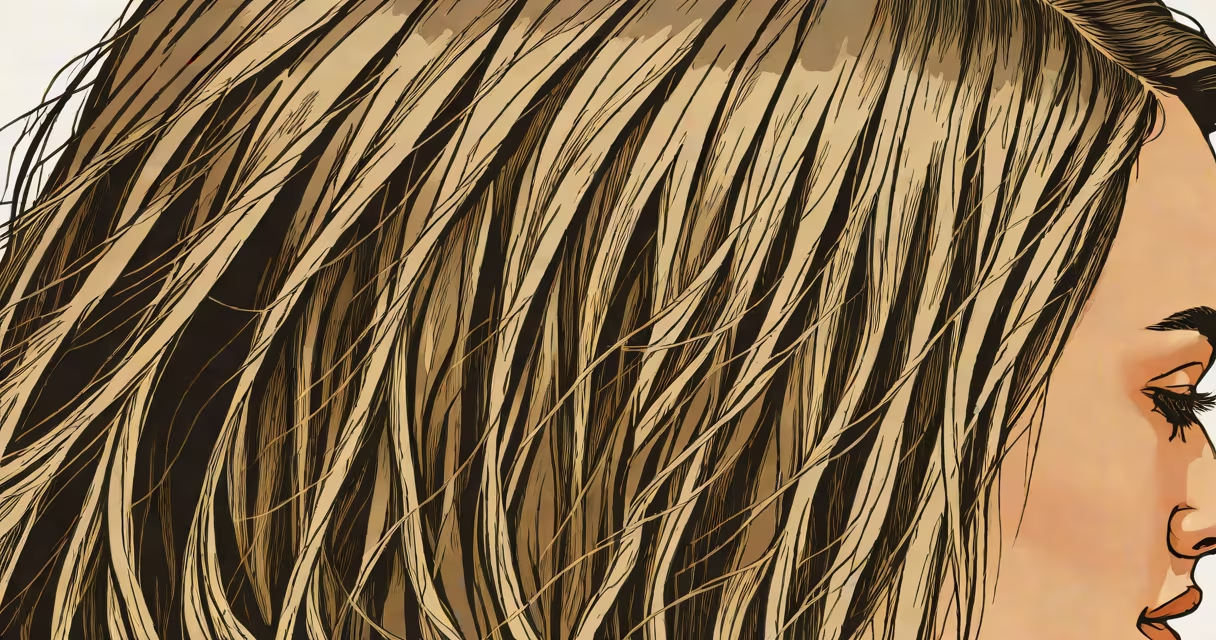
Thinning hair part women refers to progressive hair loss that appears along the central part line of the scalp, commonly affecting women in their 30s through 50s. This pattern typically begins with a widening part, reduced volume, and visible scalp, especially when hair is pulled back.
This condition is distinct from male-pattern baldness. While men often lose hair at the crown or temples, women with thinning hair part experience diffuse thinning centered on the midline. The hair follicles shrink over time due to sensitivity to dihydrotestosterone (DHT), a hormone derivative linked to hair cycle disruption.
The American Academy of Dermatology notes that female pattern hair loss affects approximately 30 million women in the U.S., with the part-line thinning being one of the earliest visible signs. It often develops gradually, making early detection difficult until volume loss becomes noticeable.
Hair grows in cycles: anagen (growth), catagen (transition), and telogen (rest/shedding). In women with thinning hair part, the anagen phase shortens, leading to shorter, finer hairs. Over time, follicles enter a miniaturization phase, producing less dense hair.
Genetics play a major role. A family history of hair thinning increases risk. Studies show that variants in the AR gene (androgen receptor) correlate with increased DHT sensitivity in women, even at normal testosterone levels. This explains why some women develop thinning despite no apparent hormonal imbalance.
Stress-related shedding can mimic thinning hair part. Telogen effluvium occurs after surgery, childbirth, or severe illness, causing sudden shedding. However, this usually resolves within 6 months. Persistent thinning beyond that window suggests ongoing pattern hair loss rather than temporary shedding.
Hormonal fluctuations are a primary driver. Postpartum changes, perimenopause, and conditions like polycystic ovary syndrome (PCOS) disrupt estrogen and progesterone balance, increasing androgen activity. Elevated androgens bind to receptors in scalp follicles, triggering miniaturization.
Thyroid dysfunction is another frequent contributor. Both hypothyroidism and hyperthyroidism alter metabolic rates and disrupt hair cycling. Research from the Journal of Clinical Endocrinology & Metabolism shows that 15% of women with unexplained hair thinning have subclinical hypothyroidism. Testing TSH, free T4, and thyroid antibodies can reveal hidden imbalances.
Nutritional deficiencies also contribute. Low iron (ferritin below 30 ng/mL), vitamin D, zinc, and biotin impair keratin production and follicle health. A 2022 study in the International Journal of Trichology found that 42% of women with thinning hair part had ferritin levels under 30, even without anemia symptoms.
| Factor | Typical Impact | Testing Recommendation |
|---|---|---|
| Androgen sensitivity | Reduces follicle lifespan; causes fine, short hairs | Test DHEA-S, free testosterone, SHBG |
| Thyroid issues | Disrupts hair cycle; leads to diffuse shedding | Check TSH, free T4, TPO antibodies |
| Low iron stores | Impairs oxygen delivery to follicles | Ferritin < 30 ng/mL indicates deficiency |
Many women mistake thinning hair part for dryness, product buildup, or styling damage. But true thinning involves actual reduction in hair density, not just surface appearance. A simple test: pull a small section of hair from the part line. If more than 10-12 strands come out with gentle tug, it may indicate active shedding.
Some confuse it with alopecia areata, which presents as round patches of complete hair loss. Unlike that autoimmune condition, thinning hair part women shows gradual, symmetrical thinning along the center line, not isolated spots.
A common error is assuming that hair thinning is irreversible. Early intervention improves outcomes. Topical minoxidil 5% applied daily has shown 60% of users report improved density after 12 weeks, according to a 2021 clinical trial published in the Journal of the American Academy of Dermatology.
Sarah, 42, noticed her hair part had widened over six months. She wore it in a ponytail daily and began seeing more strands in her brush. Her dermatologist confirmed she had female pattern hair loss with a 30% reduction in hair density at the central part line via dermoscopy.
Lab tests revealed low ferritin (22 ng/mL), normal TSH, and elevated DHEA-S. She started oral iron supplements (100 mg/day), topical minoxidil 5%, and a low-androgen diet. After nine months, her part narrowed, and new vellus-like hairs emerged at the crown.
This case illustrates that multiple factors can coexist. Sarah's thinning was driven by both iron deficiency and mild androgen excess, requiring a combined approach.
If you notice a widening part, reduced volume when brushing, or scalp visibility, consult a dermatologist specializing in trichology. Early diagnosis prevents further miniaturization. Delaying care increases the chance of permanent follicle damage.
Hair thinning in front women often overlaps with central thinning, but frontal loss may stem from traction alopecia or scarring conditions. A proper evaluation distinguishes between pattern loss and mechanical or inflammatory causes.
Thinning hair part women is not inevitable. With accurate diagnosis and targeted treatment, regrowth and stabilization are achievable. Recognizing the pattern early maximizes success.