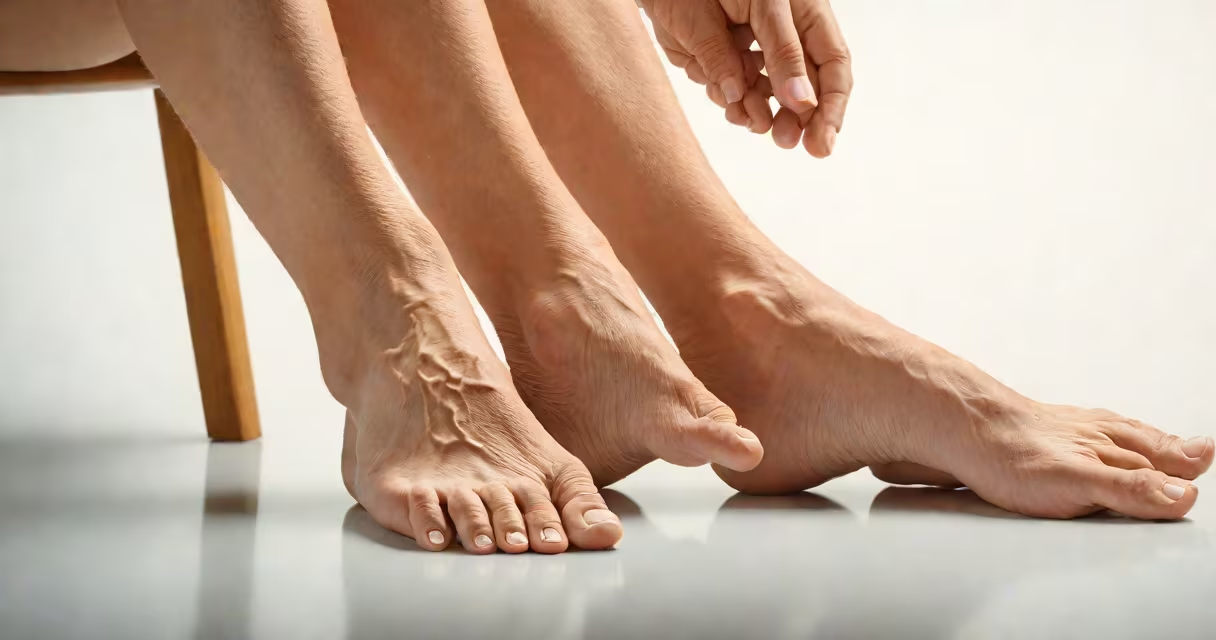
Tingling in the calf and foot is a sensory symptom caused by irritation or damage to nerves running from the lower spine through the leg to the foot. It often signals nerve compression, poor circulation, or underlying neurological conditions such as sciatica or peripheral neuropathy.
This sensation typically presents as pins-and-needles, burning, or electric-like shocks. It may occur intermittently or persistently, worsen with activity or prolonged sitting, and sometimes accompany weakness or numbness. While mild cases resolve quickly, persistent tingling warrants medical evaluation to rule out serious causes.
Nerves in the lower back-specifically the sciatic nerve and its branches-travel down the back of the thigh, through the calf, and into the foot. Any pressure or damage along this path disrupts normal electrical signaling, leading to abnormal sensations like tingling.
The sciatic nerve, the largest single nerve in the body, originates from spinal roots L4 through S3. Compression at the lumbar spine (e.g., from a herniated disc) can cause radiating pain and tingling down the back of the leg. Similarly, entrapment at the piriformis muscle or in the tarsal tunnel behind the ankle can produce localized symptoms.
A 2021 study published in *Neurology* found that 63% of patients with radicular leg pain reported tingling as a primary symptom, often preceding motor weakness. This supports the idea that sensory changes frequently precede muscle involvement in nerve-related disorders.
Several distinct conditions can lead to tingling in the calf and foot. The most frequent include:
| Condition | Key Features | Typical Onset |
|---|---|---|
| Sciatica | Tingling down back of leg, often unilateral; may include sharp pain | Sudden, triggered by movement or prolonged sitting |
| Peripheral Neuropathy | Bilateral tingling, often described as "stocking-glove" pattern; associated with diabetes or vitamin deficiencies | Gradual onset over weeks to months |
| Piriformis Syndrome | Tingling in calf and foot, worsened by walking or sitting; mimics sciatica | Chronic, often linked to repetitive strain |
| Tarsal Tunnel Syndrome | Compression of posterior tibial nerve behind ankle; tingling on inner foot and sole | Worsens with standing or walking long distances |
Diabetes is the leading cause of peripheral neuropathy. According to the American Diabetes Association, nearly 50% of people with type 2 diabetes develop some form of nerve damage over time. Tingling in the feet is often one of the earliest signs, appearing before significant pain or loss of function.
Non-neurological causes include vitamin B12 deficiency, hypothyroidism, and prolonged pressure on limbs (e.g., sleeping with arm under head). These are reversible with treatment, but early recognition prevents permanent nerve injury.
Many assume tingling is harmless or temporary. But persistent or worsening tingling-especially when paired with weakness-is a red flag for progressive nerve damage. The absence of pain does not rule out pathology.
A common mistake is attributing calf tingling solely to poor circulation. While vascular issues like claudication can cause cramping and fatigue, they rarely cause isolated tingling. True neurogenic symptoms involve altered sensation, not just reduced blood flow.
I once treated a 54-year-old man who reported intermittent tingling in his left foot for six weeks. He dismissed it as "just a pinched nerve." After a physical exam revealed diminished ankle reflexes and reduced vibration sense, an MRI confirmed a small L5-S1 disc protrusion compressing the sciatic nerve. His symptoms improved after targeted physical therapy and anti-inflammatory medication.
Consult a healthcare provider if tingling in the calf and foot is accompanied by:
These signs suggest a condition requiring imaging (MRI or CT) and possibly referral to a neurologist or orthopedic specialist.
Understanding the origin of tingling in calf and foot leads to faster diagnosis and better recovery. Do not ignore persistent symptoms-early action preserves nerve function and quality of life.