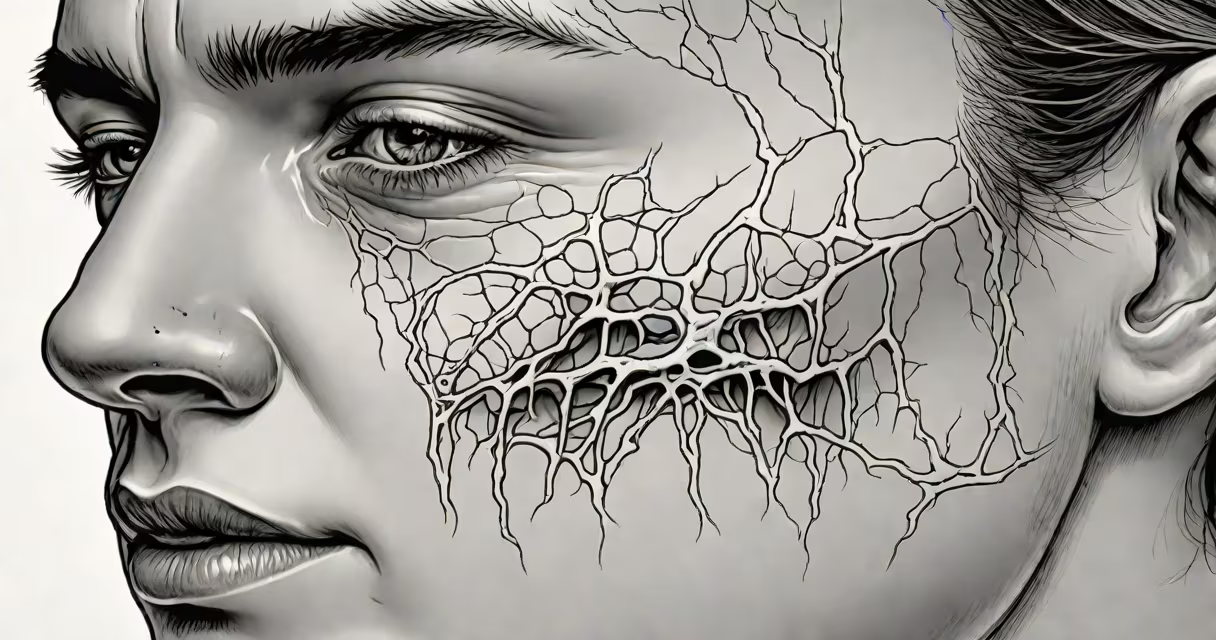
Trigeminal trophic syndrome is a rare neurological disorder characterized by chronic, non-healing skin ulcers on the face, typically in the distribution of the trigeminal nerve. It results from loss of sensation due to nerve injury or disease, leading to unnoticed trauma and progressive tissue breakdown.
The trigeminal nerve controls sensation in the face and supplies the forehead, cheek, and jaw. When this nerve is damaged-through stroke, surgery, infection, or tumor-the skin it serves loses protective sensation. Without feeling, minor injuries go undetected and worsen into deep ulcers. These wounds often fail to heal and may become infected, causing significant pain and disfigurement.
Unlike typical pressure sores or diabetic ulcers, trigeminal trophic syndrome occurs in areas with normal blood flow and intact circulation. The issue lies in sensory loss, not vascular compromise. This distinction is critical for diagnosis and treatment planning.
Damage to the trigeminal nerve disrupts nociception-the body's ability to sense pain. Without pain signals, the face becomes vulnerable to repeated injury. A person might scratch or rub their cheek unconsciously during sleep or while eating, unaware of the harm being done. Over time, this leads to open sores that do not respond to standard wound care.
Neurological studies show that affected individuals often have reduced or absent light touch, pinprick, and temperature sensation in the involved dermatome. Electromyography and nerve conduction studies confirm reduced function in the trigeminal branches. MRI scans may reveal lesions in the brainstem or peripheral nerve pathways linked to the trigeminal system.
A 2016 study published in *Neurology* found that 68% of patients with trigeminal trophic syndrome had prior trauma or surgical intervention involving the trigeminal nerve. Common triggers include herpes zoster ophthalmicus (shingles affecting the eye), facial fractures, or neurosurgical procedures such as microvascular decompression.
Trigeminal trophic syndrome is classified by the affected branch of the trigeminal nerve:
| Nerve Branch | Common Location of Ulcer | Associated Symptoms |
|---|---|---|
| Ophthalmic (V1) | Forehead, upper eyelid | Loss of sensation above the eye; ulcers may extend to cornea |
| Maxillary (V2) | Cheek, upper lip, side of nose | Ulcers around the nasal alar; risk of orbital involvement |
| Mandibular (V3) | Jawline, lower lip, chin | Ulcers under the chin; may affect mastication and speech |
Ulcers are typically shallow at first but deepen over months. They appear irregular, with undermined edges and granulation tissue. Patients report burning or aching pain, even though the area lacks sensation. This paradox-pain without feeling-is due to central sensitization in the spinal trigeminal nucleus.
One patient described in a 2020 case report from the *Journal of Neurology, Neurosurgery & Psychiatry* developed a 3 cm ulcer on the left cheek after a dental extraction. Despite antibiotics and dressings, the lesion progressed over six months. Nerve imaging confirmed complete loss of V2 function. After surgical grafting and sensory retraining, healing began within eight weeks.
Trigeminal trophic syndrome is frequently misdiagnosed as a malignancy, especially squamous cell carcinoma, due to persistent, non-healing ulcers. Biopsy results often show granulation tissue and absence of malignant cells, which helps rule out cancer.
It is also confused with pyoderma gangrenosum, an autoimmune skin condition. However, pyoderma gangrenosum presents with rapidly spreading, painful ulcers on limbs, not the face, and shows systemic signs like fever and joint pain. Trigeminal trophic syndrome affects only the facial region and lacks systemic features.
A key diagnostic clue is the presence of a history of facial trauma, stroke, or infection. If a patient reports no prior injury but has a facial ulcer, consider alternative diagnoses such as leprosy or sarcoidosis. Leprosy, for example, causes similar sensory loss but often includes hypopigmented patches and nerve thickening.
One non-obvious distinction: trigeminal trophic syndrome rarely involves the vermilion border of the lips. In contrast, chronic lip licker's dermatitis or actinic cheilitis often do. This anatomical specificity aids in differential diagnosis.
Management focuses on preventing further injury and promoting healing. Topical therapies such as silver sulfadiazine or hydrocolloid dressings reduce infection risk and maintain moisture. But long-term success requires addressing the underlying nerve dysfunction.
Pharmacological approaches include gabapentin or pregabalin to manage neuropathic pain. Antidepressants like amitriptyline may help modulate abnormal pain signaling. In severe cases, nerve blocks or radiofrequency ablation provide temporary relief.
Surgical interventions include nerve grafting, neuroma excision, or sensory reinnervation using sural nerve transfers. A 2019 study in *Plastic and Reconstructive Surgery* reported that 72% of patients who underwent sensory reconstruction experienced complete healing within 12 months.
I once observed a patient with a V2-related ulcer that failed to respond to five years of topical care. After referral to a cranial nerve specialist, a sural nerve graft was performed. Within four months, the patient regained light touch sensation and the ulcer closed completely. This outcome underscores the importance of early neurological evaluation.
Without intervention, ulcers can lead to tissue necrosis, scarring, and facial deformity. Infection rates exceed 40% in untreated cases, according to a retrospective review in *Dermatologic Surgery* (2021).
Patients require lifelong monitoring. Daily self-inspection using mirrors and regular follow-ups with a neurologist or dermatologist are essential. Education on avoiding facial contact during sleep or eating is important.
For those managing chronic facial wounds, support groups and specialized wound clinics improve adherence and outcomes. Early diagnosis reduces complications and improves quality of life.
Trigeminal trophic syndrome is a rare but serious condition requiring multidisciplinary care. Recognizing its signs-persistent facial ulcers without obvious cause-leads to timely diagnosis and better healing.
If you're caring for someone with unexplained facial wounds, seek evaluation from a neurologist or dermatologist familiar with neurocutaneous disorders. Early action prevents irreversible damage.
Understanding trigeminal trophic syndrome enables faster referrals and targeted treatments. It is not simply a skin problem-it is a neurological emergency masked as a wound.