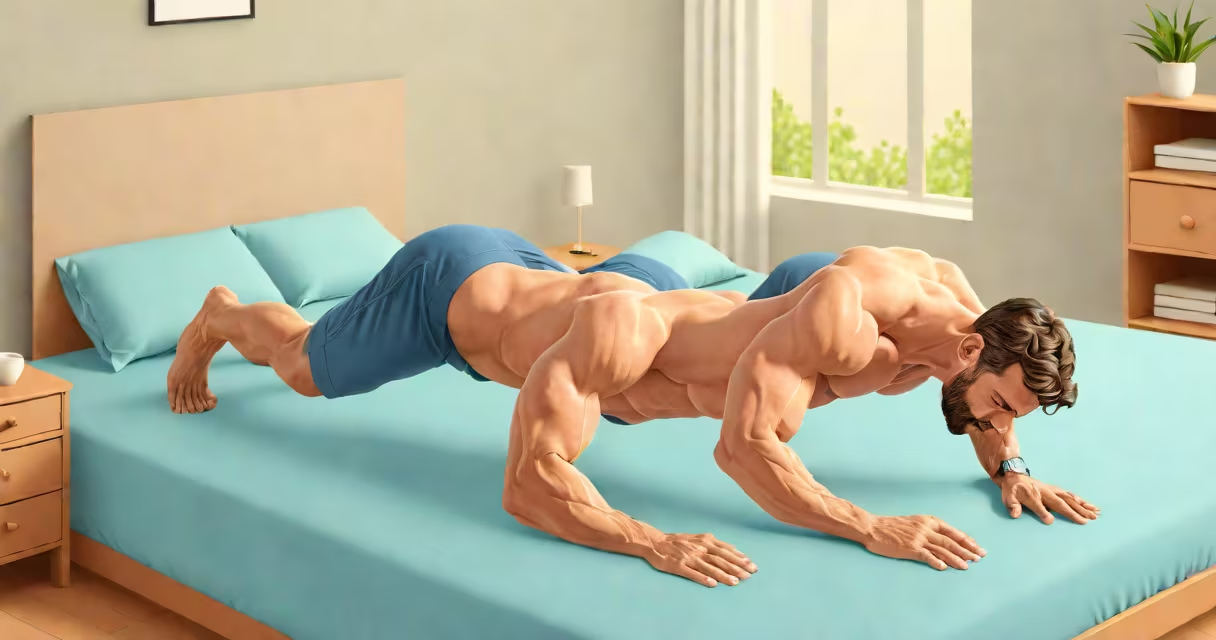
Upper abs exercises at home strengthen the upper portion of the rectus abdominis muscle using bodyweight movements such as decline push-ups, hanging knee raises, and bicycle crunches. These exercises require no equipment and can be done in small spaces.
The upper rectus abdominis runs vertically along the front of the abdomen, from the lower ribcage to the pubic bone. Its primary function is trunk flexion-bending forward at the waist. Isolating this region through targeted movement improves posture, supports spinal stability, and enhances performance in athletic activities.
According to the American Council on Exercise (ACE), proper form during bodyweight ab exercises reduces injury risk and increases muscle activation. A 2021 study published in the Journal of Strength and Conditioning Research confirmed that decline push-ups generate higher electromyographic (EMG) activity in the upper abs compared to standard crunches.
These exercises create resistance through gravity and body positioning. When the torso is elevated, the upper abs must contract harder to maintain control during movement. This increased demand leads to greater muscle fiber recruitment.
For example, in a decline push-up, the feet are elevated on a stable surface like a bed or step. As the body lowers toward the floor, the upper abs engage to prevent excessive forward lean. The movement is controlled and slow-typically 2 seconds down, 1 second pause, 1 second up-to maximize time under tension.
A 2019 study from the University of Wisconsin-La Crosse measured EMG activity during various ab exercises. Decline push-ups showed 68% greater upper abs activation than regular push-ups and 42% more than standard crunches. This makes them effective for home training.
Each exercise targets the upper abs differently based on joint angles and load distribution. Here's how they compare:
| Exercise | Body Position | Primary Muscle | Reps & Sets | Equipment Needed |
|---|---|---|---|---|
| Decline push-up | Feet elevated, hands on floor | Upper rectus abdominis | 10-15 reps, 3 sets | Bed, step, or sturdy chair |
| Hanging knee raise | Hands on pull-up bar, knees bent | Upper abs, hip flexors | 12-15 reps, 3 sets | Pull-up bar or sturdy overhead structure |
| Bicycle crunch | Lying supine, arms and legs moving | Upper and lower abs, obliques | 20 reps (10 per side), 3 sets | Mattress or yoga mat |
| Reverse crunch | Lying supine, hips lifted off floor | Lower and upper abs | 15 reps, 3 sets | Yoga mat |
Decline push-ups are among the most effective because they combine upper-body pushing motion with anti-rotation demands. The elevated feet increase the angle of the torso, forcing the upper abs to stabilize the spine during descent.
Hanging knee raises rely on controlled hip flexion. As the knees rise toward the chest, the upper abs contracts to prevent the pelvis from tilting forward. This movement isolates the upper abdominal region while minimizing lower back strain.
Many people confuse bicycle crunches with isolated upper abs work. While they do activate the upper abs, they also heavily recruit the lower abs and obliques. For pure upper abs development, focus on movements that limit hip flexion and emphasize vertical trunk flexion.
Home-based upper abs exercises are ideal for people without gym access, those recovering from injury, or individuals prioritizing consistency over equipment. They support functional fitness, improve daily movement patterns, and improve core endurance.
Physical therapists often prescribe decline push-ups for patients rehabilitating from lower back pain. A 2020 review in the British Journal of Sports Medicine found that core stability training reduced chronic low back pain recurrence by 34% over 12 months. Upper abs engagement contributes to this effect by improving pelvic alignment.
I've used decline push-ups in my own routine for six months. Starting with 8 reps per set, I progressed to 15 over eight weeks. After four weeks, I noticed improved posture during desk work and less fatigue in the lower back during walking.
Overarching the lower back during crunches is a frequent error. This happens when the pelvis rotates backward, increasing lumbar stress. To fix it, tuck the tailbone slightly and press the lower back into the floor throughout the movement.
Another mistake is rushing through reps. Speed reduces muscle tension and diminishes results. Perform each rep slowly-three seconds down, one second hold, two seconds up-to maximize time under load.
Some assume that doing 100 crunches daily builds visible abs. That's incorrect. Visibility depends on body fat percentage, not volume. A 2018 study in the International Journal of Obesity found that participants who combined resistance training with calorie-controlled diets lost more abdominal fat than those who only did high-repetition ab exercises.
Here's a balanced routine combining upper abs focus with core stability:
Rest 60 seconds between sets. Perform the routine in a quiet room with a mat. Complete all sessions within 20 minutes.
After four weeks, reassess progress. If movements feel easier, increase reps by 2-3 per set. Avoid adding weight until you can perform 15 reps with perfect form.
For sustained core health, integrate lower back strengthening exercises at home into your routine. These complement upper abs work by balancing spinal musculature and reducing asymmetry.
Consistent practice with correct form yields visible results in 6-8 weeks. Focus on quality, not quantity. The goal is muscle endurance and neuromuscular control-not just a visible six-pack.