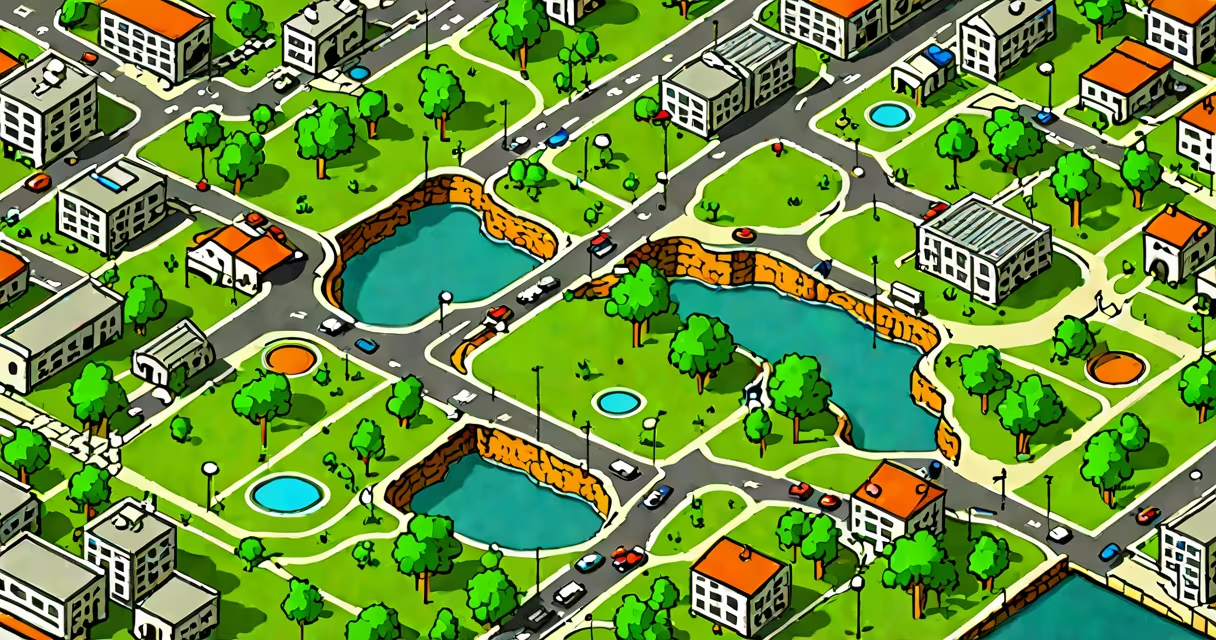
The urban water cycle is the movement and transformation of water within cities, driven by rainfall, human-built infrastructure, and altered land surfaces. Unlike natural cycles, it emphasizes runoff, storage, treatment, and reuse in densely populated areas.
Urban environments replace permeable soil and vegetation with pavement, rooftops, and buildings. These surfaces prevent water from soaking into the ground. Instead, rain becomes surface runoff, flowing into gutters, storm drains, and pipes. This shifts the balance of the natural water cycle toward rapid drainage and increased flood risk.
Water enters urban systems through precipitation, then travels via engineered channels. It may be collected in retention basins, treated in wastewater plants, or discharged into rivers and oceans. Some cities now capture runoff for irrigation or groundwater recharge. The cycle ends when water returns to natural bodies or evaporates.
When rain falls on a city, most of it doesn't infiltrate. Impervious surfaces like asphalt and concrete have low infiltration rates-typically less than 1 mm/hour compared to 10-100 mm/hour for forest soils. Rainwater accumulates quickly on these surfaces, forming runoff.
Runoff flows into storm sewers through catch basins. These systems are designed to move water rapidly away from streets and buildings. In older cities, combined sewer systems carry both stormwater and sewage. During heavy storms, these systems can overflow, releasing untreated waste into nearby waterways.
Modern cities use green infrastructure to slow and filter runoff. Bioswales, permeable pavements, and green roofs absorb rainwater and reduce peak flow. For example, Philadelphia's Green City, Clean Waters program uses over 1,000 green stormwater infrastructure projects to manage 80% of annual rainfall on-site.
The urban water cycle includes several distinct processes, each affecting water quality and quantity differently.
| Process | Description | Impact |
|---|---|---|
| Surface Runoff | Water flowing over pavement and rooftops | Carries pollutants like oil, metals, and debris; increases flood risk |
| Infiltration | Water seeping into soil beneath green spaces or permeable surfaces | Recharges groundwater; reduces runoff volume |
| Stormwater Capture | Collection of runoff in tanks, basins, or cisterns | Enables reuse for irrigation or toilet flushing |
| Wastewater Treatment | Processing of sewage and stormwater mixtures | Removes pathogens and chemicals before discharge |
Some cities implement dual systems: one for stormwater and one for sewage. New York City's Green Infrastructure Plan targets 1 billion gallons of stormwater captured annually by 2030 using rain gardens and green roofs.
A lesser-known factor is urban heat islands. Cities are 2-5°C warmer than surrounding rural areas due to concrete and lack of vegetation. This increases evaporation rates and alters local precipitation patterns, intensifying the urban water cycle's stress points.
Many assume the urban water cycle is simply a scaled-down version of the natural water cycle. That's incorrect. Natural cycles involve gradual infiltration, evapotranspiration, and groundwater recharge. Urban cycles prioritize speed and containment.
Another misconception is that storm drains lead to treatment plants. Most don't. In many U.S. cities, stormwater flows directly into rivers or lakes without treatment. A 2021 EPA report found that 60% of urban stormwater systems discharge untreated runoff during major storms.
Also, people often confuse urban runoff with sewage. They're different. Sewage contains organic waste and pathogens. Stormwater carries sediment, heavy metals, and pesticides from roads and lawns. Mixing them creates complex pollution challenges.
Seattle's RainWise program offers rebates to homeowners who install rain gardens or cisterns. The goal is to reduce stormwater entering the city's aging sewer system.
One participant installed a 1,200-gallon cistern under their downspout. During a 1-inch rainfall event, the cistern captured 1,800 gallons of runoff from a 1,000 sq ft roof. That's 80% of the expected runoff volume.
After installation, the homeowner reported fewer basement backups during spring rains. The city estimates that 10,000 such cisterns could prevent 10 million gallons of stormwater from overwhelming sewers annually.
This example shows how small-scale interventions can alter the urban water cycle's dynamics. It's not about replacing nature-it's about redesigning urban systems to mimic natural functions.
Unmanaged urban runoff causes significant environmental harm. Pollutants like nitrogen, phosphorus, and microplastics degrade aquatic ecosystems. Algal blooms in lakes and rivers often trace back to stormwater discharges.
Health risks include exposure to fecal coliform bacteria in flooded streets. After Hurricane Harvey in 2017, Houston saw elevated E. coli levels in floodwaters, leading to skin infections and gastrointestinal illness in residents.
Climate change amplifies these issues. More frequent extreme rainfall events overwhelm urban drainage systems. A 2022 study by the National Oceanic and Atmospheric Administration (NOAA) projected that by 2050, 70% of U.S. coastal cities will face increased stormwater flooding due to sea level rise and heavier rain events.
Urban water cycle management is not optional. It's a core function of resilient city planning. Cities that integrate green infrastructure, monitor runoff quality, and update outdated systems see measurable reductions in flood damage and water pollution.