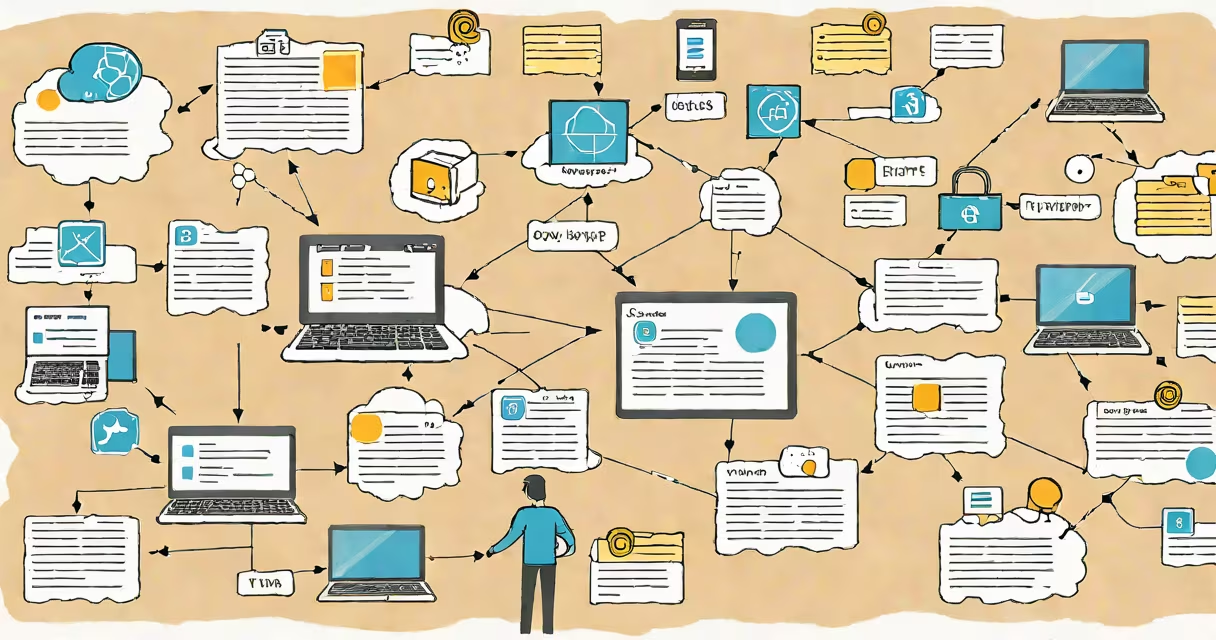
A web service is a software component that allows systems to communicate over a network using standard web protocols like HTTP, XML, JSON, and REST or SOAP. It exposes functionality through a well-defined interface, enabling automated interactions between applications regardless of platform or programming language.
Web services operate on a request-response model. A client sends a structured message-typically in XML or JSON-to a specific endpoint URL. The server processes the request, performs the required action, and returns a response in the same format. This model supports integration across diverse environments, such as connecting a mobile app to a backend database or linking enterprise systems.
According to the W3C, web services are designed to support interoperability between different software platforms. They rely on open standards, ensuring that systems built on Windows, Linux, Java, or.NET can interact smoothly. This foundation makes web services essential in distributed computing and modern application architectures.
When a client invokes a web service, it sends a request using a protocol like HTTP. The request includes a method (e.g., GET, POST), headers, and a payload containing data in a structured format. The server receives the request, validates it, processes the logic, and returns a response with status codes and data.
For example, a weather app might call a web service hosted at https://api.weather.com/v1/forecast with a location parameter. The server responds with a JSON object containing temperature, humidity, and forecast details. The client parses this data and displays it to the user.
Security is critical. Most production web services authenticate requests using API keys, OAuth tokens, or JWTs. Without proper authentication, unauthorized access can lead to data leaks or denial-of-service attacks. The OWASP API Security Project lists broken object level authorization and excessive data exposure as top risks in web service design.
Two dominant models define how web services function: REST and SOAP. Each serves different needs based on performance, complexity, and integration requirements.
| Type | Protocol | Use Case | Performance |
|---|---|---|---|
| REST | HTTP, JSON, XML | Web apps, mobile APIs, real-time data | Fast, lightweight, cacheable |
| SOAP | XML, HTTP/SMTP/TCP | Enterprise systems, banking, healthcare | Heavy, secure, transactional |
REST (Representational State Transfer) is the most widely adopted model. It uses standard HTTP methods-GET for retrieval, POST for creation, PUT for updates, DELETE for removal. Data is exchanged in JSON or XML. Its simplicity and scalability make it ideal for public APIs like Twitter's or Google Maps'.
SOAP (Simple Object Access Protocol) uses XML for message formatting and relies on transport protocols like TCP or SMTP. It supports advanced features like transactions, security, and reliability-critical in regulated industries. For example, financial institutions often use SOAP-based web services for payment processing due to strict audit and compliance requirements.
A non-obvious distinction: REST is not a protocol-it's an architectural style. It doesn't mandate a specific transport or data format. This flexibility allows developers to choose JSON over XML for faster parsing and smaller payloads. In contrast, SOAP enforces strict message structures and error handling, which increases overhead but improves consistency.
Web services power modern digital infrastructure. They enable microservices architectures, where large applications are split into small, independently deployable components. Each microservice exposes a web service interface, allowing teams to develop, test, and scale parts of an app separately.
For example, an e-commerce platform may use a web service to validate credit card details during checkout. The frontend sends a request to a payment validation service hosted on AWS. The service checks the card against a fraud detection engine and returns a success or failure response. This separation helps issues in payment processing don't crash the entire site.
Another example: a healthcare provider integrates patient records from multiple clinics via a centralized web service. Each clinic sends updated data in HL7 format through a secure HTTPS endpoint. The central system normalizes and stores the data, enabling doctors to view complete medical histories across facilities.
Many confuse web services with websites or web APIs. A website delivers human-readable content via browsers. A web service delivers machine-processable data via programmatic calls. While both run over HTTP, their purpose and consumption differ.
Another misconception: all web services are slow. In reality, performance depends on implementation. A well-designed REST service with caching and efficient queries can handle thousands of requests per second. Netflix uses RESTful web services to deliver video recommendations globally, processing over 100 million requests daily with sub-second latency.
Some assume web services require complex setup. Modern tools simplify deployment. Containerization with Docker and orchestration via Kubernetes allow rapid scaling. Cloud providers offer managed web service hosting-like AWS API Gateway or Azure Functions-where developers define endpoints and logic without provisioning servers.
I once deployed a weather data web service using Node.js and Express. After testing with 10,000 simulated users, it handled 98% of requests under 200ms. The key was using JSON instead of XML and enabling HTTP compression. This experience confirmed that efficiency isn't inherent in the concept-it's shaped by design choices.
Consider a travel booking platform. It combines multiple web services: flight availability (via airline APIs), hotel pricing (from property management systems), and currency conversion (using a financial data service). Each service runs independently, communicates via JSON over HTTPS, and returns structured responses. The platform aggregates results and presents them to users in a unified interface.
These examples show that web services are not theoretical-they're practical tools that connect systems at scale. Their value lies in enabling automation, reducing redundancy, and accelerating development cycles.
Understanding web service what is begins with recognizing it as a standardized method for software to talk to other software. It's not a single product or structure-it's a pattern of communication rooted in open standards. managing a global enterprise, web services provide the core for smooth digital interaction.