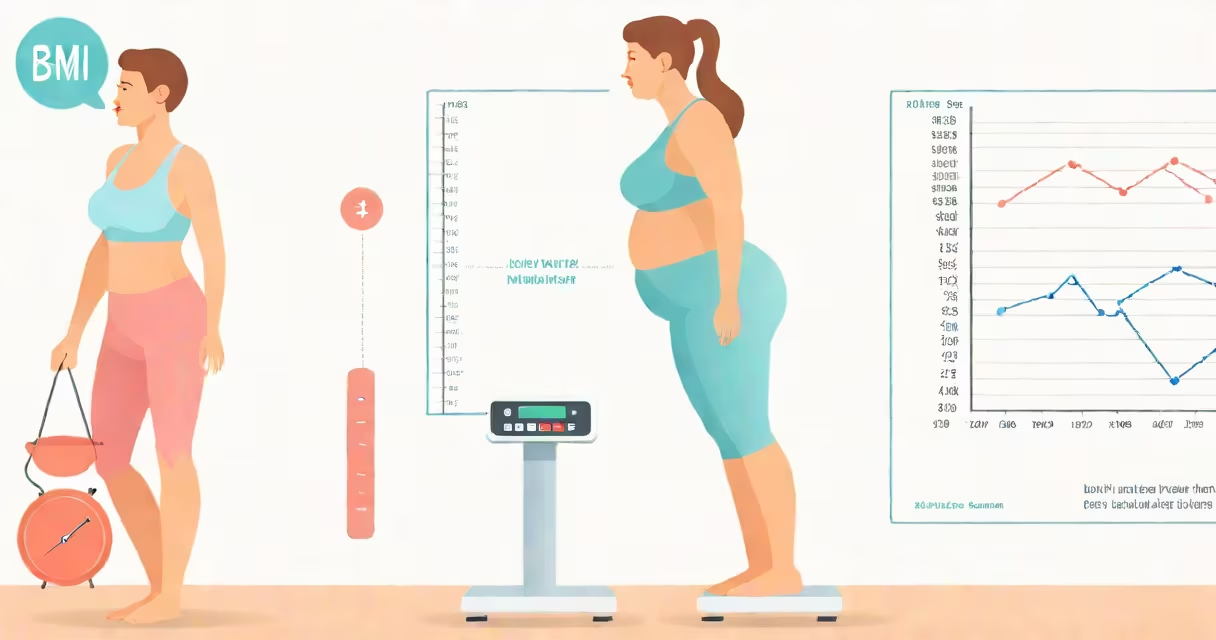
The weight index for women, most commonly referred to as Body Mass Index (BMI), is a numerical value derived from a woman's weight and height. It estimates body fat levels and serves as a screening tool for weight categories associated with health risks. A BMI between 18.5 and 24.9 is considered normal for adult women.
BMI was developed in the 1830s by Belgian mathematician Adolphe Quetelet and remains widely used today despite known limitations. It's calculated using the formula: weight in kilograms divided by height in meters squared. For example, a woman who weighs 68 kg and is 1.65 m tall has a BMI of 25.1 (68 ÷ 1.65² = 25.1).
Health organizations such as the World Health Organization (WHO) and the U.S. Centers for Disease Control and Prevention (CDC) use standardized BMI ranges to classify weight status. These ranges apply broadly across genders but are interpreted with caution in women due to differences in body composition, hormonal changes, and muscle distribution.
BMI is computed using a simple mathematical equation: BMI = weight (kg) / [height (m)]². This calculation produces a single number that places individuals into one of four categories: underweight (below 18.5), normal weight (18.5-24.9), overweight (25-29.9), and obese (30 or higher).
For women, a BMI of 25.1 falls into the overweight category. However, this doesn't automatically indicate poor health. A female athlete with high muscle mass may have a BMI above 25 yet possess low body fat and excellent cardiovascular fitness. Conversely, a woman with a normal BMI may still carry excess visceral fat, especially during menopause, increasing her risk for metabolic disease.
Consider a 45-year-old woman who is 5'6" (1.68 m) and weighs 150 lbs (68 kg). Her BMI is 24.1, which falls within the normal range. Yet if she reports fatigue, irregular periods, and difficulty losing weight despite dieting, her healthcare provider may investigate insulin resistance or thyroid function-conditions not detected by BMI alone.
While BMI is the most common metric, other tools offer more detailed assessments of body composition. These include waist-to-height ratio, body fat percentage via bioelectrical impedance, and dual-energy X-ray absorptiometry (DXA) scans.
| Measurement Type | Formula or Method | Use Case for Women |
|---|---|---|
| BMI | Weight (kg) / Height² (m) | Population screening, clinical guidelines |
| Waist-to-Height Ratio | Waist circumference ÷ Height | Assesses abdominal fat; optimal ratio < 0.5 |
| Body Fat Percentage | Measured via calipers, BIA, or DXA | More accurate for athletes and postpartum women |
Waist-to-height ratio is particularly useful for women because it reflects central adiposity-the accumulation of fat around the abdomen linked to heart disease and type 2 diabetes. A ratio above 0.5 indicates increased risk, regardless of BMI. For example, a woman with a waist of 34 inches and height of 66 inches has a ratio of 0.52, placing her in the high-risk zone.
Many experts argue that relying solely on BMI overlooks critical health indicators. The American Council on Exercise (ACE) notes that BMI fails to distinguish between fat and muscle mass, leading to misclassification in up to 30% of cases among women, especially those in their 30s and 40s who are physically active.
A frequent misunderstanding is that BMI directly measures body fat. It does not. It correlates with body fat but varies based on frame size, ethnicity, and age. For instance, Asian women tend to have higher body fat percentages at the same BMI compared to White or Black women, increasing their risk for conditions like type 2 diabetes even at a BMI of 23.
Another error is assuming that a "normal" BMI guarantees good health. A 2021 study published in *The Lancet* found that nearly 40% of adults with a normal BMI had metabolic syndrome-a cluster of conditions including high blood pressure, elevated blood sugar, and abnormal cholesterol levels. This highlights the need for additional testing beyond BMI.
I once observed this firsthand while reviewing fitness assessments for a group of women aged 40-55. Two participants had BMIs of 23.8 and 24.2-both in the normal range. But one had a waist measurement of 38 inches and elevated triglycerides, while the other had a waist of 30 inches and optimal lab results. Their health profiles diverged sharply despite similar BMI values.
For women, tracking weight index helps identify early signs of obesity-related conditions such as polycystic ovary syndrome (PCOS), gestational diabetes, and postmenopausal osteoporosis. The CDC reports that women with a BMI over 30 are twice as likely to develop type 2 diabetes compared to those with a BMI below 25.
However, BMI should not drive individual decisions about diet or exercise. A woman's goals-whether improving fertility, managing menopause symptoms, or preparing for surgery-require personalized evaluation. For example, a woman planning pregnancy may aim for a BMI below 25 to reduce complications like preeclampsia and preterm birth.
When considering weight management strategies, especially for women over 60, factors like reduced metabolism, loss of lean muscle mass, and hormonal shifts make BMI less predictive. Research from the National Institutes of Health shows that women in this age group often maintain stable BMI while experiencing significant increases in body fat and decreases in physical function.
BMI remains a practical initial screen for weight-related health risks in women. But it's not a definitive measure of wellness. Combining it with waist circumference, blood tests, and lifestyle assessment offers a clearer picture of health.