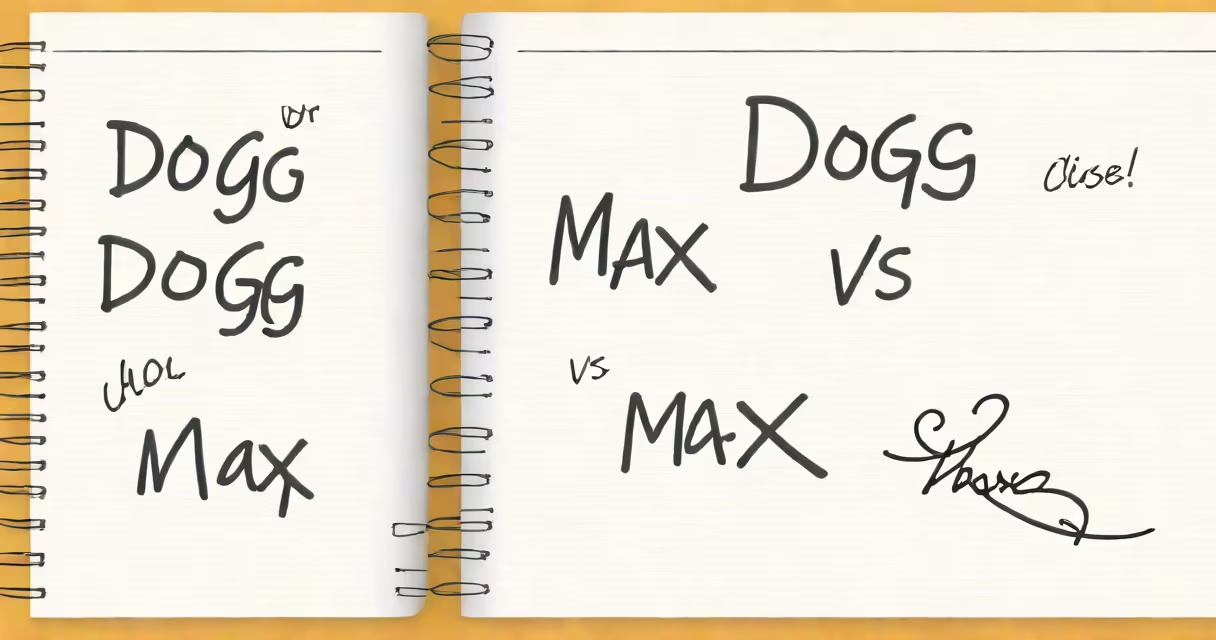
A common noun names a general person, place, thing, or idea and is not capitalized unless it starts a sentence. A proper noun names a specific person, place, or thing and is always capitalized. These distinctions define how English assigns identity and specificity to words.
Common nouns refer to categories. "Dog," "city," "book," and "holiday" are common nouns because they describe broad groups. Proper nouns name unique entities. "Max," "Paris," "War and Peace," and "Christmas" are proper nouns because they identify one specific instance. The difference lies in scope and capitalization.
Capitalization is the clearest signal. "Dog" remains lowercase in all contexts. "Max" appears with a capital M regardless of position. This rule applies consistently across American and British English. The Chicago Manual of Style confirms that proper nouns are capitalized to indicate uniqueness.
Common nouns function as subjects, objects, or complements in basic sentence structures. "The cat slept on the mat" uses "cat" and "mat" as common nouns. They represent any cat and any mat, not a specific one.
Proper nouns serve as precise identifiers. In "Sarah visited Paris last summer," "Sarah" and "Paris" are proper nouns. They name distinct individuals and locations. Removing capitalization changes meaning: "sarah visited paris" implies a generic person and city, losing reference to the actual person and destination.
Proper nouns often appear in titles, names, and official designations. "The Great Gatsby" uses "Great Gatsby" as a proper noun naming a specific novel. "The New York Times" capitalizes all major words in its name. The Associated Press Stylebook states that all words in a newspaper's name are capitalized, even if they're normally common nouns.
Common nouns fall into categories based on what they represent. Concrete nouns name physical things: "car," "tree," "chair." Abstract nouns name ideas: "freedom," "joy," "justice." Collective nouns name groups: "team," "flock," "committee."
Proper nouns include personal names, geographical locations, brands, events, and institutions. Personal names: "Emma," "Dr. Patel." Places: "Mount Everest," "Nile River." Brands: "Nike," "iPhone." Events: "Olympic Games," "Earth Day." Institutions: "Harvard University," "United Nations."
| Type | Example | Capitalization Rule |
|---|---|---|
| Common noun | dog | Lowercase unless starting a sentence |
| Proper noun | Max | Always capitalized |
| Common noun | river | Lowercase |
| Proper noun | Nile | Always capitalized |
| Common noun | holiday | Lowercase |
| Proper noun | Christmas | Always capitalized |
Some words shift between types based on context. "Apple" is a common noun when referring to the fruit. "Apple Inc." is a proper noun when naming the company. This duality trips up many learners. The key is whether the word identifies a specific entity.
People often mislabel words as proper nouns when they aren't. "Friday" is a common noun when used generically. "I'll see you on Friday" uses "Friday" as a day of the week, not a specific event. But "Friday Night Lights" is a proper noun because it names a show.
Another mistake is capitalizing common nouns in titles. "The Secret Life of Pets" is correct. "The Secret Life Of Pets" is incorrect because "of" and "pets" are not proper nouns. The AP Stylebook requires only the first word and proper nouns in titles to be capitalized.
One non-obvious rule: brand names become common nouns over time. "Kleenex" started as a proper noun for a brand of tissues. Now "kleenex" is used generically in speech and writing. The Oxford English Dictionary notes this shift from proper to common usage, though it remains a trademark.
Consider the sentence: "My dog Max loves to run in Central Park on Sundays." Here, "dog" is a common noun. "Max" is a proper noun. "Central Park" is a proper noun. "Sundays" is a common noun.
Rephrasing with only common nouns: "My pet loves to run in the park on weekends." The meaning shifts. "Pet" and "park" lose specificity. "Weekends" replaces "Sundays," which were a precise day. The original sentence identifies the animal, the location, and the time.
I once edited a student essay where "christmas" was written lowercase. The sentence read: "we decorated the tree and ate cookies during christmas." Correcting it to "Christmas" restored the intended meaning: a specific holiday, not a general season. The change clarified timing and cultural context.
When writing, ask: Is this a unique thing? If yes, capitalize. If no, leave lowercase. This rule prevents errors in formal documents, academic papers, and everyday communication.