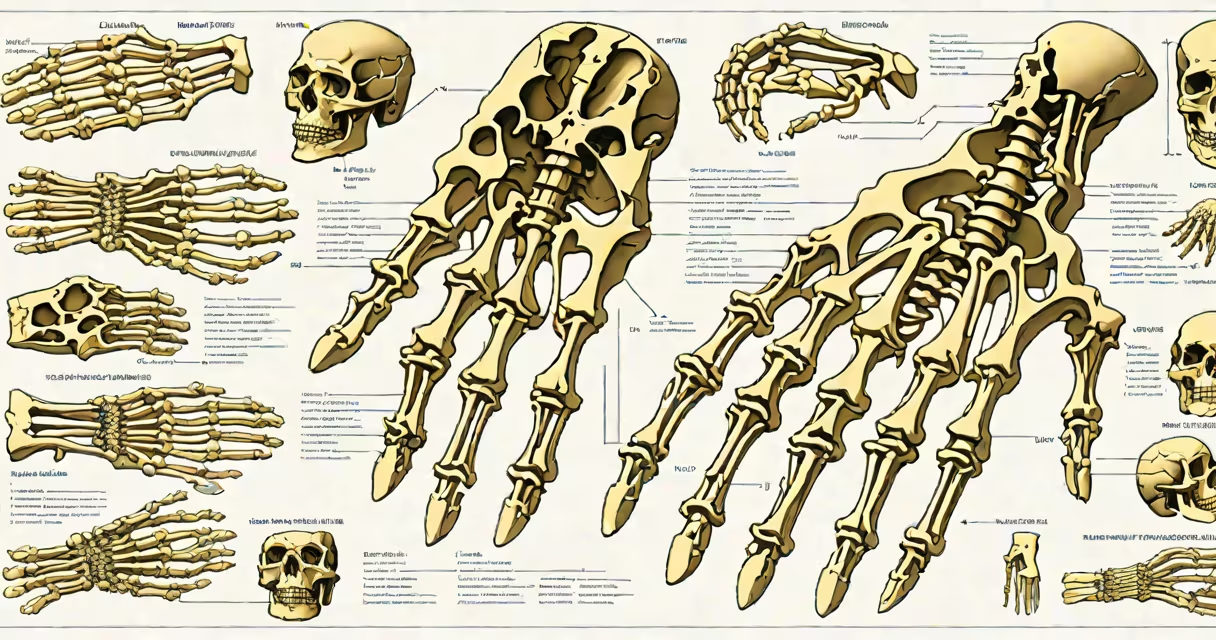
The hand bones are divided into three groups: the eight carpal bones in the wrist, the five metacarpal bones forming the palm, and the fourteen phalanges making up the fingers and thumb. These bones work together to enable fine motor control, grip strength, and dexterity.
Each group serves a specific structural and functional purpose. The carpal bones form the wrist joint and allow for complex movements like rotation and flexion. The metacarpals connect the wrist to the fingers and provide the foundation for finger motion. The phalanges are the small bones in each finger and thumb, enabling precise manipulation of objects.
Understanding these names is essential for medical professionals, athletes, and anyone studying human anatomy. Misidentifying them can lead to confusion in injury reports, surgical planning, or rehabilitation protocols.
The hand's ability to perform delicate tasks-typing, threading a needle, playing piano-relies on the coordinated action of these three bone groups. The carpal bones act as a stable yet flexible base, absorbing shock during impact and allowing the wrist to move in multiple planes.
When you make a fist, the metacarpals pivot at the knuckles, bending the fingers toward the palm. This motion is controlled by tendons and muscles attached to the bones. The phalanges then lock into place through interlocking joints, creating a secure grip.
A real-world example: a rock climber relies on precise control of the distal phalanges-the fingertip bones-to maintain balance on small holds. A fracture in the middle phalanx of the index finger can disrupt grip strength and require immobilization for six weeks, according to the American Academy of Orthopaedic Surgeons (AAOS).
The carpal bones are arranged in two rows of four bones each. The proximal row includes the scaphoid, lunate, triquetrum, and pisiform. The distal row consists of the trapezium, trapezoid, capitate, and hamate. These bones articulate with the radius and ulna above and the metacarpals below.
The metacarpals are numbered I through V, starting from the thumb (first metacarpal) to the little finger (fifth metacarpal). The first metacarpal is unique-it's shorter and more mobile, allowing opposition of the thumb against the fingers, a key feature in tool use.
The phalanges follow a consistent pattern: each finger has three bones-proximal, middle (middle phalanx), and distal. The thumb has only two: proximal and distal. This variation allows for greater precision in the thumb while maintaining strength in the other digits.
| Bone Group | Number of Bones | Location | Key Function |
|---|---|---|---|
| Carpal bones | 8 | Wrist | Shock absorption, wrist flexibility |
| Metacarpal bones | 5 | Palm | Support for finger movement, force transmission |
| Phalanges | 14 | Fingers and thumb | Grasp, fine motor skills, tactile feedback |
Many people assume the wrist contains only one bone-the radius-but it actually includes eight carpal bones and articulates with both the radius and ulna. The scaphoid, located at the base of the thumb, is especially vulnerable to fractures during falls on an outstretched hand.
Another misconception is that the thumb has three phalanges like the other fingers. It does not. The thumb has only two: proximal and distal. This difference enables the opposable motion that distinguishes human hands from those of most primates.
Some confuse the term "phalanges" with "digits." While the fingers and thumb are called digits, the bones within them are specifically phalanges. The term "digit" refers to the entire appendage, including skin, nerves, and blood vessels-not just the bone.
I once observed a patient in a physical therapy clinic who had fractured the trapezium-a carpal bone near the base of the thumb. Despite minimal swelling, he reported pain when gripping tools. An X-ray confirmed the fracture. Treatment involved a thumb spica cast for six weeks, highlighting how critical proper bone identification is in diagnosis and care.
Even in everyday life, knowing the correct names helps communicate symptoms accurately. Saying "I hurt my wrist bone" is vague. Specifying "I injured the scaphoid" leads to faster, more accurate medical evaluation.
The hand bones are part of the upper limb skeleton, which includes the humerus, radius, and ulna. They connect via synovial joints-ball-and-socket, hinge, and saddle types-that allow for many motion.
Each hand bone group contributes uniquely to hand function. The carpal bones stabilize the wrist during lifting. The metacarpals transfer force from the forearm to the fingers. The phalanges provide the fine control needed for writing or buttoning clothes.
The hand bones are called carpals, metacarpals, and phalanges. These three groups form the structural structure of the hand, enabling movement, grip, and precision. Knowing their names ensures clarity in medical contexts, athletic training, and personal health awareness. Understanding what are the hand bones called is the first step toward mastering hand anatomy.