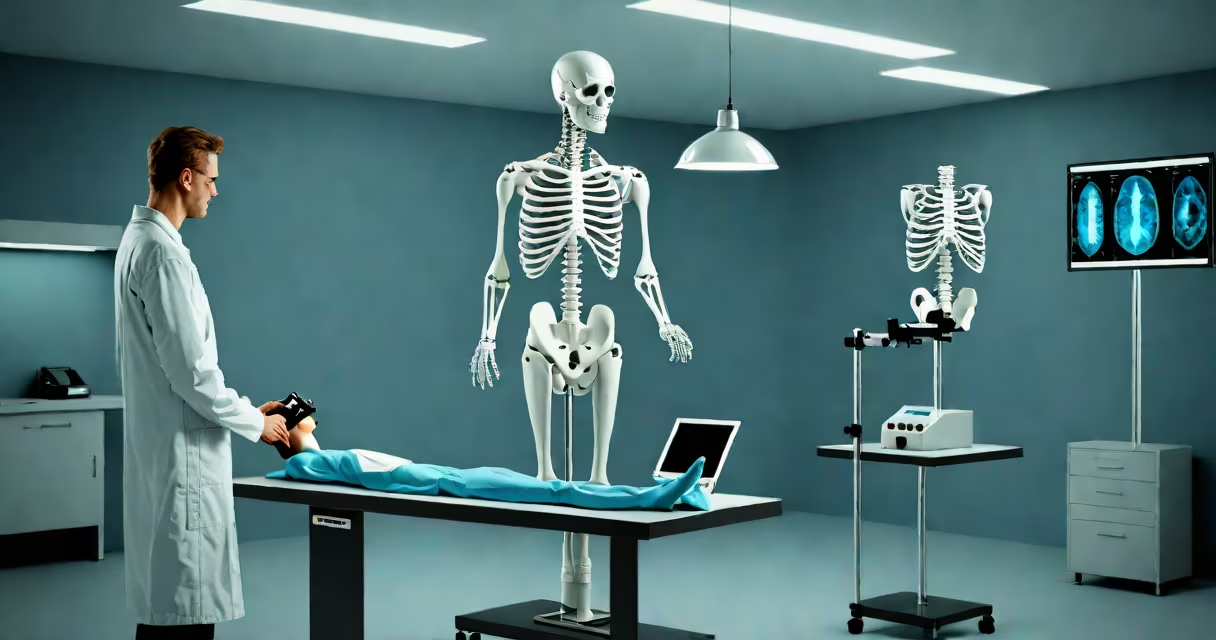
An xray tech class is a structured educational program that prepares individuals to become certified radiologic technologists, teaching them to safely operate diagnostic imaging equipment and produce high-quality medical images for clinical evaluation.
These programs combine classroom instruction with hands-on clinical training. Students learn anatomy, radiation safety, patient care, and image acquisition techniques. Upon completion, graduates qualify to take the American Registry of Radiologic Technologists (ARRT) certification exam, a requirement for employment in most U.S. hospitals and imaging centers.
Most xray tech classes last between 12 and 24 months and lead to a certificate or associate degree. Programs accredited by the Joint Review Committee on Education in Radiologic Technology (JRCERT) meet national standards and are required for eligibility to sit for the ARRT exam. Non-accredited programs do not qualify students for certification.
Classes begin with foundational science courses-biology, chemistry, and physics-with a focus on radiation principles and human anatomy. Students study how ionizing radiation interacts with tissues and how to minimize exposure while maximizing image clarity.
Hands-on labs simulate real-world conditions. Students practice positioning patients for chest, abdominal, and extremity X-rays using models and live simulations. They learn to adjust exposure settings based on patient size, tissue density, and equipment specifications.
Clinical rotations occur in hospital radiology departments or outpatient imaging clinics. Over 1,000 hours of supervised practice are typically required. During rotations, students perform X-rays under direct oversight, document procedures, and assist in quality control checks.
Programs differ by credential level, duration, and delivery format. Most are offered at community colleges, vocational schools, or university health science centers.
| Program Type | Duration | Eligibility | Accreditation Required? |
|---|---|---|---|
| Certificate | 12-18 months | High school diploma or GED | Yes (JRCERT) |
| Associate Degree | 2 years | High school diploma or GED | Yes (JRCERT) |
| Accelerated Certificate | 6-12 months | College credits or prior healthcare experience | Yes (JRCERT) |
Some programs offer hybrid formats, blending online lectures with in-person labs. Others provide full-time, accelerated tracks for students who want to enter the workforce quickly. Full-time enrollment is standard, though part-time options exist in select institutions.
Xray tech classes are essential for entering the diagnostic imaging field. Hospitals, urgent care centers, orthopedic clinics, and mobile imaging services rely on trained technologists to support physicians' diagnoses.
For example, a patient with a suspected fracture requires a precise X-ray to confirm bone alignment. A trained technologist positions the limb correctly, selects optimal exposure parameters, and ensures minimal radiation dose-all within seconds. Without proper training, image quality degrades, leading to misdiagnosis or repeat scans.
The U.S. Bureau of Labor Statistics reports that demand for radiologic technologists will grow 7% from 2022 to 2032, faster than average. This growth stems from aging populations requiring more imaging for conditions like osteoporosis and heart disease. Each new xray tech class produces professionals who fill this growing need.
Many assume xray tech class is only about operating machines. In reality, it emphasizes critical thinking, patient communication, and radiation protection. Technologists must assess patient history, identify contraindications, and adapt positioning for mobility issues or pain.
A common error is confusing xray tech class with general medical assistant training. While both roles involve patient interaction, only xray tech classes include formal instruction in radiation physics, image optimization, and compliance with federal regulations like the Radiation Protection Act.
Another misconception is that certification is optional. The ARRT requires certification for legal practice in 49 states. Only a few states allow temporary licensure without certification, but employers still require it for hiring.
In a typical xray tech class at a community college in Texas, a student named Maria completed her first clinical rotation at a regional hospital. She was assigned to the emergency department, where she assisted with trauma cases.
On her second day, a 32-year-old male arrived after a motorcycle accident. He had back pain and difficulty moving. Maria reviewed his chart, confirmed he had no known metal implants, and discussed the procedure with him. She positioned him prone on the table, adjusted the collimator to limit beam size, and set the exposure at 60 kVp and 10 mAs.
After reviewing the image, the radiologist noted a subtle compression fracture in L2. The scan was clear, well-centered, and free of motion blur-all due to accurate technique and patient cooperation. Maria later learned that improper positioning would have obscured the vertebrae and delayed diagnosis.
This scenario illustrates how xray tech class teaches not just machine operation, but decision-making under pressure and attention to detail.
I once observed a student in a California xray tech class struggle with lateral skull positioning. Despite correct settings, the image showed overlapping structures. After review, the instructor pointed out that the patient's chin was too high, causing the mandible to obscure the temporal bones. The student corrected the angle during the next attempt and produced a diagnostic image. That moment highlighted how small adjustments-learned through repetition-make the difference between usable and unusable scans.
Not all imaging roles require xray tech class. Mammographers, CT technologists, and MRI technicians undergo specialized training beyond basic X-ray. An xray tech class focuses specifically on projection radiography-the most common form of medical imaging.
Also, xray tech class is not equivalent to a bachelor's degree in health sciences. While some students transfer into B.S. programs later, the core curriculum remains focused on technical skill, patient safety, and clinical workflow-not research or public health policy.
One non-obvious fact: many xray tech classes now include training in digital image archiving systems like PACS (Picture Archiving and Communication Systems). Technologists must understand how to label, store, and retrieve images securely, following HIPAA guidelines. This integration of IT skills is often overlooked in older descriptions of the role.
Completing an accredited xray tech class opens access to entry-level positions in hospitals, clinics, and mobile units. Graduates earn $60,000 annually on average, according to the U.S. Bureau of Labor Statistics, with higher pay in metropolitan areas and specialized settings.
Xray tech class is a gateway to a stable, in-demand healthcare career grounded in science, precision, and patient care. It equips learners with the tools to contribute directly to accurate diagnosis and improved outcomes.