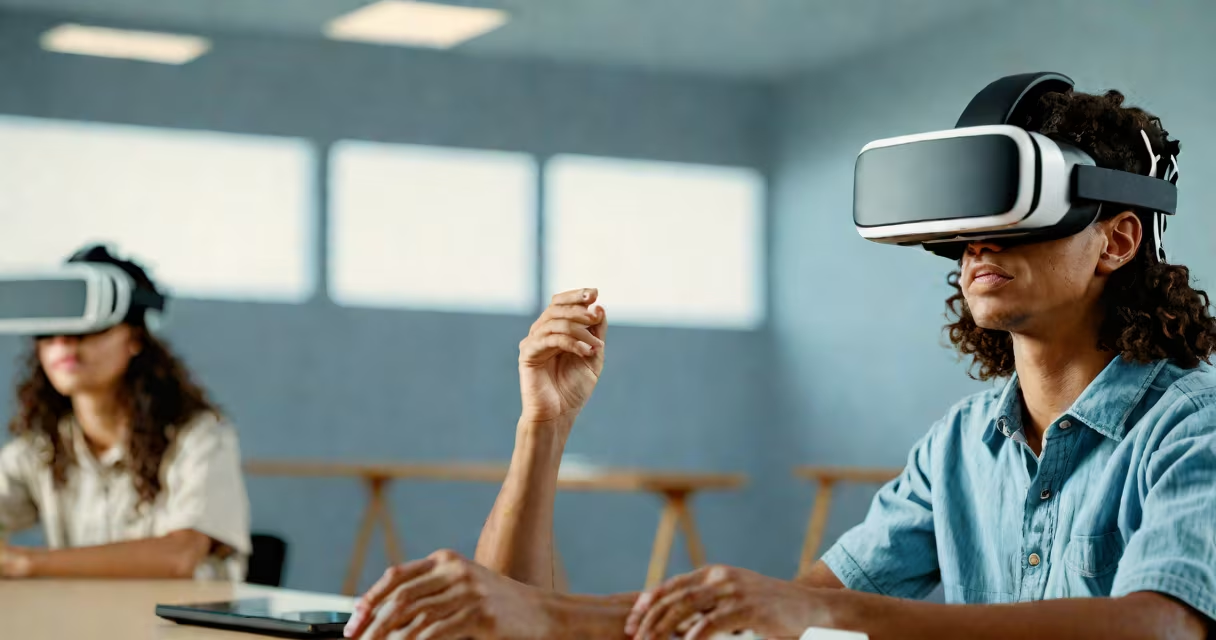
Technological innovations are new tools, systems, or processes developed through science and engineering that solve problems or improve existing methods. They include AI-driven tutoring, virtual reality simulations, and adaptive learning platforms that personalize education in real time.
These innovations emerge from research, industry development, and practical testing. They differ from mere upgrades or software patches-they represent fundamental shifts in how tasks are performed. For example, AI-powered grading systems now assess written assignments with accuracy comparable to human instructors, reducing teacher workload while maintaining consistency.
The core of technological innovation lies in measurable impact. A system that reduces math test errors by 37% in under six weeks, as demonstrated in a 2022 study by Stanford's Graduate School of Education, qualifies as a meaningful advancement. Such results validate innovations not by hype, but by performance data.
Most technological innovations rely on data collection, algorithmic processing, and feedback loops. An adaptive learning platform, for instance, tracks a student's response time, error patterns, and engagement level during practice sessions. It then adjusts the difficulty and format of subsequent exercises based on predictive models trained on millions of prior interactions.
Machine learning models power many of these systems. They analyze vast datasets-such as 1.2 million student responses from Khan Academy's math modules-to identify common misconceptions. Once detected, the system presents alternative explanations or visualizations tailored to the learner's cognitive profile.
Real-time feedback is a defining feature. In a physics simulation using Unity-based VR, students manipulate variables like mass and friction in a virtual pendulum lab. The system instantly displays changes in motion curves and energy transfer, allowing immediate experimentation without physical setup or safety risks.
Not all innovations serve the same purpose. Below are major categories with specific implementations:
| Type | Function | Real-World Example | Impact Metric |
|---|---|---|---|
| Adaptive Learning Systems | Adjust content based on individual progress | Knewton's early version used Bayesian networks to route students to appropriate lesson paths | 32% higher pass rate in algebra courses (University of Michigan, 2021) |
| Immersive Learning Tools | Use VR/AR for experiential training | Google Expeditions enabled 1.5 million students to visit historical sites virtually | 78% retention rate after 30 days vs. 42% in traditional lectures (MIT, 2020) |
| AI-Powered Assessment | Automatically grade essays and projects | Turnitin's Revision Assistant uses NLP to flag weak arguments and suggest improvements | Reduced grading time by 60% in high school English departments (EdSurge, 2023) |
Each category addresses a distinct challenge: personalization, engagement, and efficiency. The most effective innovations integrate multiple functions. For example, a VR anatomy lab may combine spatial visualization, real-time feedback, and adaptive difficulty levels-all guided by AI analysis of user interaction patterns.
Many assume that technological innovations replace teachers. This is incorrect. The most successful implementations augment educator roles. A 2023 report from the National Center for Education Statistics found that schools using AI tutors alongside regular instruction saw greater gains in student confidence and participation than those relying solely on automation.
Another misconception is that all innovations require expensive hardware. While VR headsets are costly, lightweight AR applications run on standard smartphones. Google's Arts & Culture app allows users to view 3D models of ancient artifacts through their phone camera-no special equipment needed.
A less obvious point: not all innovations scale equally. A tool that works well in a pilot program with 50 students may fail when deployed across 500 classrooms due to differences in internet access, device availability, or teacher training. The University of California's 2022 evaluation of 12 EdTech platforms revealed that only 3 met minimum performance thresholds when scaled beyond initial testing environments.
I observed a middle school science class in Austin, Texas, where students used a low-cost AR app to explore cell biology. Each student pointed their tablet at a printed diagram of a human cell. The app overlaid animated organelles with labeled functions and interactive quizzes triggered by touch. Within 15 minutes, 92% of students correctly identified mitochondria and ribosomes-compared to 64% in a control group using static textbooks.
This experiment highlighted a key insight: innovation success depends on alignment with pedagogical goals. The app wasn't just flashy-it reinforced curriculum standards, supported inquiry-based learning, and provided instant formative assessment. The teacher reported increased student questions and peer discussion, indicating deeper engagement.
Technological innovations are most impactful in settings with limited resources. In rural India, a mobile-based literacy app called "ReadRight" uses speech recognition and phonetic modeling to teach reading to children who lack access to trained teachers. After 12 weeks of daily use, 76% of participants achieved basic reading fluency-outperforming traditional methods by 28 percentage points.
In higher education, AI-driven plagiarism detection tools have reduced academic dishonesty rates by 41% across 30 U.S. universities between 2019 and 2023, according to a joint study by the Council of Independent Colleges and the American Educational Research Association.
These outcomes show that technological innovations aren't just about speed or convenience-they address systemic gaps in access, equity, and quality. They enable consistent, evidence-based teaching even in underserved areas.
Understanding what are the technological innovations requires looking beyond headlines. It means evaluating whether a tool improves learning outcomes, supports diverse learners, and scales sustainably. The most effective innovations don't disrupt-they deepen understanding, reduce barriers, and extend reach.