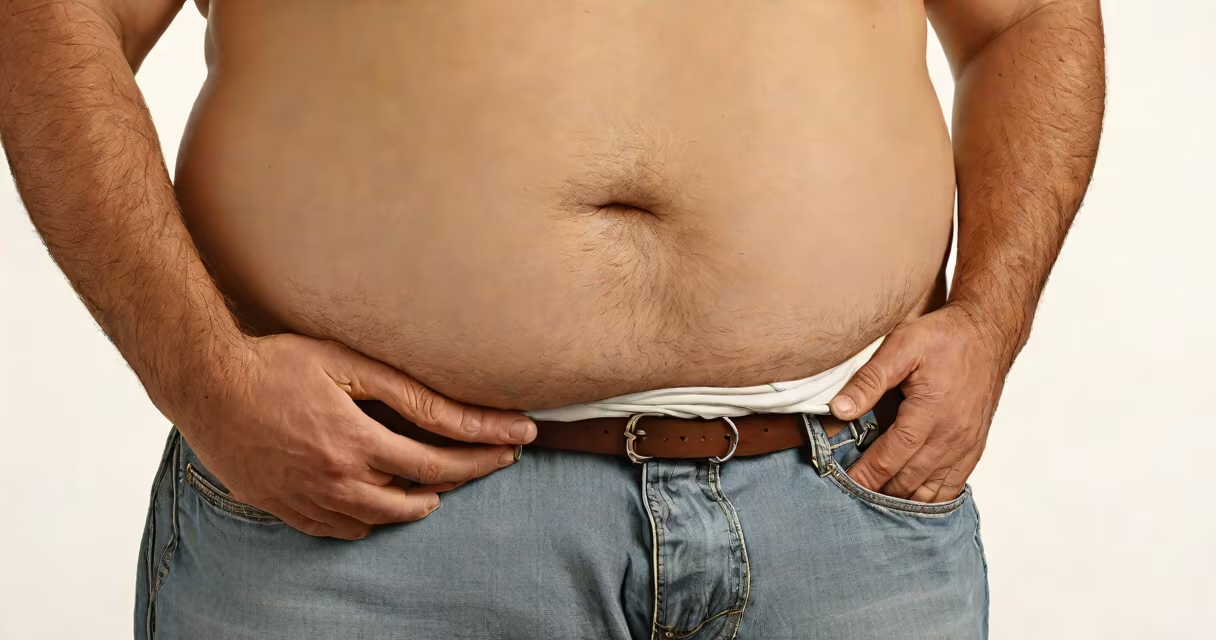
A big stomach in men results from visceral fat buildup around internal organs, often driven by poor diet, low physical activity, and hormonal shifts-not just excess weight. This condition increases risks for heart disease, type 2 diabetes, and metabolic syndrome.
Visceral fat is metabolically active tissue that releases inflammatory compounds and free fatty acids into the bloodstream. Unlike subcutaneous fat under the skin, it directly impacts organ function. A 2020 study in The Journal of Clinical Endocrinology & Metabolism found that men with waist circumferences over 102 cm (40 inches) had higher insulin resistance and elevated triglycerides.
Common triggers include high intake of refined carbohydrates, sugary drinks, and saturated fats. Alcohol consumption contributes too-ethanol metabolism diverts liver resources toward fat storage, particularly in the abdominal region. Sedentary behavior reduces lipoprotein lipase activity, slowing fat breakdown in the abdomen.
Abdominal fat forms through a combination of energy imbalance and hormonal regulation. When calorie intake exceeds expenditure, surplus energy is stored as triglycerides in adipocytes. In men, testosterone levels decline gradually after age 30, reducing muscle mass and lowering resting metabolic rate. Lower lean mass means fewer calories burned at rest, increasing fat retention.
Stress also plays a role. Chronic cortisol elevation activates glucocorticoid receptors in abdominal adipose tissue, promoting fat deposition. A 2019 review in Frontiers in Physiology linked prolonged stress to increased waist-to-hip ratios in adult males, independent of BMI.
Some men develop a protruding belly despite normal body weight-a condition known as "skinny fat." This occurs when muscle loss outpaces fat gain, leading to a soft, sagging midsection. It's not visible on a scale but shows up on body composition scans.
Not all big stomachs are the same. They differ in texture, cause, and health implications. Understanding the type helps identify the root issue.
| Type | Appearance | Primary Cause | Health Risk Level |
|---|---|---|---|
| Visceral fat | Hard, tight, deep bulge | High-calorie diet, low activity, aging | High (linked to heart disease) |
| Bloating | Soft, swollen, may fluctuate daily | Gas, constipation, food intolerances | Moderate (discomfort, not life-threatening) |
| Subcutaneous fat | Soft, jiggly, under the skin | Obesity, genetics | Low to moderate (increases joint strain) |
Visceral fat is the most dangerous. It surrounds the liver, pancreas, and intestines. A 2021 study using MRI scans showed that men with the highest visceral fat volume had a 3.2-fold greater risk of developing non-alcoholic fatty liver disease compared to those with lower volumes.
Bloating differs from fat accumulation. It involves gas, fluid retention, or intestinal fermentation. For example, lactose intolerance leads to bloating within 30 minutes of consuming dairy. A 2022 clinical trial found that eliminating lactose reduced bloating symptoms in 68% of participants with diagnosed intolerance.
Many assume that a big stomach is simply "being overweight" or "eating too much." But this oversimplifies the biology. A man with a normal BMI can still have high visceral fat-this is called metabolically unhealthy normal-weight (MUNW).
Another myth is that crunches eliminate belly fat. Spot reduction doesn't work. Exercise burns fat systemically, not locally. Doing 100 sit-ups won't shrink the belly unless paired with caloric deficit and strength training.
Some blame genetics entirely. While genes influence fat distribution-men tend to store fat centrally due to androgen signaling-lifestyle factors dominate outcomes. A 2023 twin study published in Nature Metabolism showed that identical twins with similar genetics developed vastly different abdominal fat levels based on diet and exercise patterns.
John, a software developer, noticed his belt size increased from 34 to 40 inches over five years. He weighed 185 lbs (BMI 25.2), which is in the normal range. His doctor ordered a DEXA scan and abdominal CT. Results revealed 12.4 kg of visceral fat-well above the recommended threshold of 10 kg for men.
John's diet included two cans of soda daily, takeout meals five times a week, and minimal movement. He sat 10 hours a day. After six months of dietary change-cutting added sugar, increasing protein and fiber-he lost 11 pounds and reduced visceral fat by 28%. His waist shrank to 36 inches.
This case illustrates that visceral fat isn't visible on a scale. It requires imaging or waist measurement to detect. A waist circumference over 40 inches in men signals high health risk, regardless of weight.
Men should consult a healthcare provider if they notice rapid abdominal growth, persistent bloating, or discomfort. These can signal underlying conditions such as insulin resistance, hypothyroidism, or even gastrointestinal tumors.
For example, a 2020 study in Annals of Internal Medicine found that unexplained abdominal swelling was present in 14% of men diagnosed with early-stage colorectal cancer. Routine screening via colonoscopy is recommended starting at age 45.
If a man experiences fatigue, erectile dysfunction, or low libido alongside a large stomach, hormone testing may be warranted. Low testosterone correlates strongly with central adiposity. Treatment can improve body composition, though it's not a substitute for lifestyle changes.
A big stomach in men is rarely caused by one factor. It results from a mix of visceral fat accumulation, poor nutrition, inactivity, and hormonal shifts. The condition increases long-term disease risk and is not reliably detected by weight or BMI alone.
Men with a waist over 40 inches should consider medical evaluation. Simple steps-reducing processed foods, adding resistance training, and improving sleep-can reverse fat gain. Focus on measurable outcomes: waist size, blood markers, and energy levels, not just appearance.