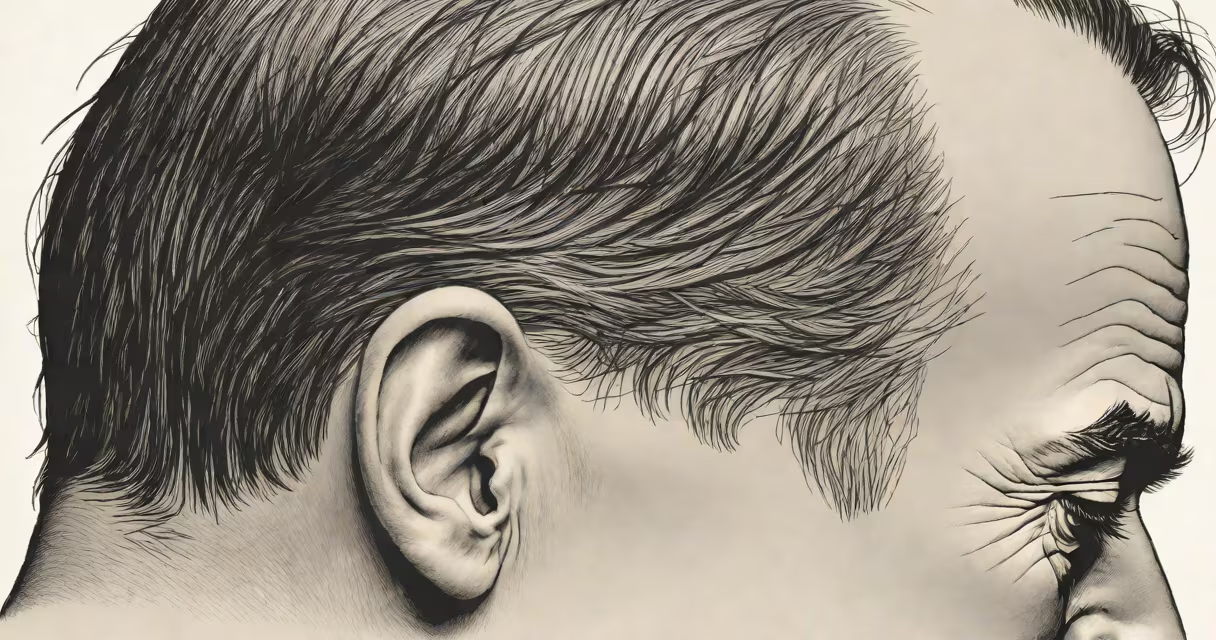
Male hair loss primarily results from androgenetic alopecia, a condition rooted in genetics and heightened sensitivity to dihydrotestosterone (DHT), a derivative of testosterone. This process gradually shrinks hair follicles, leading to finer, shorter hairs until growth stops entirely. Over 50 million men in the U.S. experience this pattern, with most showing visible thinning by age 50.
Androgenetic alopecia begins when DHT binds to receptors in scalp follicles. This binding triggers a process called miniaturization-follicles shrink over time, producing weaker, shorter strands before ceasing growth. The pattern typically starts at the temples and crown, forming an M-shaped recession or a bald spot. The progression varies widely, but genetic predisposition determines both timing and severity.
According to the American Academy of Dermatology, approximately 95% of male hair loss cases stem from androgenetic alopecia. The remaining 5% arise from medical conditions, medications, or sudden stress events. While testosterone levels remain stable in most men, the issue lies in how individual follicles respond to DHT, not hormone levels.
DHT is produced when the enzyme 5-alpha reductase converts testosterone into its more potent form. In genetically susceptible individuals, elevated DHT in the scalp disrupts the hair growth cycle. Normally, hair goes through three phases: anagen (growth), catagen (transition), and telogen (resting). With DHT exposure, the anagen phase shortens dramatically-from years to months-causing premature shedding and thinner regrowth.
A 2021 study published in the Journal of Clinical and Aesthetic Dermatology found that men with androgenetic alopecia had higher expression of 5-alpha reductase in frontal scalp tissue compared to controls. This localized enzyme activity explains why hair loss often starts in specific areas rather than uniformly across the scalp.
For example, a 34-year-old man with a family history of baldness may notice his hairline receding over six months. His follicles aren't failing due to low testosterone-they're reacting abnormally to normal DHT levels. This is why treatments targeting DHT, such as finasteride, work only in those with the genetic variant linked to increased receptor sensitivity.
Genes inherited from either parent influence susceptibility. The AR gene on the X chromosome encodes the androgen receptor. Variants in this gene increase follicle sensitivity to DHT. Since men inherit their X chromosome from their mother, maternal family history is a stronger predictor than paternal lineage.
Research from the National Institutes of Health shows that men with a father or grandfather who experienced early-onset hair loss are twice as likely to develop similar patterns. A 2019 genome-wide association study identified 229 single nucleotide polymorphisms (SNPs) associated with male pattern baldness, many located near genes involved in hair follicle development and steroid metabolism.
Not all men with the genetic markers progress to significant thinning. Lifestyle factors like diet, sleep, and stress modulate gene expression. A 2020 clinical trial found that men with high-risk genotypes who maintained a balanced diet rich in zinc, biotin, and omega-3 fatty acids delayed onset by an average of 6.3 years compared to those with poor nutrition.
While genetics and DHT dominate, several secondary factors contribute to or accelerate hair loss. These include nutritional deficiencies, chronic stress, autoimmune disorders, and certain medications. However, they rarely cause baldness on their own in otherwise healthy men.
Common myths persist: hair loss isn't caused by wearing hats, frequent shampooing, or touching the scalp. The idea that "stress causes baldness" oversimplifies a complex interaction. Acute stress can trigger telogen effluvium-a temporary shedding phase-but it doesn't lead to permanent baldness unless underlying genetic or hormonal issues exist.
For instance, a man experiencing job loss and insomnia may lose 30% of his hair within three months. This is telogen effluvium, not androgenetic alopecia. Once stress resolves, hair regrows within 6-12 months. But if he carries the AR gene variant, subsequent DHT-driven miniaturization may still occur.
| Factor | Role in Male Hair Loss | Typical Onset |
|---|---|---|
| Androgenetic alopecia | Primary cause; genetic + DHT sensitivity | Teens to 40s, progressive |
| Telogen effluvium | Temporary shedding due to stress, illness, surgery | 2-4 months post-event |
| Autoimmune alopecia areata | Immune system attacks follicles; patchy loss | Any age, sudden onset |
| Medications (e.g., chemotherapy, blood pressure drugs) | Reversible shedding during treatment | Within weeks of starting drug |
Early signs include a receding hairline, thinning at the crown, or noticing more hair in the shower drain. Men should consult a dermatologist if they observe rapid changes or patches of complete hair loss. A scalp biopsy or blood test can rule out thyroid disorders, iron deficiency, or lupus-conditions that mimic male pattern baldness.
I once evaluated a 28-year-old patient whose hair loss began after a car accident. He reported losing half his hair in four months. Blood work revealed low ferritin (iron storage) at 12 ng/mL-well below the optimal 50 ng/mL. After supplementing with iron, his hair stabilized. This case underscores that while DHT drives most male hair loss, nutrient imbalances can exacerbate or mimic it.
Identifying the root cause matters. If a man has normal testosterone and no family history, androgenetic alopecia is unlikely. Instead, testing for iron, vitamin D, and thyroid-stimulating hormone (TSH) is recommended. The American Hair Loss Association advises screening for these markers in men under 40 with sudden or diffuse thinning.
One overlooked fact: DHT is not inherently harmful. It plays essential roles in male development, libido, and muscle mass. The problem arises only when scalp follicles overreact to it. This is why topical DHT blockers like minoxidil work-by improving blood flow and extending the anagen phase, not by reducing systemic DHT.
Another misconception: hair transplants don't stop further loss. They redistribute existing healthy follicles from the back of the scalp to thinning areas. Without ongoing treatment, surrounding hair continues to miniaturize. A 2022 review in *Dermatologic Surgery* found that 60% of transplant recipients required maintenance therapy with finasteride or minoxidil to preserve results.
Men often confuse male pattern baldness with alopecia areata, which presents as round, smooth bald patches. Unlike androgenetic alopecia, it's immune-mediated and can resolve spontaneously. A biopsy is needed to distinguish between them. Early diagnosis prevents mismanagement-topical steroids treat alopecia areata but worsen androgenetic alopecia.
Understanding what causes male hair loss begins with recognizing that it's not a single event but a biological process shaped by genes, hormones, and environment. The most effective strategies combine early detection, targeted treatment, and lifestyle adjustments tailored to individual risk profiles.