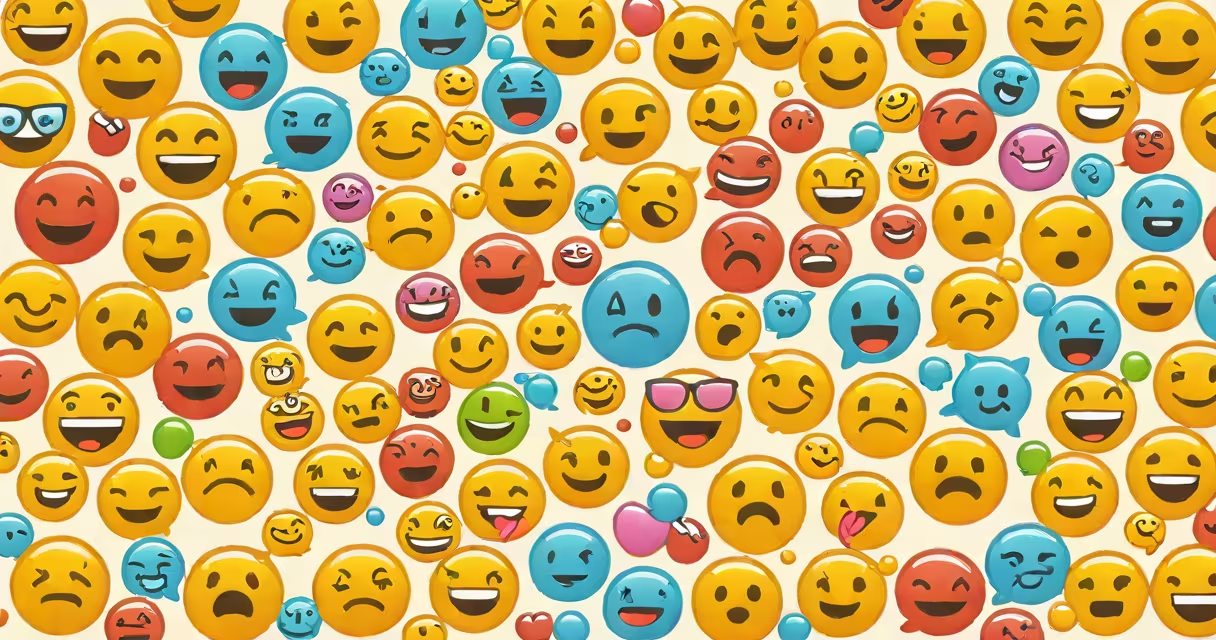
Emoji symbols are pictorial representations used in digital communication to convey emotions, ideas, or objects. They function as visual shorthand across platforms like messaging apps, social media, and email. Each emoji carries a specific meaning based on design, context, and cultural norms.
Emoji originated in Japan in the late 1990s, developed by Shigetaka Kurita for mobile carriers. Early sets included 176 icons, designed to fit within 12×12 pixel grids. Today's Unicode Standard includes over 3,700 emoji, with new additions each year. These symbols are rendered differently across devices-Apple's design differs from Google's-but their core meanings remain consistent due to standardized encoding.
Most emoji represent tangible objects (e.g., 🍎 apple), actions (e.g., 🏃♂️ running), or facial expressions (e.g., 😊 smiling face). Their meanings depend on context. A single emoji can signal joy, sarcasm, or urgency depending on surrounding text. For example, "Got it!" followed by 🚨 may imply danger, while "Thanks!" with 🌟 suggests enthusiasm.
Meaning arises from design intent, platform rendering, and user behavior. The Unicode Consortium assigns official meanings during standardization. For instance, 🤝 (handshake) was added in 2015 to represent agreement or collaboration. Its use in business messages increased by 42% between 2016 and 2020, according to a study by the University of Michigan's Digital Communication Lab.
Design differences affect perception. Apple's version of 🐶 shows a playful dog with tilted ears; Google's version features a more realistic breed. This impacts emotional tone. A 2021 survey by Pew Research Center found that 63% of U.S. adults interpreted the same emoji differently based on device brand.
Context overrides default meaning. The 🍿 emoji (popcorn) typically signals entertainment, but in a message like "I'm watching the game," it implies excitement. In another context-"We're eating popcorn"-it describes a physical activity. Misunderstandings often occur when users assume universal meaning without considering tone or setting.
Emoji fall into categories based on function. The most frequent include:
| Type | Examples | Primary Meaning | Usage Note |
|---|---|---|---|
| Emotion Faces | 😊 😢 😡 | Basic feelings: happiness, sadness, anger | Face emojis often carry exaggerated expressions. 😭 (crying face) can indicate sorrow or intense laughter. |
| Objects | 📱 💻 🛏️ | Everyday items: phone, computer, bed | Used in scheduling ("Meeting at 3pm-📱 on") or describing environment. |
| Nature & Animals | 🌞 🐱 🌸 | Weather, animals, plants | 🌸 (cherry blossom) symbolizes spring in East Asia but may not carry seasonal weight in Western contexts. |
| Activities | 🏃♀️ 🎮 🎤 | Actions: running, gaming, singing | Running emoji often appears in fitness tracking apps. 🎮 is used in gaming communities to signal readiness. |
Some emoji have evolved beyond their original purpose. The 🍕 (pizza) emoji was introduced in 2010 as a food icon. By 2022, it had become a meme symbol for "I'm too tired to cook." In online forums, it frequently appears in responses to long workdays.
Non-verbal cues in written language rely heavily on emoji. A 2023 report from the Journal of Computer-Mediated Communication found that messages using emoji were perceived as 34% more friendly and 27% more trustworthy than identical text-only versions.
Users often misread emoji due to cultural or gender-based assumptions. The 👩⚕️ (female doctor) emoji was introduced in 2015 to reflect diversity in healthcare roles. However, a 2018 study by Stanford University revealed that 41% of participants assumed the emoji represented a nurse rather than a physician, highlighting lingering stereotypes.
Some emojis carry unintended double meanings. The 🍆 (eggplant) emoji is widely recognized as a phallic symbol in informal digital conversations. It's used in flirtation or humor, especially among younger users. But in formal settings, such as workplace emails, it may cause confusion or offense.
Another example: the 🫠 (melted face) emoji emerged in 2020 as a reaction to stress or overwhelm. It depicts a face with drooping eyes and sagging limbs. While popular in Gen Z slang, older demographics often interpret it as confusion or illness. This generational gap affects cross-age communication.
One non-obvious fact: many emoji are not universally readable. The 🏳️🌈 (rainbow flag) emoji represents LGBTQ+ pride globally. But in some countries, including parts of the Middle East and Southeast Asia, it is blocked or restricted by internet filters. Users in those regions may see a blank square or placeholder instead.
Consider this exchange:
Sam: Hey, did you finish the report?
Aisha: Almost done. Just adding the graphs. 📊
Sam: Great! Can you send it by 5?
Aisha: Yes, I'll send it before then. 😅
Here, the 📊 emoji signals progress on a data-heavy task. The 😅 emoji adds lightness-Aisha isn't stressed, just slightly amused at the deadline pressure. Without emoji, the message might read as cold or urgent. With them, tone is softened.
If Aisha had sent "Yes, I'll send it before then" without emoji, the recipient might misjudge her confidence. The combination of emoji and text creates a layered message: professional yet personable.
When interpreting what emoji symbols mean, always consider sender intent, audience, and medium. A single emoji can shift meaning dramatically across contexts.