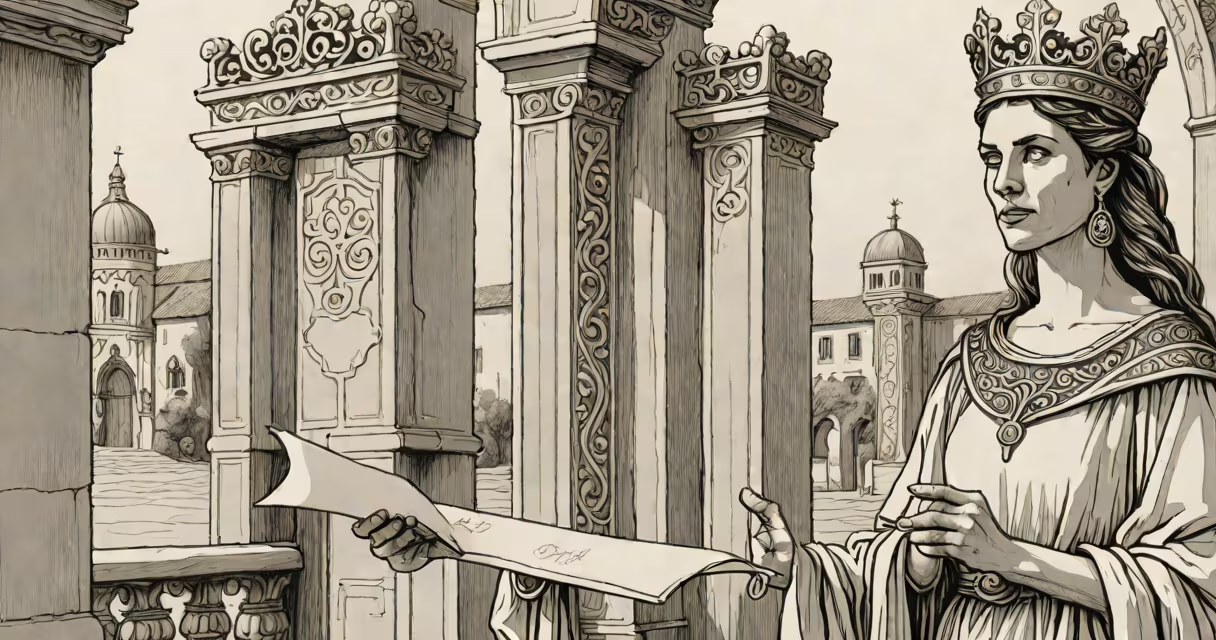
In the Hebrew Bible, wisdom is personified as a woman-often called "Lady Wisdom"-who calls out in public spaces, offers guidance, and embodies moral understanding. This literary device uses feminine imagery to represent divine reasoning, ethical discernment, and spiritual insight.
The concept appears most prominently in Proverbs, particularly chapters 1-9, where Wisdom speaks in the first person. She describes herself as being present at creation, calling people to choose life, righteousness, and understanding. Her voice is not metaphorical in isolation-it reflects a theological structure where wisdom is both divine and accessible.
Modern readers often misunderstand this portrayal as suggesting women are inherently wise. That's incorrect. The Bible uses the figure of a woman to symbolize wisdom because ancient Near Eastern cultures associated wisdom with feminine qualities like nurturing, discernment, and relational insight. The term "woman" here functions as a rhetorical tool, not a demographic claim.
Wisdom as a woman operates as a teacher and moral guide. In Proverbs 8:1-3, she stands at the crossroads, calling out to those who pass by: "Does not wisdom call aloud? Does not understanding raise her voice?" Her location-public spaces like city gates-marks her as available to all, not just the elite.
She contrasts sharply with "Folly," another female figure in Proverbs 9:13-18. Folly is loud, seductive, and leads to destruction. This pairing illustrates a core biblical idea: choices have consequences. Choosing wisdom brings safety; rejecting it leads to ruin. The contrast isn't about gender roles-it's about values.
A key example is Proverbs 31:10-31, the "Woman of Valor." Though often misread as a domestic ideal, this passage presents a woman whose strength lies in her integrity, business acumen, and fear of the Lord. She manages property, supports her family, and speaks wisely. Her value isn't tied to appearance or obedience-it's rooted in action and godly character. This portrait aligns with the broader theme: wisdom is practical, not passive.
Wisdom as a woman appears across several biblical books. The table below outlines major references:
| Biblical Book | Chapter/Verse | Key Description |
|---|---|---|
| Proverbs | 1:20-33 | Wisdom calls from rooftops and city gates, warning against ignoring her voice. |
| Proverbs | 8:1-21 | Wisdom declares her presence at creation, her role in forming the earth. |
| Proverbs | 9:1-6 | She prepares a feast, inviting the simple-minded to learn and live. |
| Proverbs | 31:10-31 | The "Woman of Valor" exemplifies wisdom through leadership, generosity, and faithfulness. |
| Job | 28:12-28 | Wisdom cannot be bought. It begins with fearing God-a key insight echoed in Proverbs. |
These passages show that wisdom is not limited to one narrative. She appears in poetic, didactic, and narrative forms. In Proverbs 8, she speaks with authority and intimacy. In Proverbs 31, she acts with purpose and influence. Both portrayals serve the same goal: to model how wisdom shapes decisions, relationships, and life outcomes.
One widespread error is equating "Lady Wisdom" with Mary, the mother of Jesus. While Christian tradition sometimes draws symbolic parallels, the biblical text never identifies her with Mary. The figure in Proverbs predates Christianity by centuries and exists within a Jewish wisdom tradition. Confusing her with Mary distorts the original context and reduces her to a Marian symbol.
Another misunderstanding is treating the woman in Proverbs 31 as a template for modern womanhood. The passage is not a job description. It's a celebration of a specific woman's character in a specific culture. Her actions-running a business, managing servants, teaching her children-are rooted in ancient Israelite society. Applying her story directly to today's career paths misses the point: her value lies in her relationship with God, not her productivity metrics.
A lesser-known but critical distinction: the Hebrew word for wisdom, *chokmah*, is grammatically feminine. This linguistic feature influences how the concept is rendered in translation. The New Revised Standard Version renders Proverbs 8:1 as "Does not wisdom call?" while the NIV says "Does not wisdom call?" But the original Hebrew uses a feminine noun. This grammatical reality reinforces the symbolic use of gender-not biological, but literary.
I once led a small group study on Proverbs 8 during a retreat. We read the passage aloud, then discussed how wisdom still calls today. One participant, a young woman in finance, said, "I hear her in boardroom meetings-when someone pushes for quick profits over long-term ethics. That's when I remember: wisdom doesn't shout. She whispers in the silence between decisions."
This moment revealed a deeper truth: wisdom as a woman isn't just ancient poetry. She remains relevant. In conflict resolution, ethical leadership, parenting, and personal decision-making, the call of wisdom echoes. She invites us to pause, reflect, and choose what lasts.
For example, consider a manager choosing between layoffs and restructuring. The immediate path may save money. But wisdom-personified as a woman-would ask: Who bears the cost? What happens to morale? How does this affect trust? These aren't emotional questions-they're strategic ones rooted in care and foresight.
When you encounter a difficult choice, ask: What would Lady Wisdom say? Not as a mystical figure, but as a standard of integrity, balance, and long-term thinking. Her voice isn't distant-it's embedded in the scriptures, waiting to be heard.