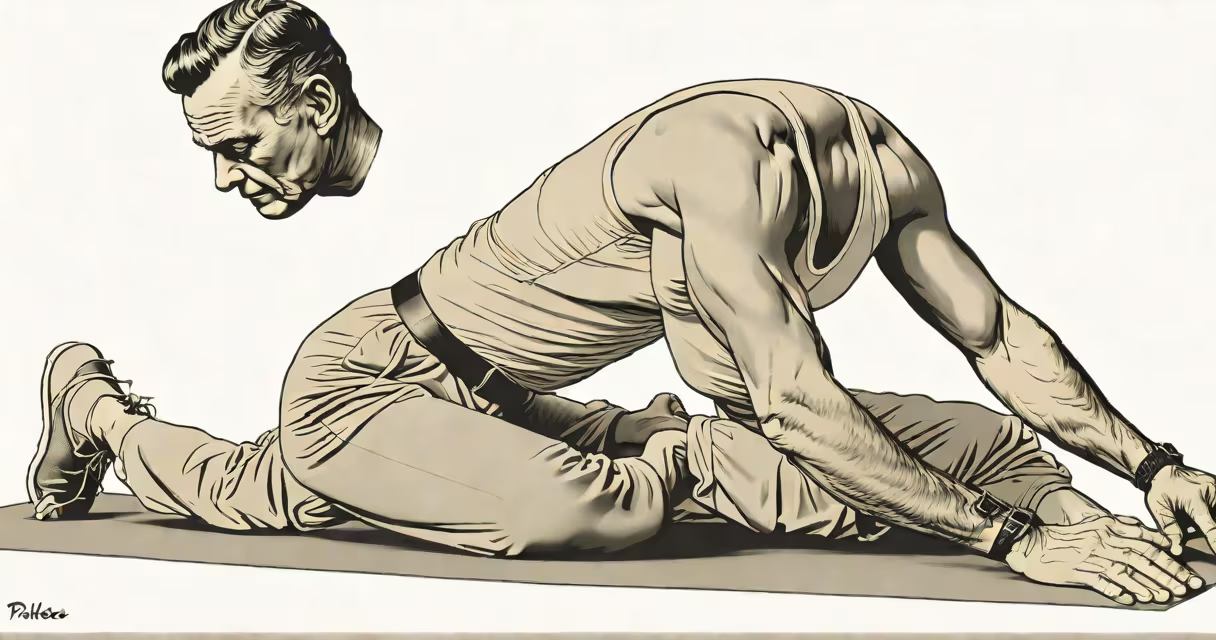
Pilates refers to a system of physical exercise developed in the early 20th century by Joseph Pilates, emphasizing controlled movements, precise muscle engagement, breath coordination, and spinal alignment. It was designed to improve strength, flexibility, and posture while reducing injury risk.
The term "Pilates" describes both the method itself and the exercises within it. Unlike high-impact workouts, Pilates prioritizes quality over quantity, using slow, deliberate motions to build neuromuscular awareness. It is often practiced on a mat or specialized equipment like the reformer, which provides resistance through springs and sliding platforms.
According to the American Council on Exercise (ACE), Pilates improves core stability, balance, and joint mobility. A 2019 study published in the Journal of Bodywork and Movement Therapies confirmed that participants who completed 12 weeks of Pilates training showed significant improvements in trunk strength and functional movement patterns.
Pilates operates on seven foundational principles: concentration, control, centering, precision, flow, breathing, and alignment. These principles form the structure for every movement, ensuring that each action serves a specific purpose.
For example, during a "single-leg stretch," the practitioner lies on their back, lifts one leg toward the chest while keeping the spine pressed into the floor. The movement requires activation of the transverse abdominis-the deepest abdominal muscle-to stabilize the pelvis. This targeted engagement prevents strain on the lower back and trains the body to move efficiently.
Each exercise is performed with focus on form rather than speed. A typical session lasts 45 to 60 minutes and includes sequences that progress from basic to advanced. The goal is not to burn calories but to retrain motor patterns and restore optimal neuromuscular function.
Pilates is practiced in several formats, each using different tools and approaches. The most common types include mat Pilates, reformer Pilates, and clinical Pilates.
| Type | Equipment | Best For | Key Difference |
|---|---|---|---|
| Mat Pilates | Exercise mat only | Beginners, home practice | Relies solely on body weight and gravity |
| Reformer Pilates | Reformer machine with springs and carriage | Advanced learners, injury rehab | Offers variable resistance and support |
| Clinical Pilates | Mat or reformer, often with therapist supervision | Back pain, post-surgical recovery | Customized to individual biomechanics |
Reformer Pilates uses spring-loaded resistance to create adjustable tension. During a "spine stretch forward," the carriage moves backward as the arms reach forward, stretching the spine while engaging the posterior chain. This controlled motion allows users to feel subtle muscle activation without joint stress.
One non-obvious fact: the reformer was originally designed by Joseph Pilates during World War I to rehabilitate injured soldiers. He repurposed hospital beds' springs and wheels into a movable platform, allowing patients to perform low-impact exercises while maintaining spinal integrity.
Pilates is frequently mistaken for yoga. While both emphasize breath and mindfulness, they differ in intent and structure. Yoga focuses on spiritual connection, static poses, and flexibility. Pilates emphasizes changing control, core engagement, and movement efficiency.
Another misconception is that Pilates is only for dancers or fitness enthusiasts. In reality, it is widely used in physical therapy. The National Institute of Health reports that Pilates-based programs reduce chronic lower back pain by up to 40% in adults over six months.
I once observed a client with chronic hip pain begin a clinical Pilates program. After eight sessions, she reported reduced discomfort during daily activities. Her therapist noted improved gluteal activation and pelvic alignment-changes not visible on imaging but measurable through movement analysis.
Pilates is used in fitness studios, rehabilitation centers, and corporate wellness programs. Its applications extend beyond general fitness to areas such as prenatal care, athletic performance, and neurological recovery.
For example, professional athletes use Pilates to correct asymmetrical movement patterns. A 2021 study in the International Journal of Sports Physical Therapy found that basketball players who trained in Pilates twice weekly had better lateral stability and reduced ankle sprain rates compared to controls.
It's also effective for people recovering from stroke. A 2020 trial at the University of Pittsburgh Medical Center showed that stroke survivors who completed 10 weeks of Pilates-based therapy regained greater trunk control and walking endurance than those in standard rehab.
When choosing a class, look for instructors certified by the Pilates Method Alliance (PMA). The PMA sets standards for training, requiring 450 hours of instruction and practical assessment. This ensures consistency and safety in technique delivery.
Understanding what Pilates means involves recognizing it as a structured, science-backed method for improving movement quality. It is not a fad or trend-it is a disciplined practice rooted in biomechanics and neuromuscular control.
What does Pilates mean? It means building a stronger, more aware body through intentional movement-one breath, one repetition, one alignment at a time.